






Esteemed New York Times opinion writer and Nobel Prize Winner Paul Krugman doesn't think it's necessary to be nice to people. He's displayed this time and time again, and again today writes that he feels no particular urge to be nice to people:
First, picturesque language, used right, serves an important purpose. “Words ought to be a little wild,” wrote John Maynard Keynes, “for they are the assaults of thoughts on the unthinking.” You could say, “I’m dubious about the case for expansionary austerity, which rests on questionable empirical evidence and zzzzzzzz…”; or you could accuse austerians of believing in the Confidence Fairy. Which do you think is more effective at challenging a really bad economic doctrine?
We writers and journalists shouldn't shy away from "picturesque language;" Krugman is right that when it's used correctly, writing - journalism and nonfiction, even - is much better to read.
Where he's wrong is his last sentence about "effectiveness" of challenging wrong ideas. We don't have to speculate or ask our readers about this. We have studies.
In a recent study, a team of researchers from the George Mason University Center for Climate Change Communication and several other institutions employed a survey of 1,183 Americans to get at the negative consequences of vituperative online comments for the public understanding of science… The text of the post was the same for all participants, but the tone of the comments varied. Sometimes, they were “civil”—e.g., no name calling or flaming. But sometimes they were more like this: “If you don’t see the benefits of using nanotechnology in these products, you’re an idiot.”
The researchers were trying to find out what effect exposure to such rudeness had on public perceptions of nanotech risks. They found that it wasn’t a good one. Rather, it polarized the audience: Those who already thought nanorisks were low tended to become more sure of themselves when exposed to name-calling, while those who thought nanorisks are high were more likely to move in their own favored direction. In other words, it appeared that pushing people’s emotional buttons, through derogatory comments, made them double down on their preexisting beliefs.
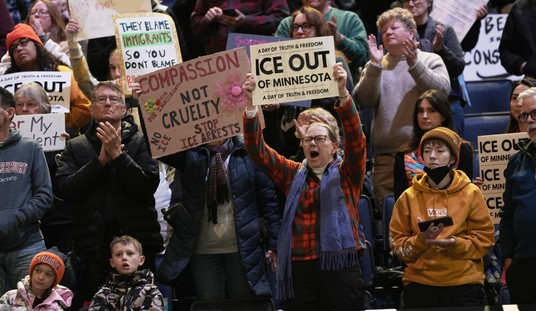
The use of "picturesque language," in Professor Krugman's terminology, actually makes people less likely to be convinced by an argument. (Funny how Krugman's "picturesque language" always manifests itself in name-calling rather than, I don't know, landscape metaphors about Federal Reserve charts, but c'est la vie.)
In this way, incivility is not designed to actually convince anyone in argumentation. It's a performance art, designed to close minds, inflame passion, and rally your own troops (who are already on your side) to your side. One would think that a Nobel Prize winner in economics wouldn't need to name-calling - or at the very least, that he'd read the academic literature on the subject.










Join the conversation as a VIP Member