







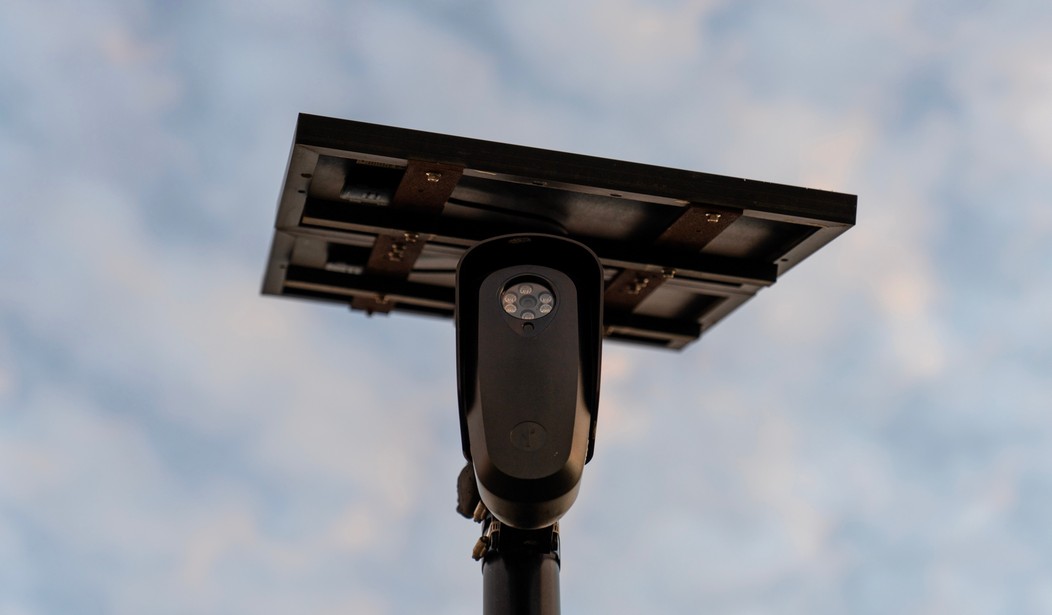
A federal jury on Monday struck down a Texas sheriff’s AI surveillance-driven traffic stop program after finding that it violated people’s Fourth Amendment rights.
The verdict resulted from a lawsuit filed by Bexar County resident Alek Schott, one of the victims of the unconstitutional operations.
It took only three hours for a federal jury to conclude Monday evening that a Bexar County sheriff’s team that used traffic stops as a pretext to search vehicles violated the constitutional rights of a man who happened to have his dashcam running when he was pulled over.
Deputies told Houston resident Alek Schott they pulled him over in March 2022 for drifting onto the shoulder of Interstate 35 outside of San Antonio. But Schott’s camera indicated that wasn’t true. The deputy next directed Schott into his patrol vehicle and peppered him with questions, ultimately informing Schott his behavior was suspicious enough to warrant searching his truck for drugs or drug money.
When Schott declined the search request, a drug-sniffing dog was summoned. The dog alerted, but a team of deputies scoured the vehicle and found nothing illegal. Deputies later claimed in written reports they had uncovered trace amounts of drugs, even though footage from their body cameras showed no such evidence.
After Schott complained, the sheriff’s office told him to file a lawsuit if he was displeased with his treatment. So he did. As his lawyers for the Institute for Justice, a libertarian-leaning nonprofit law firm, dug into his case, they uncovered unsettling facts about how a vast and secretive surveillance network was being used to track people across Texas.
Alek Schott was detained after police claimed he committed a traffic violation.
— Institute for Justice (@IJ) September 29, 2026
But the evidence clearly showed he did not.
Yesterday, a federal jury found Bexar County liable for the unconstitutional scheme that led to his stop and search and awarded Alek $76—one dollar for… pic.twitter.com/X6LCqzZRnu
The sheriff’s office’s operation involved license-plate camera readers across the state that scanned cars and stored details regarding when and where each plate was viewed. Analysts and anonymous tipsters reported travelers they deemed to be suspicious to the authorities.
Schott’s truck was flagged for alleged smuggling because of the route he took, the direction he traveled, and a female passenger he dropped off at a hotel. An unidentified person called in the tip, which reached Bexar County deputies through a WhatsApp chat called the Northwest Highway Group.
Deputy Joel Babb said the information came from a man he knew only as “Kiki,” who Babb believed worked at a federal fusion center in Laredo. Fusion centers are intelligence-gathering hubs where local, state, and federal authorities collaborate and share information.
After Schott’s vehicle was flagged, deputies sought to find an excuse to pull him over. Schott was traveling home to Houston from a work trip on March 22 when Babb stopped him. The deputies waited on the shoulder of the highway, followed their target, and then invented a violation that would justify stopping him. They claimed they stopped him because he allegedly crossed a fog line. However, evidence presented at trial showed Schott never left his lane.
Babb ordered Schott out of his truck, frisked him, and questioned him about his trip, job, a hotel stay, cash, and drugs. After Schott refused to allow officers to search his vehicle, deputies used the K-9 unit to manufacture probable cause so they could search the truck without his consent, a practice that is more common than most think.
The Institute for Justice, whose attorneys represented Schott in the lawsuit, laid out how the operation worked.
Today, a jury in federal court found Bexar County liable for running an unconstitutional traffic stop scheme that turned mass surveillance of American drivers into a pipeline of pretextual traffic stops and unconstitutional searches.
The unconstitutional program ran in five steps: First, surveillance cameras across the state and country recorded license plates and logged when and where cars went. Second, analysts and anonymous tipsters flagged ordinary travel, like driving toward the border and back, as suspicious. Third, Bexar County sheriff’s deputies invented a traffic violation to justify pulling over the flagged driver. Fourth, deputies pulled drivers into their front seats, interrogated them and asked consent to search their car. Finally, fifth, if the driver refused to consent to a search, a K-9 alert from a manipulated dog supplied the probable cause to search anyway. This practice happened for four years to countless motorists.
Institute for Justice attorney Christie Hebert characterized the ruling as “a huge win” and emphasized how “Motorists across this country are being watched by local, state and federal agents, flagged by AI-powered cameras, and then pulled over for a bogus offense that exists only as a cover story for an interrogation and a search.”
“The Fourth Amendment does not permit this,” Hebert continued. “Today a jury of Texans looked at how this program actually worked and said so. Every agency in this state should understand that we are fully prepared to enforce this verdict.”
Editor's Note: Do you enjoy Townhall's conservative reporting exposing the radical left and woke media? Support our work so we can keep bringing you the truth.
Join Townhall VIP and use promo code FIGHT to receive 60% off your membership.

Join the Conversation
VIP members get the ability to comment on articles.