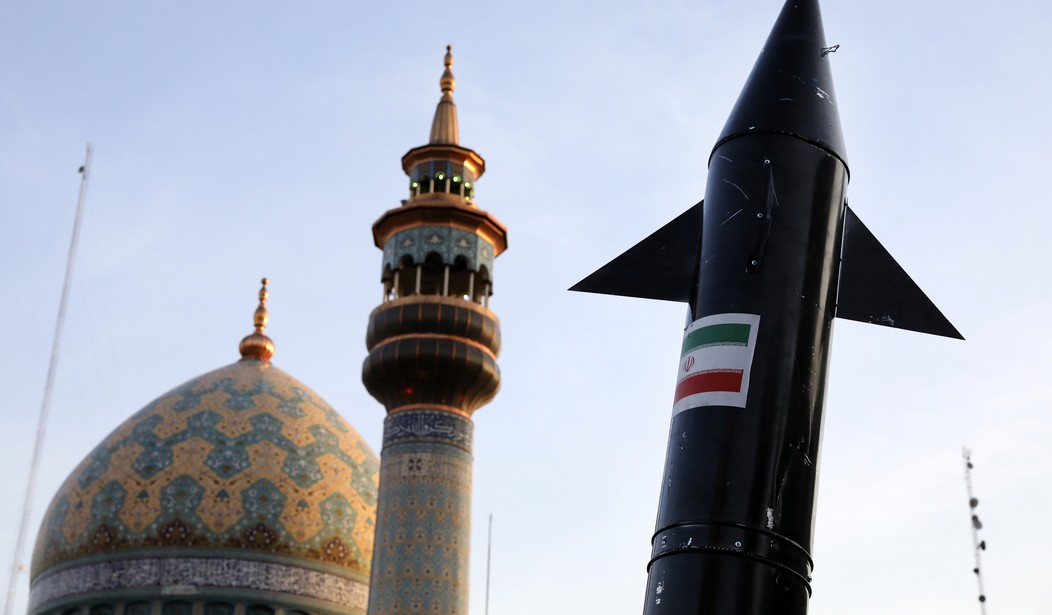

The Iranian regime is reportedly building new ballistic missiles using parts taken from older projectiles as it prepares to escalate the ongoing military conflict with the United States.
The Wall Street Journal reported on Thursday that Tehran is assembling liquid fuel missiles, which must be fueled just before launching, and solid fuel missiles, which are already ready to fire.
The regime is using underground facilities to construct the munitions.
Middle East officials told the Journal that Iran is also trying to erect new underground assembly facilities so they are harder to bomb. However, the regime’s arsenal has not returned to full prewar capabilities.
This is because the regime is forced to use parts it already had before the war to construct new missiles. This means its output is far lower.
A U.S. official told the Journal that the regime probably began this project after Tehran agreed to a deal with the Trump administration to reopen the Strait of Hormuz. The individual also stated that the regime likely assembled at least a couple of hundred missiles from these parts.
BREAKING: Iran is launching a large-scale ballistic missile wave from all over the country, including Tehran, Lorestan, Khomein, Yazd, and Kermanshah.
— The Hormuz Letter (@HormuzLetter) September 1, 2026
Heavy explosions reported in Jordan, with initial reports of direct impact at the US Muwaffaq Salti Air Base.
Former CIA analyst Jim Lamson said, “We could be talking about hundreds of missiles or possibly thousands of missiles.”
Tal Inbar of the Missile Defense Advocacy Alliance explained, “When there are no bombings of the facilities, you can replace damaged infrastructure, and you can buy new components from other countries and store them in the facilities.” He also said, “You have to be extremely naive to think that Iran is not rebuilding its missile-production capabilities.”
Exclusive: Iran has resumed its production of ballistic missiles using stockpiled components and working in underground facilities, US and Mideast officials said, eroding what the U.S. and Israel have touted as a major achievement of the warhttps://t.co/ReBJVezTEw
— Robbie Gramer (@RobbieGramer) September 10, 2026
Meanwhile, Washington and Tehran have been embroiled in a regional conflict over control of the Strait of Hormuz. Iran claimed it attacked 10 ships in the region after the U.S. destroyed five Iranian oil tankers, according to Reuters.
Secretary of State Marco Rubio said, “Iran continues to try to hit U.S. naval ships, and for every time they do that or try to do that, they're going to lose tankers.”
Traffic through the Strait has plummeted since the war began, which has contributed to global increases in oil prices. It dropped from two million barrels a day after the war began, compared to eight to nine million barrels before the start of the military hostilities.