


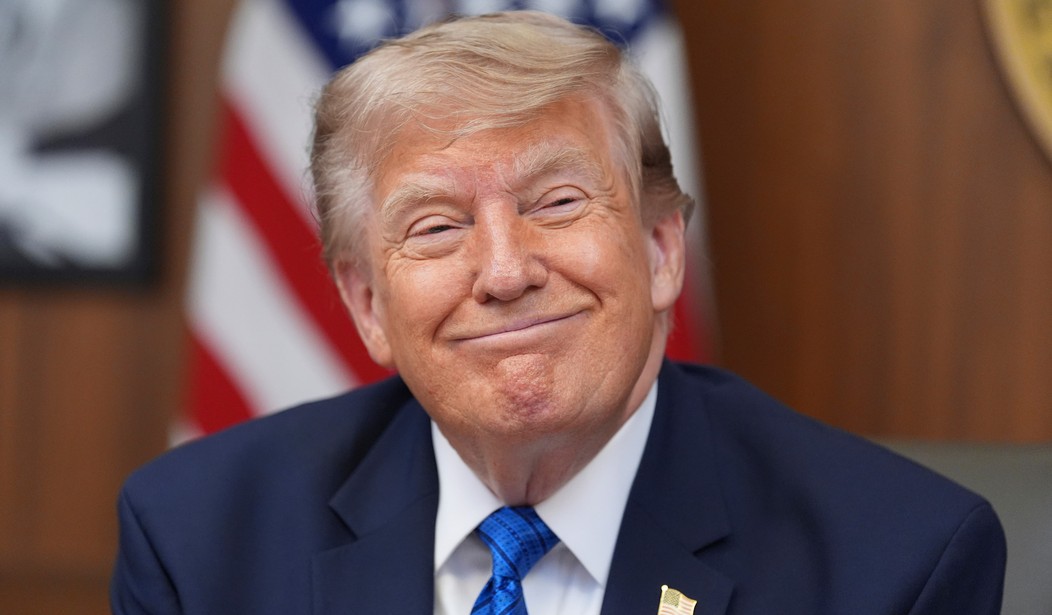
President Donald Trump on Friday evening hyped up the bipartisan proposal to reshore movie and television production as the days of Republican control of both chambers of Congress come to a close.
In a Truth Social post, the president noted the bipartisan nature of the effort, including working with Republican Sens. Tim Scott, John Cornyn, Thom Tillis, and Katie Britt, and Democrat Sens. Adam Schiff, Alex Padilla, and Raphael Warnock, among others.
“The support and popularity of doing this, and bringing Entertainment back to the United States of America, has been unbelievable! Hollywood, and so many other places, have been virtually ‘emptied out’ by the Tax Incentives, and much more, given by other Countries.”
Trump added that the entertainment industry has increasingly moved abroad to places like Canada, the U.K., and Australia, which has not only affected actors and producers, but many thousands of below-the-line workers in the industry.
“The amount of money spent on these Tax Incentives will be made up tenfold by the money pouring into the Treasury’s coffers,” Trump said. “Hopefully Republicans and Democrats will get together and finalize this already very actively negotiated Legislation. It can be done quickly, accurately, efficiently and, importantly, will benefit all of America.”
As The Hollywood Reporter explains, the Motion Picture, Television, and Entertainment Revitalization Act would “establish a 20 percent base tax credit on labor expenses, rising to a maximum of 30 percent with bonuses” on film and television projects budgeted over $1 million with at least three-quarters filmed in the United States. That tax credit could be stacked on top of state incentives already in place.
According to a report from a coalition of industry unions, since the turn of the century, the U.S. market share for the 25 most expensive movies has fallen from almost 75 percent to 34 percent, which amounts to “half of the crew and two-thirds of the budgets.” As a result, an estimated $4 billion is lost annually.
There is, of course, concern about the cost of the incentives.
A policy brief from the Mackinac Center, a conservative-leaning free-market think tank, dove into the details of state incentive programs and found that they “have little impact on production location decisions, so they create few permanent jobs or other economic effects. This generates little return to state treasuries, and film incentives routinely fail to return positive economic benefits.”
The left-of-center Tax Policy Center echoed the Mackinac Center’s analysis of state incentives, but noted that the way certain states have designed their programs (such as capping total credits and not wasting the money on star actors and directors) could be a path forward for federal legislation.
However, the Tax Policy Center ultimately concluded that “[w]ith federal finances already strained, this may not be the time to add a new federal tax credit on top of expensing and net interest deductibility without clear evidence that its economic benefits would justify its still-unknown cost.”
Adam N. Michel of The Cato Institute, a libertarian think tank, estimates that the cost of the federal incentive could range from $33 to $49 billion over a decade. He argues that because of the apparent failure of state tax incentives, a federal incentive would essentially act as a Hollywood subsidization program.
"If filming in the United States costs too much, the answer is lower taxes and easier regulations for all businesses, not billions of dollars in subsidies for a single industry," he concludes.
The Motion Picture, Television, and Entertainment Revitalization Act was introduced in September, and is pending in congressional committees.
Editor’s Note: Hollywood, academia, and liberal elites are out of touch with the average American.
Help us continue to report the truth about what 77 million patriots voted for by joining Townhall VIP and using promo code FIGHT to receive 60% off your membership.

Join the Conversation
VIP members get the ability to comment on articles.