







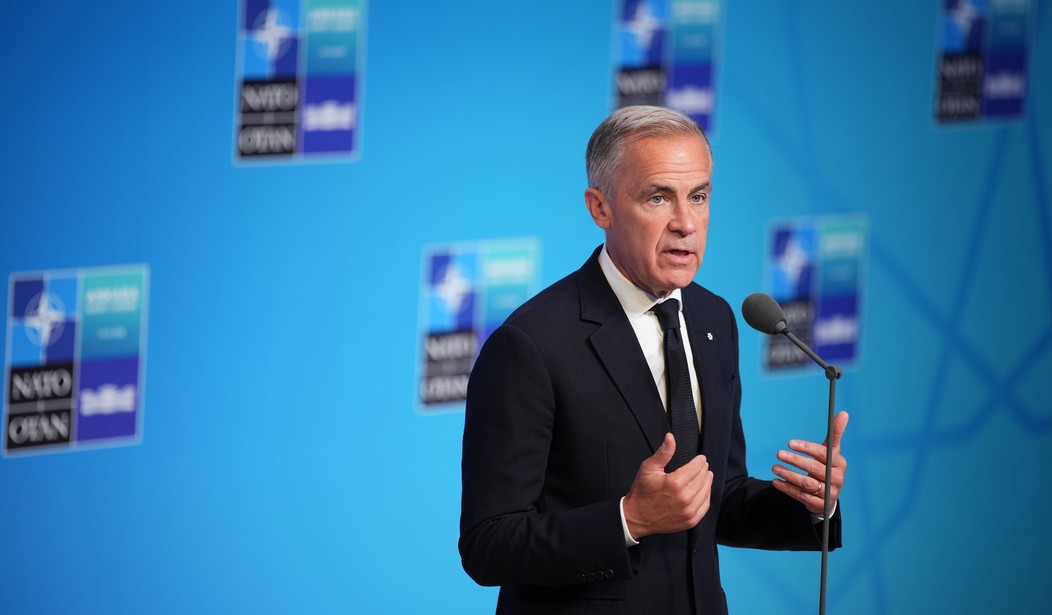
Canadian Prime Minister Mark Carney wants to make his nation an 'associate member' of the European Union (EU). The move follows the breakdown of trade talks with the U.S. There is no "associate member" of the EU today; it would be a new and — to use Carney's own words — "unique alliance."
Carney pushes idea of making Canada 'associate member' of EU, WSJ reports https://t.co/hdK0XQTois https://t.co/hdK0XQTois
— Reuters (@Reuters) September 13, 2026
The EU, which has not been flexible about membership rules in the past, is open to the idea of granting Canada a yet-to-be-created status of associate membership, the newspaper reported, citing unnamed officials both from the EU and Canada.
"We're not looking to become a member of the European Union," Carney said.
"What we are looking — and will begin discussions for — is a unique alliance between Canada and the European Union," he told reporters at the Toronto International Film Festival. "We share the same values, we have the same priorities and we have very complementary strengths."
Carney's office confirmed on Saturday he will travel to France and Britain next week. He will address the European Parliament in Strasbourg and attend EU President Ursula von der Leyen's State of the European Union address.
Canada would not join the EU, of course, but a relationship would allow for easier movement of goods and services between Canada and Europe, as well as easier collaboration on projects like undersea cables and data centers and visa-free, live-and-work access in France for Canadians in the EU.
Let's hitch our wagon to the dying horse that's the EU.https://t.co/DrM8DjVpvC
— RMC86 (@RMC19861987) September 13, 2026
That's a fair point. Europe relies heavily on American support, too.
Canada trades with the EU almost entirely free due to CETA.
— Kevin̊ ⤵️🐰🕳 (@k2pointO) September 13, 2026
Why on earth would we need to surrender our sovereignty to the EU as an “associate member”?
READ THIS: https://t.co/KFknkBCDfh
A Canadian weighed in and called it a "remarkably stupid economic strategy."
This strikes me as remarkably stupid economic strategy.
— L. Wayne Mathison (@WayneMathison) September 13, 2026
Diversifying Canadian trade makes sense. Pretending Europe can somehow replace the economic relationship we have with the United States does not.
The United States is next door. Our railways, pipelines, electricity grids,… pic.twitter.com/dOlo13YaYi
Mathison wrote, "So what exactly do we gain from some invented “associate membership” beyond CETA? Potentially European regulatory obligations, political entanglements, financial contributions and pressure to harmonize Canadian rules with decisions made in Brussels, all to sell more goods across an ocean to markets that cannot duplicate the geographic advantage of the United States. Norway rejected EU membership twice. Iceland opened accession negotiations and eventually walked away without joining. Both understood that you can have close economic relations with Europe without surrendering unnecessary national autonomy."
Seems like a less than stellar deal.
Think about this plan. The EU is poorer than we are. The EU is growing more slowly than we are. The EU has no functioning military. And yet Carney wants to break with us to ally with them.
— Laura Ingraham (@IngrahamAngle) September 13, 2026
Whatever Carney’s motives, he is obviously not trying to raise the living stds of… https://t.co/6H8EGZ9c4S
Canada, as a country, is poorer than Alabama, and the EU isn't far behind. This seems more like rearranging the deck chairs on Titanic than sound policy.
As far as the U.S. is concerned, the impacts will likely be minimal. This isn't membership in the EU, it will take years on joint projects and visa-free work, and Canada still exports a large majority of its goods to the U.S.
Editor's Note: President Trump is leading America into the "Golden Age" as Democrats desperately try to stop it.
Help us continue to report on President Trump's successes and combat Democrats' lies. Join Townhall VIP and use promo code FIGHT to receive 60% off your membership.


Join the Conversation
VIP members get the ability to comment on articles.