







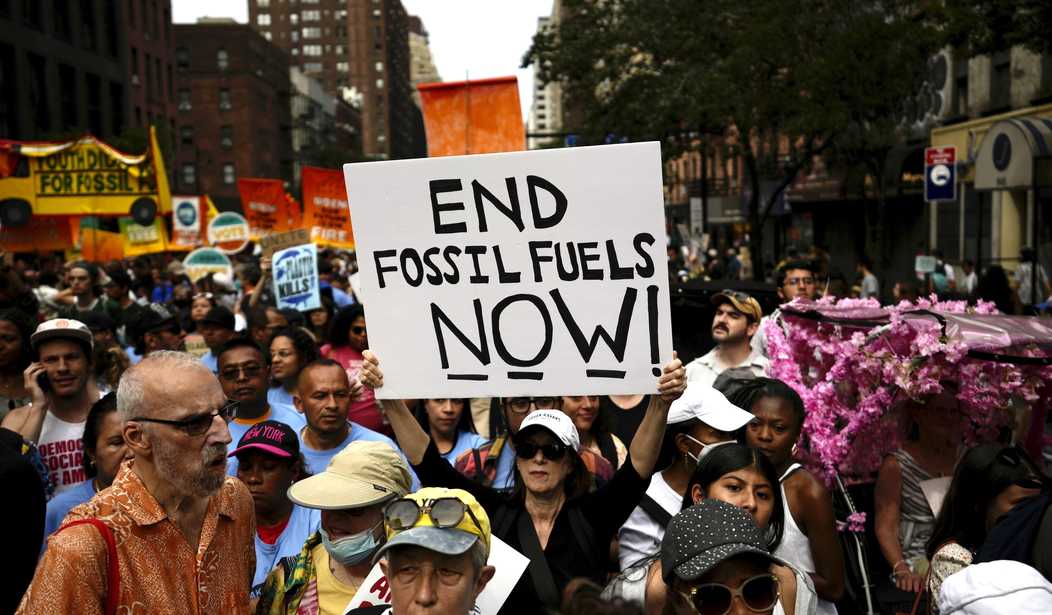
Not long ago, as part of a series of articles on what is being done in response to climate change in all fifty states, a New York Times publication painted a seemingly innocent picture of teenagers gathered at the edge of six wooded, hilly acres in Minnesota. These young people, guided by an environmental group called Green Crew, pulled weeds and tended to local plants.
The article framed this collective action as a therapeutic remedy for a generation suffering from profound climate anxiety. A quoted scientist in the piece proposes that engaging in group activities mitigates the depression and negative emotions born from obsessing over changing weather patterns.
You see this pattern everywhere. First, children are told that their future has been stolen, that the planet is on the brink of collapse, that every storm or heatwave is a sign that time is running out. Then, when the natural result of such messaging appears—confusion, sleeplessness, despair—the climate establishment rushes in with programs and clubs that promise to “channel” these fears through “collective action.”
What looks like compassion is, in reality, a closed loop of fear and managed activism. It is nothing but a subtle art of amplifying a fabricated crisis, often masquerading as a heartwarming story.
If you constantly tell children that disaster is inevitable, it is no surprise that some will break under the weight of those words. Instead of asking whether the story itself is accurate, the young volunteers believe their “hands-on conservation work” is a “meaningful response” to the climate worries.
But the very warmth that today is framed as a threat has played a key role in making our planet greener and more hospitable. This period of moderate warming (1850-present day) follows the Little Ice Age, a time when low temperatures stifled plant growth and decimated food crops. Famine stalked humanity. Cold weather killed millions.
Satellite data from NASA show a substantial greening of the Earth’s surface over the past many decades, with many regions seeing increased plant growth. Even on a longer geological timescale, the current 12,000-year warm interglacial has been a golden window for human life—far better than the ice age extremes that bracket it.
So what, exactly, are these students “responding” to? Not a measurable surge in climate-related deaths, not a global collapse in food production, not a planet turning brown and barren. They are responding to a story. They are reacting to an atmosphere of fear that has been carefully curated by well-funded campaigners, amplified by politicians, and carried dutifully by outlets like the Times.
When affluent societies elevate hypothetical future dangers over the very real present needs of the poor, they train their youth to see human flourishing as suspect. Young people grow up assuming that every benefit they enjoy—from gasoline to heating to global supply chains—is morally tainted.
The Minnesota teenagers, we are told, feel they live under the “threat of climate change.” Yet they enjoy some of the safest, most comfortable conditions in human history: plentiful food from every corner of the world, modern heating and cooling, clean water on tap, and advanced medicine that would have stunned earlier generations. They live in a state where winter cold can still kill the vulnerable, but where reliable energy protects life every single day. To call this “growing up under threat” is to turn gratitude on its head.
Long-term records show no global explosion in hurricanes, no clear worldwide surge in droughts or floods that can be tied to human emissions, and no support for the claim that extreme weather is spiraling out of control. Instead, rising wealth, infrastructure, and energy access have made people more resilient to every kind of weather.
The Minnesota teens, with their right intentions, pull invasive shrubs and restore habitats. But have they ever been told that the solar and wind farms—promoted as planetary saviors—kill eagles, hawks, and other protected birds in large numbers, and fragment habitat on a vast scale?
Environmental realities are complex. Yet the story given to many young people is simple and moralized: fossil fuels bad, “renewables” good; climate change the ultimate villain; activism the only way to be virtuous.
Unelected international bullies at the United Nations demand trillions of dollars to fix an imaginary problem. They keep the minds of our youth locked in a tight thought-police box where only crisis-friendly ideologies survive. Anyone who questions the narrative faces immediate cancellation.
Well-funded academic propagandists push the crisis narrative to secure lucrative research grants. Biased politicians echo the panic to expand their control over your life and your energy choices, yet they do not believe their own predictions. Former presidents and wealthy climate envoys routinely purchase sprawling, multi-million-dollar mansions directly on the oceanfront. If they genuinely believed the oceans would soon swallow the coasts, would they invest their fortunes at sea level?
The Minnesota teens are not the enemy. They are your neighbors’ children, eager to do good in a confusing world. If you care about those young people, do not join the chorus that frightens them and then offers to ease the fear it created. Break the cycle. They deserve the dignity of truth: that the world, though imperfect, is abundant; that climate, though changing, is not in crisis. Then watch as anxiety gives way to gratitude, and performative alarm gives way to real, joyful stewardship.
Vijay Jayaraj is Research Associate for Developing Countries with the Cornwall Alliance for the Stewardship of Creation and a Science and Research Associate at the CO2 Coalition. He holds a M.S. in environmental sciences from the University of East Anglia, a postgraduate degree in Energy management from Robert Gordon University, both in the U.K., and a B.S. in engineering from Anna University, India. He served as a research assistant at University of British Columbia’s Changing Oceans Research Unit in Canada.
Editor’s Note: Do you enjoy Townhall’s conservative reporting that takes on the radical Left and woke media? Support our work so that we can continue to bring you the truth.
Join Townhall VIP and use promo code FIGHT to receive 60% off your membership.



Join the Conversation
VIP members get the ability to comment on articles.