





I try to be fair to people I disagree with. Emmanuel Saez — the famous UC Berkeley economist who's considered an architect of California's proposed billionaire wealth tax — is someone I read carefully, even when I find his income-inequality work unconvincing. So, when I say that his arguments for the wealth tax are not just biased or misleading but egregiously wrong, I'm not being careless. I mean it.
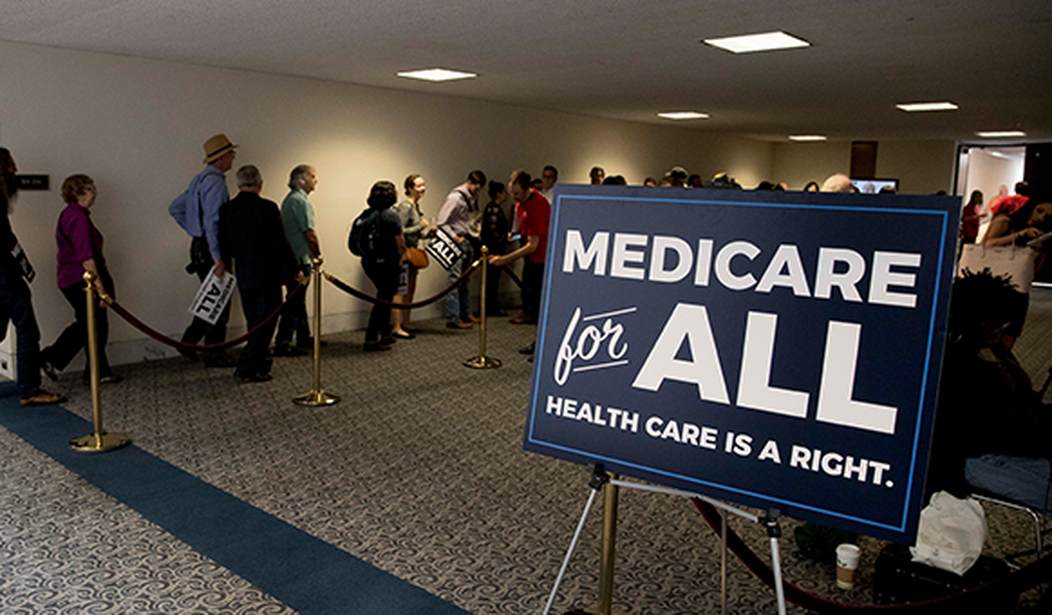
In a recent debate at Stanford University, Saez offered his central justification (apart from, you know, "billionaires are unfairly rich"): California's hospitals need it because the federal government cut Medicaid through last year's One Big Beautiful Bill.
As Economic Policy Innovation Center researchers have repeatedly documented, under the Biden administration, Medicaid spending expanded by almost 60 percent, going from roughly $409 billion before the pandemic to $656 billion by 2025. Using the most recent Congressional Budget Office numbers reflecting the OBBB — the supposed instrument of destruction — these researchers now project Medicaid spending to reach $905 billion in 2034. Calling a 38 percent increase between 2024 and 2034 a "cut" is not an honest argument.
California's hospital funding crisis has nothing to do with whether the state adds a billionaire tax. It's driven by a third-party payment system in which roughly 90 cents of every American healthcare dollar is paid by someone other than the patient, removing incentives to discipline costs or question whether services are even worth their price.
Then there's a financing structure that rewards expanding the program and punishes restraint. The federal government also happens to cover 90 cents of every dollar spent by states on Affordable Care Act expansion enrollees (including able-bodied adults without dependents). That gives states an irresistible incentive to grow the program, but it doesn't provide funding at a level that covers the cost of care.
California's leaders have taken the bait, expanded Medi-Cal aggressively and covered populations well beyond the traditional needy Medicaid population. Eager to achieve universal coverage, the state eliminated its asset test, enabling middle-class retirees to qualify for a program designed for the poor. Eligibility was phased in for undocumented immigrants over the last decade. Unfortunately, the program has no comparable mechanism to fund what it has promised.
The financial consequences of its growth are now impossible to ignore. Last year, California was $6.2 billion over its Medi-Cal budget. One government report places the cost of covering immigrants without legal status alone as a $10 billion drain from the General Fund — double what the state initially estimated.
Advocates for more Medicaid respond by saying the cost overruns prove the program is working and more people are covered. It's also evidence of a system that will continue to deteriorate fast. Hospitals that are serving growing numbers of Medi-Cal patients and covering the gap between what the program pays and what the care costs will face the same cost pressures after the tax is implemented.
So, what did the OBBB actually cut from Medicaid? It closed a financing shell game that states like California had been running for years: taxing Medicaid insurers, reimbursing them for what they paid and pocketing the federal match based on inflated figures. California alone extracted $19 billion in federal money over three years while contributing essentially nothing of its own. It used those funds, in part, to cover the enrollee extension that's now blowing a hole in its budget. Taxpayers should be furious.
It's become clear that the revenue math being used by Saez and the wealth-tax crowd is wrong too.
Stanford's Joshua Rauh and several coauthors find that the California wealth tax's projected revenue is a fantasy. Supporters advertised $100 billion in collections. Building on sound analysis as opposed to wishful thinking, Rauh's team saw billionaires already leaving and, as a result, other future tax revenues disintegrating. By driving high earners out permanently, the most likely "net present value" of the wealth tax is negative $24.7 billion.
Whether politicians and voters want to admit it or not, the real problem is still spending. California's revenue has surged by 55% since 2019, but Sacramento has expanded state spending commitments by 68%. It patched budget deficits in three consecutive years ($27 billion, $55 billion and $15 billion), not by fixing the underlying problem but by drawing down reserves and applying one-time fixes. The Legislative Analyst's Office now projects a fourth consecutive deficit, this time reaching nearly $18 billion in 2026-27 and growing to $35 billion annually by 2027-28. Medi-Cal alone will hit an all-time high, taking $49 billion from the General Fund.
The wealth tax will not save the hospitals. It will not fix Medi-Cal. It will accelerate the departure of a taxpayer base that California is already dangerously dependent on. Real fiscal problems require honesty. Contrary to what you are told by eminent economists, this wealth tax isn't one.
Veronique de Rugy is the George Gibbs Chair in Political Economy and a senior research fellow at the Mercatus Center at George Mason University.
Editor’s Note: Do you enjoy Townhall’s conservative reporting that takes on the radical Left and woke media? Support our work so that we can continue to bring you the truth.
Join Townhall VIP and use promo code FIGHT to receive 60% off your membership.

Join the Conversation
VIP members get the ability to comment on articles.