







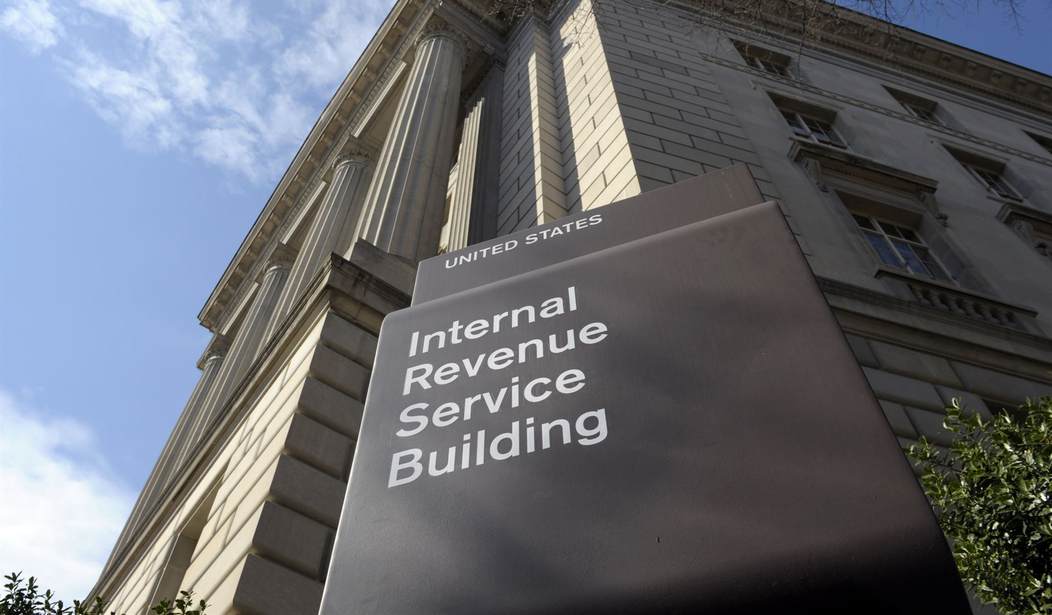
The new year will bring a new administration, and I'll be watching to see if President-elect Donald Trump's team finally puts an end to the worldwide taxation of individual Americans' income. Fixing this is imperative. It would not only be sound fiscal policy but could keep millions of law-abiding Americans living overseas from being treated like financial pariahs.
Trump seems to agree. "I support ending the double taxation of overseas Americans," he promised in a campaign statement. This problem is rooted in America's bizarre worldwide tax system.
Most people don't realize it, but if you're a U.S. citizen, the IRS wants to know about all the dollars or euros you earn, no matter where in the world you earn them. This isn't about jetsetters or Americans hiding money in offshore accounts. It's a tax grab that applies even if you haven't lived here for decades and pay your fair share in another country. It's like having the IRS follow you around the globe, demanding an account of every paycheck, bank account or investment.
Here is how it works: If you live and work exclusively outside of the United States, you must file a U.S. tax return reporting your income, foreign bank accounts containing over $10,000, retirement accounts, investments and other financial details. You're responsible for paying U.S. taxes on income above certain thresholds and navigating complex forms and rules to avoid or minimize double taxation.
This is not only unfair but uniquely so. The United States is the only developed nation that taxes based on citizenship rather than residency. We are in terrible company. As the Cato Institute's Adam Michel writes, "Eritrea's brutal dictatorship is the only other country to come close, imposing a 2 percent levy on all expatriates."
Double taxation most commonly sets in when you live in one of the many countries not covered by a tax treaty, or for foreign-earned income not protected by the Section 911 exclusion (which currently exempts up to $126,500) or other provisions that "allow foreign tax credits to offset similar taxes paid to other governments," Michel explains.
Common financial activities that are tax-advantaged in one's country of residence (like retirement accounts or home sales) may still trigger U.S. tax liability. Americans living abroad must essentially maintain two parallel tax lives and shoulder a higher burden than either U.S.-based taxpayers or those in their country of residence.
The better alternative is a territorial tax system, based on the principle that income should be taxed where it's earned. Under such a system, if you are an American living and working in Singapore, the income you earn there is taxed only in Singapore. Territorial taxation is a fundamental concept of sound tax policy that the U.S. citizenship-based system violates. In fact, Trump's tax reform of 2017 changed the worldwide taxation of corporations to quasi-territorial.
But the worst of it lies in how remarkably difficult banking has become for many Americans overseas. Thanks to the misguided Foreign Account Tax Compliance Act, foreign financial institutions often choose to deny services to U.S. citizens living abroad rather than deal with the complex reporting requirements. These individuals can thus encounter enormous difficulty in opening bank accounts, getting mortgages and participating in local investment and retirement plans.
To recap, Americans abroad must pay taxes in their country of residence, file and potentially pay additional U.S. taxes on the same income and can't always expect adequate financial services, all despite typically receiving very few U.S. government services. Some who face these burdens maintain minimal ties to the United States.
The penalties for noncompliance are wildly disproportionate. Simple filing mistakes can result in tens of thousands of dollars in fines, even when no tax was owed. Complexity makes such mistakes easy to commit, even with professional help.
While the administration has tools to limit FATCA enforcement, altogether ending it would require congressional repeal. The best way, of course, would be for Trump and Congress to work together.
As for the underlying problem of worldwide taxation, the U.S. should join the rest of the developed world and adopt a residence-based tax and reporting system. This would address all the aforementioned problems and stop treating solid citizens like criminals -- all while maintaining the ability to tax U.S. residents on their worldwide income and combat actual tax evasion.
Such a reform would also save government resources wasted on processing complex returns from Americans abroad who ultimately owe no taxes. It would encourage global mobility for U.S. citizens, including many who are abroad promoting U.S. companies, and make American workers more competitive internationally.



Join the Conversation
VIP members get the ability to comment on articles.