







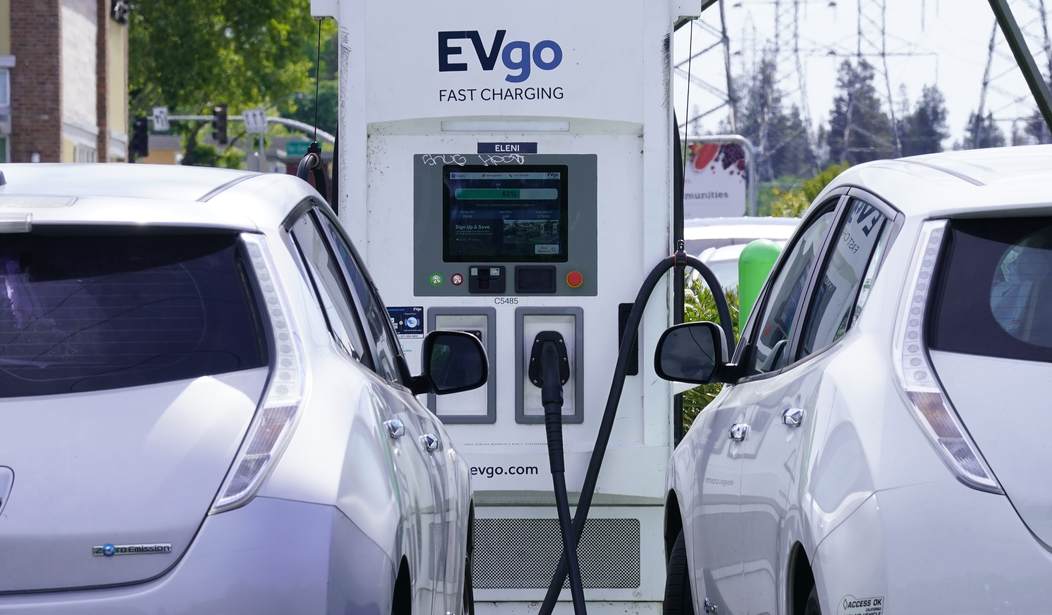
When electric vehicle subsidies were introduced around 2010, they were sold as a short term fix to allow the undeveloped EV market to get its legs and compete with Internal Combustion Engines (ICE). The subsidies were justified on the basis that EVs, emitting no tail pipe emissions, would reduce global warming, later to be known as climate change.
Fifteen years later, far longer than any normal probation period, the experiment has clearly not worked. According to the Expedia Automotive Trend Report, only of 7.9% of new car registrations in 2024 were for EVs. Just 9.3% of the 286 million cars on the road were EVs, paltry numbers indeed considering the strenuous efforts of the federal government to stoke their success.
Purchasers of new EVs are provided a $7500 federal subsidy, plus state subsidies where available. Used cars can pull down up to $4000 in purchasing aid. Commercial vehicles over 14,000 pounds can receive $40,000. Home chargers are eligible for $1000.
Even though the fuels of ICE cars are heavily taxed, the charging stations for EVs are subsidized too. Battery factories get subsidized. Then there is the whole sorry history of boondoggle giveaways subsidizing EV production and failed loans beginning with the notorious Solyndra debacle.
Canoo lost $900 million and produced 122 cars. Taxpayers got stuck with the hundreds of millions of dollars in failed loans from Lordstown Motors, which manufactured 56 vehicles total.
EV drivers don’t have to chip in for road construction and maintenance costs, since they don’t pay gas tax or any fuel-based funding source. On the contrary their is heavily susidized. Their out-of-pocket cost is equivalent to $1.21 per gallon, but direct and indirect subsidies from government and utilities push the true cost to $17.33 per gallon, according to the Heritage Foundation.
EVs require a lot of juice to operate. Even though the EV market has failed to develop as expected, many major utility companies are already struggling to meet the increase demand. They warn that future EV mandates will require greatly expanded infrastructure for electricity generation and charging stations.
The Texas Public Policy Foundation calculates EV cars would cost $48,688 more without the production and purchase subsidies alone. Maybe all this public expense would be justified if EVs substantially reduced hydrocarbon emissions, but they don’t.
These calculations are tricky because net operating emissions obviously depend on the fuels used to produce the electricity. The disappointing failure of solar and wind to supply abundant, reliable energy and our still-limited access to nuclear energy have resulted in fossil fuels producing most of the electricity used to propel these “emission free” cars.
Moreover, the battery manufacturing and disposal processes are intensely energy consuming. Most studies show little, if any, overall benefit from switching to EVs. Yet the overwhelming evidence that EVs cost a ton and don’t do much good have so far not deterred the ambitions of government and the enviros to force all or most Americans into them.
The Environmental Protection Agency’s greenhouse gas emission standards still require that 32% of new automobile sales be EVs or hybrid by 2027, a fourfold increase in two years from now! By 2032, 70% of sales must be electric. By 2050, we must be emitting no carbon at all.
Here’s a newsflash. That isn’t going to happen. The world’s biggest polluters (China and India) aren’t on board and even in the West, citizens are clearly not willing to crater their economy for a dubious ideological goal with better solutions available.
Meanwhile, government continues mandating that car companies sell EVs to customers who simply don’t want them even with the massive incentives. What could go wrong?
Companies that can are fleeing the market. Ford projects that it will lose 5.5 billion on EVs this year, which they are forced to produce to meet the EV fleet mandates. That’s $60,000 per car sold, an amount they seemingly anticipate will eventually be bailed out by government.
Look, it’s America. EVs are actually cool and fun to drive. People who want them and can afford them should have them. But there is no reason that the rest of us, who derive no benefit, should have to pay for them
Let the bubble burst.



Join the Conversation
VIP members get the ability to comment on articles.