






Leaders of the Democratic Party and much of the media are wringing their hands over what to do about Democratic voters in Florida and Michigan, in order not to leave them out of the process of picking a nominee, and perhaps alienating them as for as the general election in November is concerned.
Like so many things that politicians do that end up in a tangled mess, the current rules and practices may have been things that "seemed like a good idea at the time."
There might be a lesson there about not getting carried away with rhetoric, and about the need to stop and think through the consequences before the consequences overwhelm you.
Do we want the magic words of "universal health care" to end up in a similar tangled mess -- as it has already in some other countries -- while we end up saying, "it seemed like a good idea at the time"?
The idea behind letting "the people" decide whom the Democratic Party should nominate for President of the United States was that such things should not be decided behind closed doors by party bigwigs in the proverbial smoke-filled room.
But, in this context and in many others, the question must be asked: Who are "the people"?
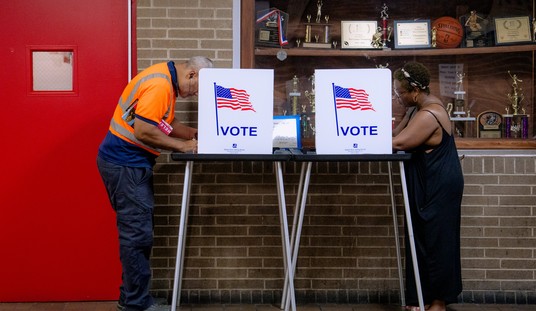
We are not talking about the American people as a whole or even a majority of the members of a given party. We are talking about those who happen to show up on primary election day or at the caucuses, including in some states people who are registered members of the opposition party.
Not only in primary elections, but in other local elections -- and especially in off-year local elections -- vested interests such as the teachers' union can get a big turnout that can give a disproportionate weight to people who are nowhere near a majority but who can win big time with one-fourth or less of the electorate.
Is that the voice of "the people"?
As far as party primaries are concerned, both Republican and Democratic Party primaries are dominated by the most zealous voters, whose views may not reflect the views of most members of their own respective parties, much less the views of those who are going to vote in the November general election.
In recent times, each election year has seen each party's nominee selected -- or at least subject to veto -- by its most extreme wing and then forced to try to move back to the center before the general election.
This can only undermine the public's confidence in the integrity of the candidates of both parties.
Back in the bad old days of the smoke-filled rooms, people with a long-term stake in their party had to take into account what the American public at large wanted, because that would determine who would actually get elected to the White House and the Congress, who in turn would then decide who would be put on the federal courts across the land, including the Supreme Court.
It is by no means clear that "the people" voting in primaries have made better choices than those made in the smoke-filled rooms. More important, those who regard the present system as sacrosanct don't even want to make such a comparison.
It is questionable whether any of the three candidates still viable in the Republican or Democratic Parties would have been chosen by either party if those with a long-run stake in the future of those parties had made the decision.
All three candidates have a lot of baggage.
Nevertheless, no one dares change the rules in the middle of the game. The big question, however, is whether either party's leaders will have the courage to change the rules after this fall's election.
Back in 1944, the Democratic Party's leaders, knowing that President Franklin D. Roosevelt was in such frail health that he was not likely to live out his next term, decided that the choice of vice presidential nominee was too important to let go by default to the current vice president, Henry Wallace.
They proposed that little-known Senator Harry Truman be put on the ticket instead, and FDR went along with it. You would have to know what a dingbat Henry Wallace was to realize how the smoke-filled room saved this nation from disaster.

Join the Conversation
VIP members get the ability to comment on articles.