








When former President George W. Bush stood on the West Front of the Capitol for his second inauguration in 2005, he gave a speech that called for a utopian foreign policy that aimed at spreading democracy all across the globe.
"We are led, by events and common sense, to one conclusion: The survival of liberty in our land increasingly depends on the success of liberty in other lands," he said. "The best hope for peace in our world is the expansion of freedom in all the world."
"So it is the policy of the United States," Bush declared, "to seek and support the growth of democratic movements and institutions in every nation and culture, with the ultimate goal of ending tyranny in our world."
"America, in this young century, proclaims liberty throughout all the world and to all the inhabitants thereof," Bush concluded. "Renewed in our strength, tested but not weary, we are ready for the greatest achievements in the history of freedom."
Did Bush succeed in this quest? No.
During his presidency, the United States was involved in two wars. The first was a necessary response to the evil Sept. 11, 2001, al-Qaeda terrorist attacks on the United States. Those attacks required the United States to invade Afghanistan, where the Taliban regime had given sanctuary to al-Qaeda.
The second war was one of choice. This was the invasion of Iraq. In October 2002, Congress passed a resolution authorizing Bush to use military force against Iraq based on the premise that Iraqi dictator Saddam Hussein was "continuing to possess and develop a significant chemical and biological weapons capability," was "actively seeking a nuclear weapons capability," and was "supporting and harboring terrorist organizations."
In 2004, the Senate Select Committee on Intelligence published a report revealing that the intelligence estimates upon which the Iraq War was based were inaccurate.
"The major key judgments in the NIE (National Intelligence Estimate), particularly that Iraq 'is reconstituting its nuclear program,' 'has chemical and biological weapons,' was developing an unmanned aerial vehicle (UAV) 'probably intended to deliver biological warfare agents,' and that 'all key aspects -- research & development (R&D), production, and weaponization -- of Iraq's offensive biological weapons (BW) program are active and that most elements are larger and more advanced than they were before the Gulf War,' either overstated, or were not supported by, the underlying intelligence reporting provided to the Committee," the report said.
"The assessment that Iraq 'is reconstituting its nuclear program' was not supported by the intelligence provided to the Committee," it said.
What about the alleged ties between Saddam's regime and al-Qaeda?
"Secretary [of State Colin] Powell did not describe, and the Intelligence Community never concluded that there was, cooperation between Iraq and al Qaeda on terrorist operations, nor did they actively support each other with resources or personnel," said the report. "Saddam Hussein and al Qaeda are not natural allies; far from it, they are natural foes. Secular Arab regimes like Saddam Hussein's were threatened by religious fundamentalists like those within al Qaeda."
After engaging in the necessary war in Afghanistan and the unnecessary war in Iraq, Bush's vision of spreading freedom and democracy around the globe failed in these nations.
The governments in both these countries continue to abuse basic human rights, according to the State Department.
"The human rights situation in Iraq worsened during the year due to increased federal government restrictions on fundamental freedoms and civic space," says the latest State Department report on human rights in Iraq, which covers 2024.
Specifically, the report says that in Iraq there were "credible reports" of "arbitrary or unlawful killings; disappearances; torture" and "arbitrary arrest and detention." There were also "restrictions on freedom of expression and media freedom."
The State Department's 2023 report on religious freedom in Iraq noted that "(r)estrictions on freedom of religion remained widespread outside the Iraqi Kurdistan Region."
The Taliban regime in Afghanistan engaged in similar human rights abuses, according to the State Department's 2024 report on that country. As in Iraq, the State Department said there were "arbitrary and unlawful killings; disappearances" and "torture." The Taliban also put "serious restrictions on freedom of expression and media freedom," as well as "restrictions on religious freedom."
These nations did not become the freedom-protecting democracies Bush envisioned.
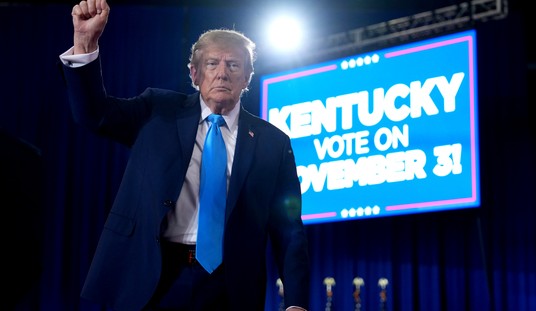
President Donald Trump last week released a report defining his own national security strategy. It does not call for spreading democracies across the globe.
"In everything we do, we are putting America First," Trump said in the introduction to this strategy.
"The purpose of foreign policy is the protection of core national interests; that is the sole focus of this strategy," said Trump's report.
"Yet the affairs of other countries are our concern only if their activities directly threaten our interests," it says.
"Our elites badly miscalculated America's willingness to shoulder forever global burdens to which the American people saw no connection to the national interest," it says.
What are the primary interests of the American people that our government needs to protect?
"First and foremost," says Trump's report, "we want the continued survival and safety of the United States as an independent, sovereign republic whose government secures the God-given natural rights of its citizens and prioritizes their well-being and interests.
"We want to protect this country, its people, its territory, its economy, and its way of life from military attack and hostile foreign influence, whether espionage, predatory trade practices, drug and human trafficking, destructive propaganda and influence operations, cultural subversion, or any other threat to our nation," it says.
This is exactly what the national security strategy of the United States should be.
To find out more about Terence P. Jeffrey and read features by other Creators writers and cartoonists, visit the Creators webpage at www.creators.com.
Editor’s Note: Thanks to President Trump and his administration’s bold leadership, we are respected on the world stage, and our enemies are being put on notice.
Help us continue to report on the administration’s peace through strength foreign policy and its successes. Join Townhall VIP and use promo code FIGHT to get 60% off your VIP membership.


Join the Conversation
VIP members get the ability to comment on articles.