






It is instructive to look at some of the basic differences between our Constitution and the free-trade zone it created and President Barack Obama's proposed 12-nation Trans-Pacific Partnership.
Our Constitution gave Congress the power to "regulate commerce with foreign nations, and among the several states, and with Indian tribes."
At the same time, it said: "No State shall, without the Consent of the Congress, lay any Imposts or Duties on Imports or Exports, except what may be absolutely necessary for executing it's inspection Laws." And that: "No Tax or Duty shall be laid on Articles exported from any State."
These clauses effectively prevented states of the union from raising trade barriers against each other or foreign nations while empowering the federal government to raise trade barriers at the nation's external borders.
The Constitution also gave Congress the power to "lay and collect taxes, duties, imposts and excises."
This empowered the federal government to impose consumption taxes both internally and on foreign imports.
After the Constitutional Convention, many saw a problem with the draft document: It did not include a Bill of Rights. They insisted this be corrected.
Approved by the first Congress and sent to the states for ratification, the Bill of Rights expressly protected many aspects of individual liberty.
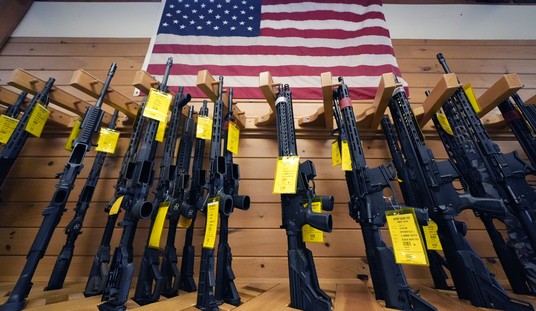
The First Amendment protected the right of individuals to exercise their religion freely, speak freely, publish freely and assemble freely. The Second protected their right to own guns. The Fourth protected their persons, houses, papers and other property from warrantless government searches.
The Fifth said they could not be deprived of their property without due process of law and that the government could take private property only "for public use" and only with "just compensation."
One great flaw in the Constitution is that it did not prohibit slavery. It thus allowed some people to be deprived of their God-given rights and treated like property. It took a long civil war, further amendments to the Constitution, and the Civil Rights Movement to correct that flaw.
Yet the ultimate product of the Constitution was a continental nation, under the rule of law, where individual rights -- including property rights -- were broadly protected and generally respected by the culture, and where government was restrained from infringing on the right of the people to engage in commerce with one another.
The United States became a remarkably prosperous nation as well as a remarkably free one.
When the administration announced this week that it had completed negotiations for the Trans-Pacific Partnership, no one called on would-be member Vietnam to adopt the Bill of Rights.
"The Socialist Republic of Vietnam is an authoritarian state ruled by a single party, the Communist Party of Vietnam," says the State Department's 2014 report on human rights in Vietnam.
"The most significant human rights problems in the country," said the State Department, "were severe government restrictions of citizens' political rights, particularly their right to change their government through free and fair elections; limits on citizens' civil liberties, including freedom of assembly and expression; and inadequate protection of citizens' due process rights, including protection against arbitrary detention."
And, eventually, Vietnam may not be the only Communist government to join Obama's trade zone with the United States.
The New York Times reported Monday: "To members of Congress, administration officials have repeatedly pressed their contention that the partnership will build a bulwark against China's economic influence, and allow the United States and its allies -- not Beijing -- to set the standards for Pacific commerce."
But the Times also reported on Tuesday: "United States officials, while making clear that they see the pact as part of an effort to counter China's influence in the region, say they are hopeful that the pact's 'open architecture' eventually prompts China to join, along with other important economic powers like South Korea."
"The People's Republic of China (PRC) is an authoritarian state in which the Chinese Communist Party (CCP) is the paramount authority," said the State Department 2014 report on human rights there.
Establishing the free-trade zone created by our Constitution required ratification by conventions in 9 of the 13 states. It also required ratification of a Bill of Rights.
Thanks to fast-track legislation that the Republican-majority Congress enacted this summer, President Obama's trade zone -- which includes Communist Vietnam and may someday include Communist China -- will need only a majority vote in both houses of Congress.


Join the Conversation
VIP members get the ability to comment on articles.