





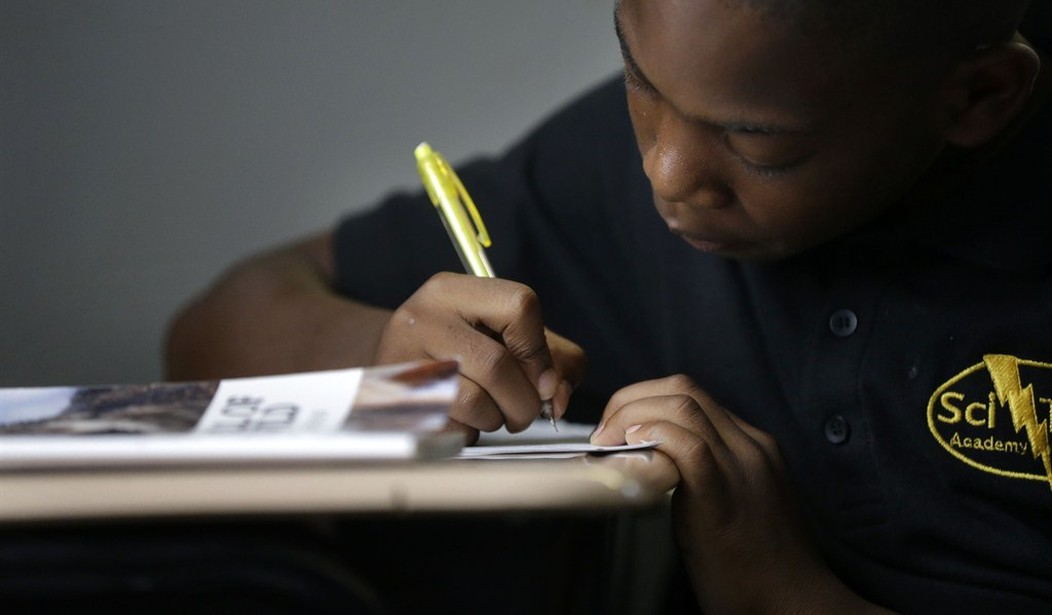
Two recently released studies, both analyzing research from impartial sources, have come to the same conclusion education reformers have been pronouncing for years: School choice benefits not only children but society as a whole.
It’s not surprising the Friedman Foundation for Education Choice (FFEC)—an organization whose mission it is to promote “school choice as the most effective and equitable way to improve the quality of K–12 education in America”—would release a study showing school choice is beneficial, but the data used by FFEC in its fourth edition of A Win-Win Solution: The Empirical Evidence on School Choice come from a variety sources, including many that are not tied to or in favor of the school choice movement.
The FFEC study’s author, Greg Forster, writes that he used all publicly available, “empirical, quantitative studies of U.S. private school choice programs” in his analysis. Forster’s report, released in May, includes a staggering 100 studies.
Fourteen of 18 studies examining how school choice affects the academic outcomes of participants reveal education choice improves student outcomes. Thirty-one of the 33 studies examining the effect choice has on academic outcomes at public schools found a positive impact on public school students. More studies in the report conclude overwhelmingly school choice saves taxpayers money, breaks down ethnic segregation, and improves democracy by giving parents freedom.
FFEC’s findings are further substantiated by a recent study by the University of Arkansas’ Department of Education Reform, which was also released in May. It analyzed “19 ‘gold standard’ experimental evaluations of the test-score effects of private school choice programs around the world.” The University of Arkansas study found, on average, private school choice increases the reading and math scores of those who take advantage of the programs. Patrick J. Wolf, one of the study’s authors, called the findings “highly significant, educationally meaningful achievement gains of several months of additional learning from school choice.”
None of this should come as a surprise. The facts speak for themselves, and so do the parents who continue to exercise their freedom to choose in states allowing some choice in government-subsidized education. Edreform.com reports charter schools enroll nearly three million children across the country. More than 100,000 students are using private school vouchers, and 190,000 others are using tax-credit scholarships to help pay tuition.
Most of these programs are aimed at children with special needs or those otherwise trapped in the worst-performing public schools, the groups of children the public school system fails most miserably. Expanding such programs to cover more children will spread those benefits to every part of a community, with the ultimate goal being to make comprehensive choice available to all children by having the money follow the child to the education mode or modes of choice. This would incentivize all schools to compete by offering a better education—the product—to bring in as many students—the customers—as possible.
The expansion of school choice programs, along with an increasing amount of evidence pointing to their success, is iron-clad evidence they are working effectively. Unfortunately, powerful teachers unions’ ongoing attacks against school choice are standing in the way of progress, as politicians fear their financial and political clout. If the creation of charter schools, increased access to private schools, and homeschooling are bad for children, why do unions feel so threatened by them? Given a choice, parents will naturally avoid bad providers, and they know that means trouble for their failing model.
Ah, yes—maybe that’s why the unions and public school administrators oppose choice.

Join the Conversation
VIP members get the ability to comment on articles.