





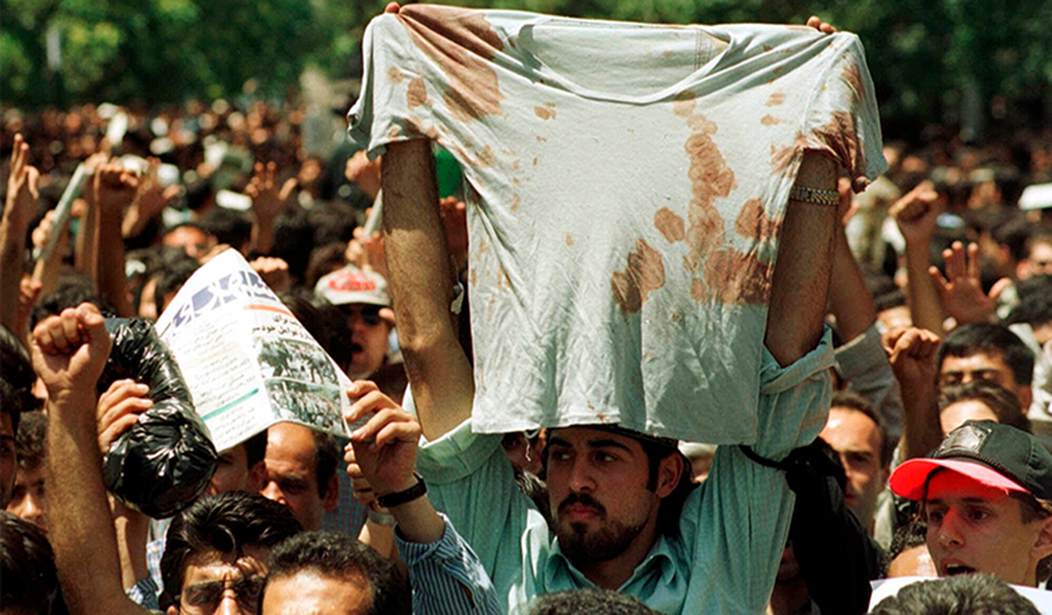
Throughout modern history, student uprisings have served as one of the clearest indicators that a regime has entered its final and most dangerous phase. Young people possess a unique capacity to sense political decay long before many others. They see through propaganda, reject hollow promises, and refuse to accept a future stolen by corruption, repression, and incompetence. When students pour onto the streets in large numbers, authoritarian rulers have every reason to fear the consequences.
The latest wave of protests sweeping Tehran, Mashhad, and Hamedan should therefore ring alarm bells throughout Iran’s ruling establishment. Thousands of students have risen in defiance of discriminatory educational policies, arbitrary changes to university entrance regulations, and mounting pressures imposed by a regime increasingly detached from the realities facing ordinary citizens. Their demands concern far more than examinations and academic records. These demonstrations reflect a generation’s growing anger at a system that has systematically robbed them of opportunity, freedom and hope.
Outside Iran’s Ministry of Education in Tehran, students gathered before marching toward the Supreme Council of the Cultural Revolution. Faced with official indifference, they staged a sit-in and delivered a powerful message: “We are waiting for results, we won’t go anywhere, and we’ll stay right here.” Such words carry enormous significance. They reveal a generation determined to pursue justice rather than accept endless delays, excuses, and deception.
What makes these demonstrations particularly remarkable is the extraordinary courage displayed by Iran’s youth. Only a few months have passed since the horrific nationwide protests of January, when citizens from every walk of life challenged the regime’s authority. The response from the Islamic Revolutionary Guard Corps (IRGC) and Basij militias proved savage. More than 30,000 protesters reportedly lost their lives as the regime unleashed overwhelming force in an effort to crush dissent and restore fear.
Since then, executions have surged dramatically – 775 people have been hanged since the beginning of the year. Gallows have become instruments of political intimidation, designed to terrorize society into silence. Every public execution carries the same message from the regime: obedience or death. Yet despite this atmosphere of intimidation, students have once again emerged onto the streets. Their willingness to challenge authority under such conditions demonstrates a level of bravery that commands admiration across the democratic world.
History offers many examples of student movements acting as the catalyst for profound political change. In 1968, student protests spread across Europe and beyond, shaking governments and transforming political culture. In South Korea during the 1980s, students stood at the forefront of the struggle against military dictatorship. Their persistence helped pave the way for democratic reforms that eventually transformed the country into one of Asia’s most successful democracies.
The collapse of communist regimes across Eastern Europe also owed much to student activism. In Czechoslovakia, student demonstrations played a crucial role in the Velvet Revolution of 1989. The sight of young people confronting an exhausted dictatorship inspired workers, intellectuals, and ordinary citizens to join the movement. Within weeks, one-party rule crumbled.
China’s Tiananmen Square protests of 1989 demonstrated a different outcome. There, students courageously demanded reform, transparency, and democratic freedoms. The Chinese Communist Party responded with tanks and gunfire. Thousands perished. Yet even though the movement suffered brutal suppression, the courage displayed by those students remains a powerful symbol of resistance against authoritarian rule.
Iran itself possesses a proud tradition of student activism. Student protests in 1999 shook the foundations of the clerical regime and exposed deep public dissatisfaction. Demonstrations erupted again in 2009 during the Green Movement. Students once more occupied the front lines, demanding accountability and political freedom. Although repression temporarily restored control, each uprising deepened the regime’s crisis of legitimacy.
Today’s protests emerge within an environment far more volatile than previous decades. Iran faces severe economic decline, rampant inflation, widespread unemployment, environmental degradation, and growing international isolation. Public confidence in state institutions has collapsed. Workers, pensioners, teachers, academics, and civil servants increasingly voice grievances that authorities appear incapable of resolving.
The simultaneous protests by municipal workers in Shush and dismissed professors from Farhangian University in Tabriz illustrate the breadth of dissatisfaction. Workers demand unpaid wages and basic economic security. Academics seek protection from arbitrary purges driven by political and security considerations. Students demand fairness and educational opportunity. Each group speaks with its own voice, yet all express frustration with the same governing system.
This convergence of grievances represents a dangerous development for authoritarian rulers. Successful democratic movements rarely emerge from a single social group acting alone. Transformational change becomes possible when students, workers, professionals, and intellectuals discover common cause. That process appears increasingly visible across Iran.
The regime’s response follows a familiar pattern. Rather than addressing legitimate concerns, officials rely on threats, insults, arrests, and violence. Education Minister Alireza Kazemi’s insistence on imposing policies while ignoring broader social realities exemplifies the leadership’s disconnect from public sentiment. Such attitudes often accelerate political decline rather than reverse it.
Iran’s rulers may still possess weapons, prisons, and execution chambers. They retain formidable instruments of coercion. Yet history repeatedly demonstrates that governments lose their grip when fear ceases to function. The most significant feature of the current protests lies precisely in that reality. Students understand the risks. They know what happened in January. They know executions continue. They know security forces stand ready to suppress dissent. Yet they march anyway.
That is why these demonstrations matter. Across history, student movements have often served as the first tremors preceding political earthquakes. Their voices expose weaknesses hidden beneath the surface of authoritarian power. Their courage inspires wider participation. Their determination signals that an old order has begun to lose its hold over the future.
The students of Tehran, Mashhad, and Hamedan have delivered a message that extends far beyond education policy. They have shown that a new generation refuses to surrender its aspirations. For regimes built upon fear, few developments prove more alarming than that.
Struan Stevenson was a member of the European Parliament representing Scotland (1999-2014), president of the Parliament's Delegation for Relations with Iraq (2009-14), and chairman of the Friends of a Free Iran Intergroup (2004-14). He is an author and international lecturer on the Middle East.
Editor's Note: For decades, former presidents have been all talk and no action. Now, Donald Trump is eliminating the threat from Iran once and for all.
Help us report the truth about the Trump administration's decisive actions to keep Americans safe and bring peace to the world. Join Townhall VIP and use promo code FIGHT to get 60% off your VIP membership.


Join the Conversation
VIP members get the ability to comment on articles.