







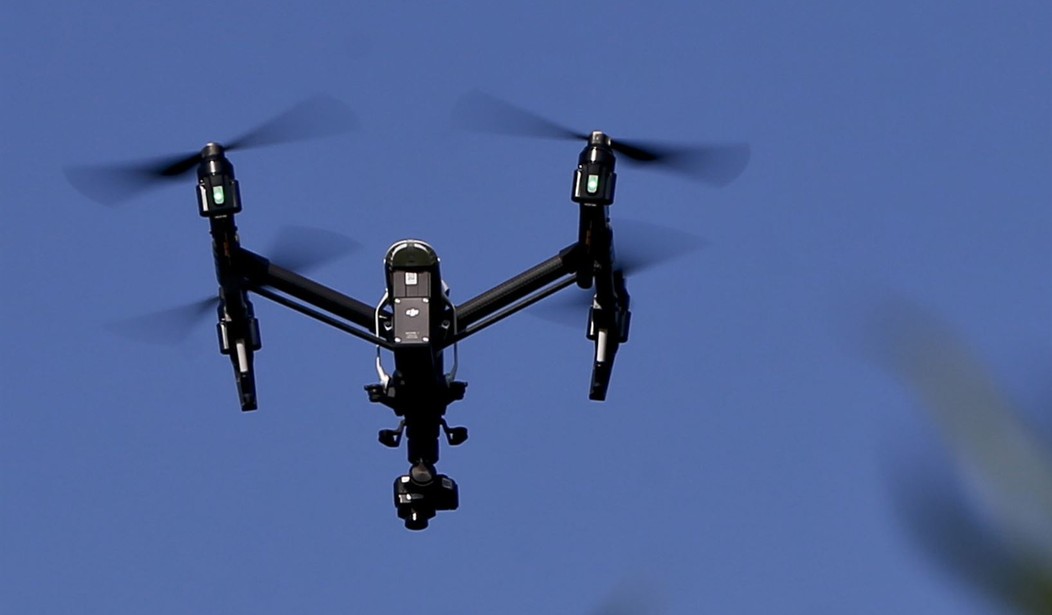
Congress is working on the National Defense Authorization Act (NDAA) for the next fiscal year. The House passed a bill on July 14, 2023, and the Senate is working through their version. There still is a long way to go before the bill becomes law and Congress should make sure not to pass any provisions that hurt first responders.
First responders fear that this legislation might carry a provision that bans the drones first responders rely on when searching for people in danger and to fight fires. It would be a big mistake for Congress to limit market access and use country of origin restrictions to limit American first responders’ access to the best drone technology.
Legislation limiting drone purchases by country-of-origin targets one specific company, DJI. The company started much like many American success stories, in a dorm room. No different than Amazon, which was founded in Jeff Bezos’ garage and sold books online in 1995, or Facebook, created in a dorm room by Mark Zuckerberg.
DJI was also founded in a dorm room, at Hong Kong University of Science and Technology in 2006, originally designed for people with a remote-controlled helicopter hobby. The company now is, by far, the leading producer of high-quality drones, and its popularity among American drone users has drawn scrutiny from the U.S. government. It is not coincidence that domestic drone manufacturers would benefit greatly if DJI was banned in the United States.
The NDAA is one of the few bills that authorizes appropriations for a department every year and members of Congress frequently bury special interest legislation in the bill. One such provision that has been repeatedly rejected aims to prevent federal agencies from buying, operating, or giving money to states and localities to purchase drones from covered foreign based companies. The bill is known as the “American Security Drone Act,” but it should have been named the “American Protectionism for American-Made Drones Act.” Although DJI drones are made abroad, they are the favored drone of American users, including fire, police, and first responders who rely on them to save lives.
The fear is that the current NDAA will be used to try to sneak this legislation through Congress this year. The bill would upend how federal agencies use drones because many drone fleets would be grounded, and future purchases of the favored drones by agencies would be restricted. This would delay critical wildfire fighting efforts at a time when wildfires are ravaging Canada and may become a problem in the U.S. A restriction on the use of already purchased drones and replacements would make it hard to conduct controlled burns to prevent a future wildfire crisis. Another impact would be to cut off grants to first responders and universities who use DJI drones to rescue people and conduct research on everything from climate change to coastal erosion.
One of the allegations against the company is that data might flow to a foreign nation through these drones. The truth is that these drones do no such thing, and DJI drone users have control over their private data. There is no nefarious plot to send data back to China. The person who owns and operates the drone is the sole person who controls what happens to the data, including pictures, videos, and flight logs. These drones can even be operated without access to the Internet or with different software altogether if the owners so choose.
Limiting market access based on the country of manufacture will do nothing to protect national security nor the American economy. Engaging in a trade war by banning foreign companies from operating in the U.S. decouples economies and makes it less economically painful to engage in an actual military conflict with a nation. Veronique de Rugy, Senior Research Fellow at the Mercatus Center at George Mason University, recently wrote that if our government bans Chinese companies, “we can expect the Chinese government to kick out American companies at great cost to both these firms and our own economy. KFC, GM, Microsoft, Boeing, Nike, Coca-Cola, Procter & Gamble, Intel, Starbucks, and Apple are just a few companies that sell significant percentages of their products to Chinese citizens.” The American economy and national security would be impacted negatively by limiting the drone market.
Even though it is ‘feel-good’ politics to talk about banning products manufactured in China, this type of protectionism is bad economics and, as applied to DJI drones, will put American lives in danger. It would be ill advised for Congress to pass this legislation, and they should abandon efforts to include it in the NDAA for fiscal year 2024.


Join the Conversation
VIP members get the ability to comment on articles.