







Americans have long since broken free of their Puritan past, but the Puritan impulse is not quite dead. Among the places it shows signs of life is the 1992 federal law that prohibits states from -- you are not going to believe this -- allowing betting on sports.
If a Martian arrived today, of course, she would deduce that in this country, betting on sports is not forbidden but mandatory. In practice, it's as American as Dunkin' Donuts. March Madness costs businesses an estimated $4 billion a year in lost productivity, and it's not because employees waste time singing their fight songs.
Gambling has been around longer than the country itself. British colonists who bet on horse races, cards and cockfights arrived to find Native Americans busy with games of chance. The American Revolution was financed in part by a lottery, for heaven's sake.
But the urge to suppress this vice is just as old. That's how we got the federal law -- which is under review by the Supreme Court in a case that arose after New Jersey defied the ban by passing legislation to permit wagering on athletic contests. The federal law may survive the justices' scrutiny -- though veteran court watchers are betting against it -- but it isn't likely to survive changing mores for much longer.
Who do the feds think they're kidding anyway? Americans spend an estimated $150 billion a year on illegal sports wagers, which is more than they spend on fast food. The business is fully legal only in Nevada, but the aboveground market makes up just 5 percent of the total.
Sen. Bill Bradley, a former NBA star, was the moving force behind the law. "Betting on sports was betting on human beings," he explained later to NPR, "and I thought that that was wrong -- that it turns players into roulette chips."
I'll leave it to any irritable 300-pound lineman to explain to Bradley why he is not and would never be anyone's roulette chip. But whatever purpose the senator had in mind is beside the point, for the simple reason that his legislation doesn't deter betting on sports. All it does is push it into the shadows, where shysters and crooks thrive.
Die-hard opponents see all gambling as a menace because some people will blow the mortgage money, lose their jobs, wreck their families and plunge into poverty. But the vast majority of players are perfectly capable of enjoying it in moderation.
Besides, trying to prevent compulsive gambling by forbidding sports bets is like trying to prevent drowning by outlawing bathtubs. Anyone with an insatiable urge to wager already has a multitude of legal options, including casinos, racetracks and state lotteries. If those aren't sufficient, hardcore players can always find a bookie, a poker game or an online site.
Even prohibitionists sometimes join the party. Kathy Gilroy, an Illinois anti-gambling activist, recently made news. No, she didn't take an ax to a video poker machine; she won a $25,000 sweepstakes at a suburban gambling parlor.
I myself am part of an organization that could be accused of encouraging corrosive disrespect for the law. The Chicago Tribune, like other newspapers, makes a daily practice of printing the betting lines on NFL, NBA, NHL and NCAA matchups. That's because otherwise law-abiding readers want them.
The professional sports leagues long opposed legalization of wagering on their games. But they have profited hugely from fantasy leagues that divert the dollars into a cannibalized version. If Congress could actually stamp out sports betting, Cowboys owner Jerry Jones would be tempted to jump off the roof of AT&T Stadium.
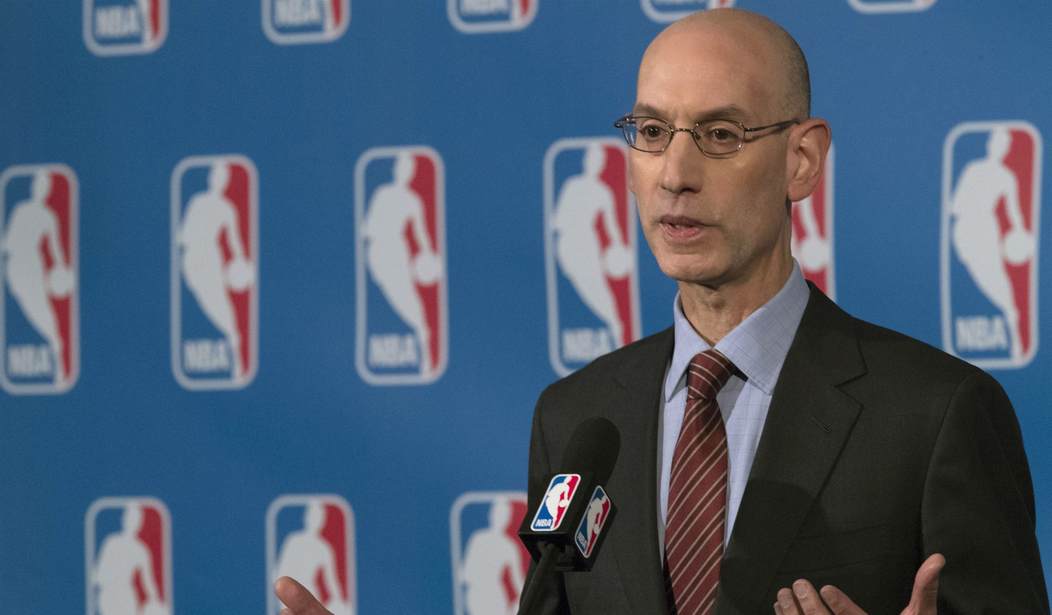
Three years ago, NBA Commissioner Adam Silver endorsed lifting the ban and imposing regulation and technological safeguards. That way, he wrote, bettors would not have to "resort to illicit bookmaking operations and shady offshore websites."
Owners and fans have always worried that legal gambling would invite point-shaving and game-throwing. But as University of Chicago economist Allen Sanderson points out, "Las Vegas betting lines and abnormally large wagers on particular outcomes serve to provide decent clues as to which contests might be fixed."
The leagues already pay attention to these indicators to sniff out corrupt players and officials. "Policing such influences is easier in the light of day," Sanderson told me.
If Americans want to bet on sports, the wise course for the government is to let them. Prohibitionists think gamblers squander precious time and money on a foolish fantasy they will never achieve. Well, look who's talking.
Join the Conversation
VIP members get the ability to comment on articles.