






The nice thing about elections is that they give you a choice not only of people but of policies. In the 2008 primaries, for instance, Hillary Clinton offered a health care plan that required everyone to get insurance, while Barack Obama’s blueprint had no such mandate. That was about the only difference in their suggested solutions.
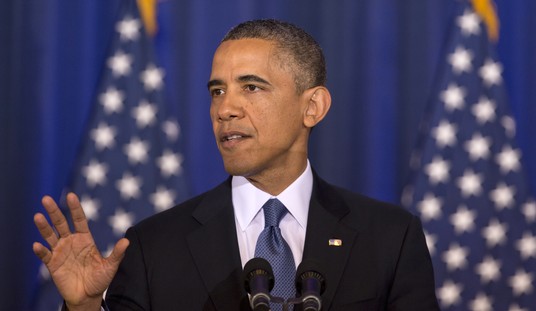
It was a big one, to hear Obama tell it. He aired a TV ad attacking Clinton because her scheme “forces everyone to buy insurance, even if you can’t afford it, and you pay a penalty if you don’t.”

He, by contrast, stressed that he would encourage more coverage by offering federal help in paying for it, while trusting in the ultimate wisdom of individual Americans to make their own decisions.
Voters had a clear choice, and they chose Obama and his voluntary plan over Clinton and her compulsory approach. That settled that.
Or so we thought. But something happened after Obama arrived in the Oval Office. His deep faith in the free decisions of ordinary people soon evaporated. Last summer, after the House included a mandate in its legislation, Obama suddenly had a change of heart.
Now, his new approach has a certain economic logic behind it. If you require insurers to take all comers, you create an incentive for people to go uninsured until they get sick. They get the benefits of coverage without the burden of having to pay for it even when they’re healthy. A mandate would compel them to accept the bitter along with the sweet.
But still: A mandate is a big intrusion into the personal autonomy that a free society is supposed to protect. You may be willing to do without medical care or treat your brain cancer with bee pollen. Too bad. You will have to buy insurance anyway.
Is that coercive? Certainly. Is it constitutional? If it passes, we will find out, since there will be a legal challenge. Some legal scholars and state attorneys general take seriously the notion that, as James Madison asserted, “The powers delegated by the proposed Constitution to the federal government are few and defined.” Making people buy health insurance is conspicuously not among them.
The Supreme Court has conceded many powers to the national government. But allowing it to force individuals to spend their own money to acquire a commodity they don’t want would go beyond its established boundaries.
“Never in the history of the United States has the federal government ever required someone to engage in an economic activity with a private party,” Georgetown University law professor Randy Barnett has said. If the Supreme Court goes along, he said, “there’s pretty much nothing Congress can’t do.”
Odds are the Supreme Court will accept this expansion of federal power, if only because accepting expansions of federal power is how most justices define their jobs. But just because it may be constitutionally permissible to lasso the uninsured and drag them into the health insurance corral doesn’t mean it is necessary or wise. Especially when there are alternatives that avoid such naked compulsion -- and that might be politically more feasible now that Democrats lack a filibuster-proof majority in the Senate.
The simplest option is to generously subsidize insurance purchases by many or most people. As it happens, both the House and Senate bills do that, offering tax credits for individuals and households whose income is 400 percent or less of the poverty level (which works out to about $88,000 for a family of four).
Another is to let individuals without employer-provided coverage buy policies through a state-run insurance exchange, which would protect consumers against rejection on the basis of existing medical problems. Insurers that want to get this business would have to accept all applicants from the pool at uniform rates.
And what about the problem of people buying in only after they get sick? The feds could discourage free-riding with a waiting period or a substantial penalty -- say, making the sponger responsible for the first $10,000 of his expenses.
You want the freedom to go uncovered? Then surely you will not mind shouldering the responsibilities that go with it. Otherwise, sign up now.
These basic changes would go a long way to expand access to health coverage. They are proof that it’s entirely possible to simultaneously respect personal freedom and greatly reduce the number of uninsured. But only if you want to.

Join the Conversation
VIP members get the ability to comment on articles.