





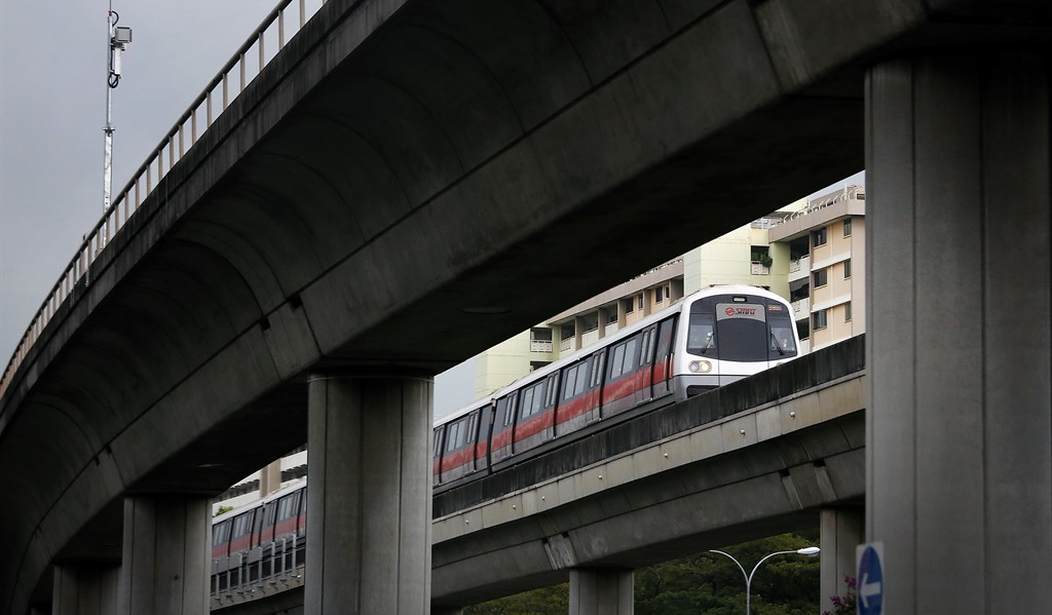
Why in the world is the federal government, 20 years into the 21st century, continuing to pour tens of billions of tax dollars into little-used mass transit rail projects? In a digital age with increasingly popular and affordable door-to-door ride-sharing apps such as Uber and Lyft, universal use of cars by all income groups and the revolution of smart driverless vehicles around the corner, subway systems and light rail are as old-fashioned as the rotary phone. The federal government and urban planners in at least 25 cities are frantically spending money to lay down tracks that, in 10 or 20 years, they will have to rip right out of the ground.
The scandal here is that mass transit is adding to traffic congestion problems across America. It is also blocking mobility as we divert billions of gas tax dollars, which are supposed to get spent on road repairs and expansions, to white elephant transit projects with minuscule ridership that, in most cities, is shrinking.
Meanwhile, the public is increasingly infuriated by traffic gridlock. In 2018, the average driver lost $1,348 by sitting in traffic. Traffic congestion is now nearly a $100 billion annual tax on the economy. In cities such as Boston, Chicago and Los Angeles, drivers lose the equivalent of three to four weeks a year sitting in traffic. By the way, every one of those cities has new or expanded transit systems that were designed to ease traffic congestion.
The latest transportation data underscores the futility of transit as a solution to inner-city gridlock. Today, fewer than 1 in 20 commuters take transit to work. Yes, there are some densely populated cities where transit works and may even be indispensable -- New York being by far the leader in transit use, with Washington and San Francisco not far behind. Almost everywhere else, transit numbers are so trivial they have virtually no impact on traffic congestion. For every one person using transit, 18 are in cars. About as many people walk, scooter or bike to work as use transit.
Yet urban planners arrogantly refuse to listen to what commuters want, as they pour money into fashionable light rail systems that people use the least. Transportation expert Wendell Cox has noted that for the exorbitant cost of transit subsidies in many cities, "It would be less expensive for taxpayers to purchase every transit rider a brand-new Prius."
But the subsidies keep rolling in. In Seattle, the urban transit enthusiasts have come forward with a grandiose plan called Sound Transit. It's a plan to spend $100 billion on new bus and rail projects over the next 25 years with car and gas taxes, tolls and fees. But its analysis shows it will lead to almost no reduction in traffic congestion in that sprawling and gridlocked city. For tens of billions of dollars less spent on new, smart road technologies, average commute times would fall, even with the increase in population.
Even the urban myth that billions of dollars of big-city transit subsidies are needed to help the poor and minorities is fatuous. The percentage of Hispanics using transit has fallen 21% since 2000. Over the last two decades, almost 1 in 5 black commuters has stopped riding transit. The percentage of people with incomes below $30,000 who use mass transit fell over the last 20 years, while those with incomes above $75,000 has risen.
Ironically, the most significant change in transportation over the past several decades is that millions more poor people and minorities can afford to own a car and drive where they want and when they want. For low-income households, transit is something not to aspire to but to be liberated from. Studies show conclusively that owning a car is literally and figuratively a road to higher incomes for those at the bottom.
If the goal of American transportation policy is greater mobility and speed at ever-lower costs, the first step is to not lay down another inch of rail. Investing in mass transit makes as much sense in 2020 as building telephone poles. So, just stop at this red light.
Stephen Moore is a senior fellow at the Heritage Foundation and an economic consultant with FreedomWorks. He is the co-author of "Trumponomics: Inside the America First Plan to Revive the American Economy." To find out more about Stephen Moore and read features by other Creators Syndicate writers and cartoonists, visit the Creators Syndicate website at www.creators.com.


Join the Conversation
VIP members get the ability to comment on articles.