





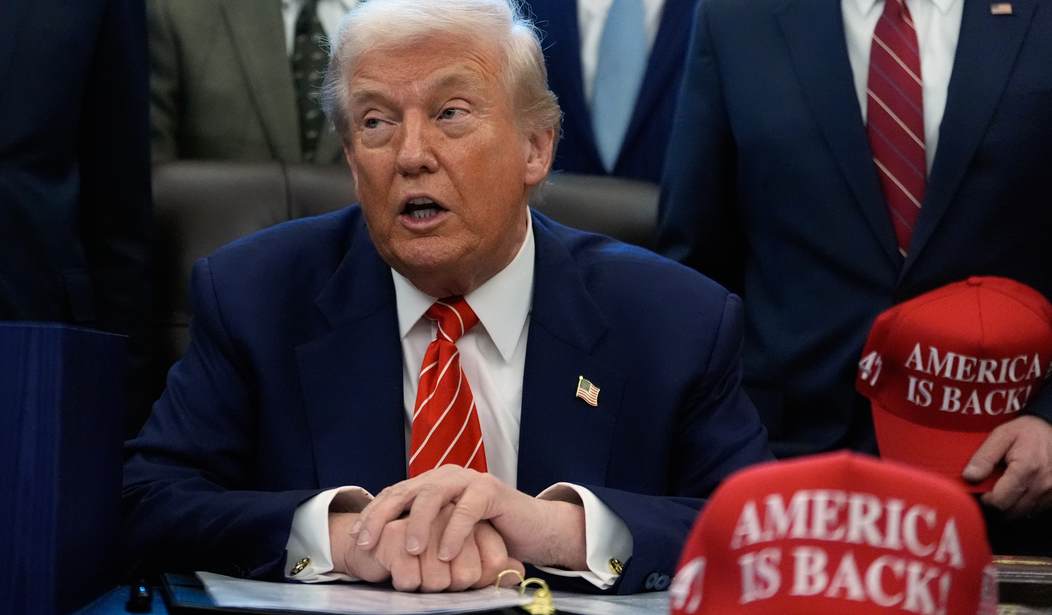
The United States made the right call this month when it approved Nvidia’s exports of its H200 artificial intelligence chips to China under targeted certification of meeting domestic demand. Here is another example of President Trump’s clear understanding of how America actually wins in the global economy: through strategic dealmaking and negotiations. The president is positioning U.S. tech companies to compete and win worldwide. As usual, Washington is reflexively working to tie their hands.
This week, Washington insiders proposed the AI Overwatch Act, a piece of legislation that would pose bureaucratic hurdles to export controls with a chip licensure requirement and process. By slowing down the decision-making process on new chip exports, the legislation undermines America’s progress toward global AI dominance.
With AI technology rapidly developing, these efforts are less about true national security than about control: who gets to decide the future of the most important technology of the 21st century. Chip manufacturing is an issue where decisive executive leadership — not micromanagement — is essential to American strength.
Over the past several years, Washington has lurched from one grand regulatory scheme to the next. The Biden administration’s now-rescinded AI Diffusion Rule sought sweeping controls with little regard for market realities or enforcement feasibility. Congress more recently flirted with the GAIN AI Act, which would have buried American chipmakers and cloud providers under new reporting and compliance mandates. That bill was wisely excluded from the National Defense Authorization Act, but its spirit lives on in new legislative proposals dressed up as “guardrails.”
The problem is not hard to see. These efforts treat AI export controls as a static regulatory exercise rather than a dynamic national interest challenge. New, vastly more powerful AI chips are released every year. Global markets and geopolitics are shifting just as fast. Locking rigid rules into statute doesn’t protect America — it freezes us in place while competitors like China adapt, scale, and surge ahead.
President Trump understands this. His administration’s AI Action Plan and recent executive actions emphasize flexibility and adaptability. In tandem with the Nvidia chip decision, the Commerce Department revised its AI chip licensing policy from a presumption of outright denial to an improved case-by-case review. This change empowers the president to weigh risks in real time instead of defaulting to blanket prohibitions that hurt U.S. firms first and hardest.
This is what America First truly looks like in practice, despite what some legislators may claim.
AI leadership is not maintained by forcing U.S. companies out of global markets. It is preserved through growth, revenue, innovation, and influence. When American firms are sidelined, foreign competitors, often directly subsidized by their governments, rush in. Excessive export controls only weaken America.
Renewed proposals like the AI Overwatch Act are deeply misguided. By layering new bureaucratic hurdles inside the Commerce Department, the bill would restrict the president’s ability to set and adjust AI export policy. Power would shift away from an elected executive and toward permanent officials who are insulated from voters and detached from commercial reality. Worse, such regimes invite regulatory capture, allowing less competitive firms to weaponize government power to lock in artificial monopolies.
This should set off alarms. Export controls are a core tool of foreign policy and national security — areas where the Constitution grants the executive branch broad authority. Congress has a role in oversight, but not in replacing judgment and leadership with rigid frameworks out of step with the pace of technological change.
None of this means ignoring risk. The federal government must prevent diversion to hostile military uses, stop bad actors, and protect American consumers. But those goals are best achieved through targeted enforcement and intelligence-driven controls, not sweeping restrictions that treat America’s own companies as suspects.
In a perfect world, fewer rules altogether would be better. But where rules exist, flexible policy guided by the president is far preferable to congressional overreach and bureaucratic inertia.
Congress should resist the urge to legislate for its own sake and instead back the administration’s leadership on AI exports. Preserving American dominance in artificial intelligence requires confidence in markets, respect for constitutional roles, and trust in elected leadership — not another layer of regulation undermining all three.
Sam Raus is the David Boaz Resident Writing Fellow at Young Voices, a political analyst and public relations professional. Follow him on X: @SamRaus1.


Join the Conversation
VIP members get the ability to comment on articles.