





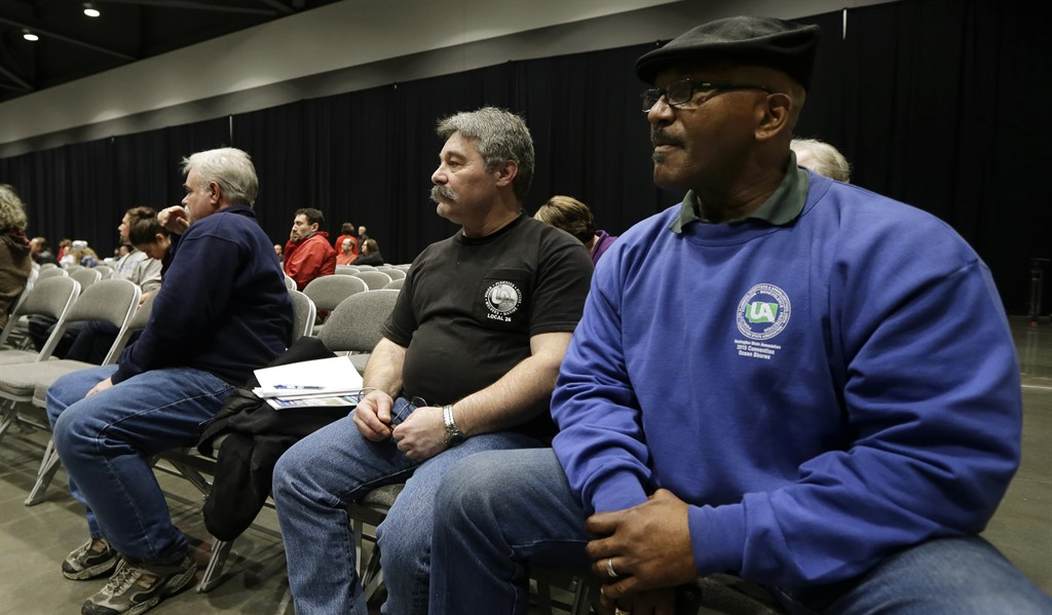
CORAOPOLIS, Pennsylvania -- Ed Bigley, the business manager for the Pittsburgh Plumbers Union Local 27, says the organization has been serving the region since the dawn of the industrial revolution in the 1870s, when it came under the umbrella of the Knights of Labor.
By July of 1890, it had formed its own stand-alone union, even holding its first convention in the city, with the Pittsburgh Post reporting the event had a "sumptuous banquet" for the visiting delegates of plumbers from across the country as the 100 members of the new union marched into the room "to the pleasing strains of the Royal Italian orchestra."
The union president then, J. Counan, gave brief remarks about the importance of the plumbers' trade not just to the development of businesses but also to the overall health of the people who live and work in the city.
Counan also stressed the importance of carrying on the trade for the next generation.
Bigley said for about 100 years after that fortuitous speech reference, young men and women either in high school or fresh out of high school who were good at math and problem-solving, and who didn't mind getting their hands dirty, filled high school "shop" classrooms or post-graduation trade schools and became plumbers after finishing their apprenticeship.
"It was a career that propelled generations of young people into the American dream of owning a home while working your way up the ladder to be part of one of the most vital trades in our country," Bigley said.
That all started to change in the 1980s when high school counselors developed a mindset that looked at students who could solve a Rubik's Cube and decided they weren't destined for a life in trades and pushed them toward college instead.
Even if that narrative is somewhat oversimplified, it serves as an instructive demonstration of teachers and counselors who assumed that analytical and problem-solving skills belong only in the college classroom. In truth, those skills are just as applicable for solving a complex geometric plumbing system in a state-of-the-art hospital.
In response to the new higher education focus, shop classes emptied, and oftentimes the trade classes within a school district were sent off to separate buildings miles away from their classmates. Thus, the students who were interested in the trades were not learning them side by side with the students who were in AP history or chemistry classes.
Bigley said it makes those students "feel less than the kids taking AP classes," adding that it also "took them away from being with their fellow classmates in their home schools for activities and just the whole high school experience."
The result is that 30 years later there is a dangerous shortage of people who are in the plumbing trade. Bigley said the alarm bells went off three years ago when the National Association of Home Builders reported there was a 55% shortfall in the number of plumbers available for work.
Bigley said people need to wake up. "I am not sure people really understand that plumbing is not just fixing a leaking pipe or replacing a rusting one or unclogging roots in a line for a toilet," he said.
"The economic impact of the shortage problem is not just a residential issue. It also impacts the construction of new offices, hospitals, manufacturing plants, grocery stores, sort of all of the things that are part of everyone's everyday life that you don't think about," he said.
According to an analysis sponsored by bathroom fittings maker Lixil, the deficit of licensed plumbers who install bathroom fixtures and piping systems drained $33 billion from the economy in 2022. The report also noted that the industry will be short plumbers by a whopping 550,000 tradesmen within three years.
Bigley sees this in real time. To combat it, he uses both traditional methods such as job fairs and talking to the students at their schools and more modern approaches such as creatively attracting young people online. Indeed, Local 27's Facebook page is a master class in reaching young people where they are.
"The hope is with the rising cost of college we are encouraging young people through our messaging to take a look at our apprenticeship program," he said. "The cost is minimal and they learn how to develop the hands-on skills to set people up for a good life."
"Here in Pittsburgh, we are coming off of our busiest year -- heck, busiest five years in our history, and in that same time period, I've had more people retire than we have brought in through our apprenticeship program," he explained.
Bigley said their bread-and-butter here at their facility located just off of I-376 outside of Pittsburgh is commercial work, but "We also do service and industrial from apartment buildings to hospitals to, well, everything you use every day."
"A licensed plumber is the one trade that stands between you and safe drinking water; the work we do cuts down on disease," he said. "That is a heck of an impact you can have on people's lives. ... Our challenge is not so much people understanding how important we are in their daily lives. Anyone who ever had water in their basement or a clogged toilet will tell you immediately that they get that. My industry's challenge is getting across to both educators and young people in a meaningful way to tell them just how rewarding a career as a plumber can be."



Join the Conversation
VIP members get the ability to comment on articles.