





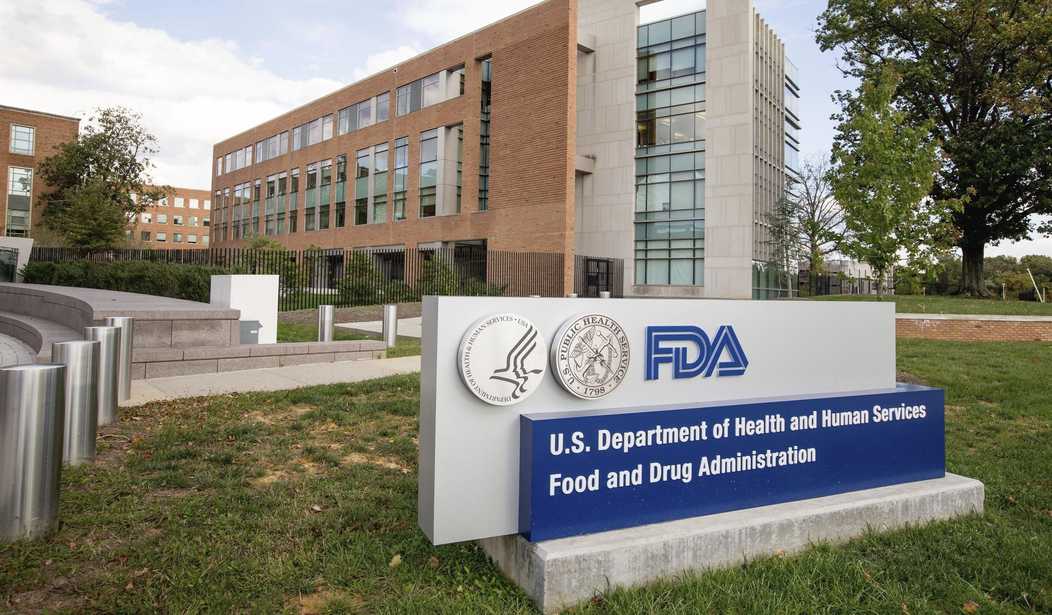
After weeks of being holed up inside, hundreds of millions of Americans eagerly await guidance from their governors and the Trump administration on when they can return to work. Unfortunately, a vaccine appears too far off to serve as a prerequisite for reopening the economy. This has prompted officials to call for extensive national testing efforts to identify individuals free of coronavirus. But these efforts require Food and Drug Administration (FDA) approval of rapid at-home testing, and the agency appears to be dragging its feet. Now more than ever, Americans need a responsive FDA that puts patients’ lives over half-measures and unnecessary risk aversion.
As COVID-19 reared its ugly head in mid-to-late March, companies such as Nurx and Everywell raced to produce and mass-distribute tests that could be used to detect coronavirus without patients having to go to the doctor’s office or hospital. These companies envisioned partnering with laboratories that had already been (temporarily) approved by the FDA to make their own tests for identifying COVID-19 patients. Early versions of testing would have patients sending samples to the laboratories who could then quickly send back results to individuals. Perhaps more advanced versions could even cut out the middlemen and have patients determine whether they have/had coronavirus in minutes.
But these companies were forced to halt their efforts after the FDA stated that it had “not authorized any test that is available to purchase for testing yourself at home for COVID-19.” Since then, some companies have tried producing their own tests anyway with guidelines that skirt around the FDA’s statement. For example, Vault Health offers a test that can be done at home that only requires virtual supervision of a medical provider via the meeting app Zoom. Companies and their lawyers can argue – in theory – that requiring a doctor’s sign-off and having providers supervise patients spitting in cups obeys the FDA’s prohibition on “testing yourself.”
Regardless of these legal games, the FDA has created considerable confusion for patients and companies and is wasting the time of countless physicians. Everywell has produced 30,000 at-home kits that cannot be sent to patients directly because of needless bureaucratic hurdles. The FDA has assured weary, anxious Americans that the agency is merely looking out for their best interests.
Officials warn of, “unauthorized fraudulent test kits that are being marketed to test for COVID-19 in the home.” Patients should indeed be weary of fake testing efforts, such as a “testing center” in Kentucky (complete with scammers in hazmat suits) that turned out to be completely bogus. There are even websites purporting to sell COVID-19 vaccines haven’t even been invented yet. But these scams shouldn’t detract from legitimate efforts to offer tests in conjunction with labs that have already received Emergency Use Authorizations from the FDA.
Since at-home kits offer the most realistic hope for a rapid reopening of America, the FDA must adopt a permissive posture. Depending on how our understanding of immunity develops, the U.S. government could use individual test data to grant certificates to people who have had the disease and are unlikely to be re-infected. Federal and state agencies could also identify individuals who have not contracted the disease and grant them permission to, say, shop in “non-essential” businesses.
These piecemeal reopening policies would be far from foolproof but are surely better than a continued across-the-board shutdown of businesses nationwide. Requiring testing at facilities instead of at home is unworkable and would lead to overcrowded hospitals, clinics, and testing centers, exposing countless individuals to unnecessary risks. The FDA should avoid these needless dangers and give the green light to companies to produce and market already-developed at-home testing services. Giving this go-ahead can unshackle millions from their homes and reboot the American dream.
Ross Marchand is the director of policy for the Taxpayers Protection Alliance.



Join the Conversation
VIP members get the ability to comment on articles.