





Modern culture has developed a strange phrase that appears everywhere in politics, media, and law: “owning the narrative.” Campaign strategists say it. Journalists debate it. Activists build entire movements around it. The phrase sounds fashionable, even cynical, but beneath the buzzword lies a serious insight: whoever controls the story often controls the outcome.
Most people repeat the phrase without thinking deeply about what it means. Narrative power does not merely shape opinion; it can shape reality itself. Once accusations circulate widely enough, once fear spreads through a crowd, truth can quietly disappear beneath the weight of the story being told.
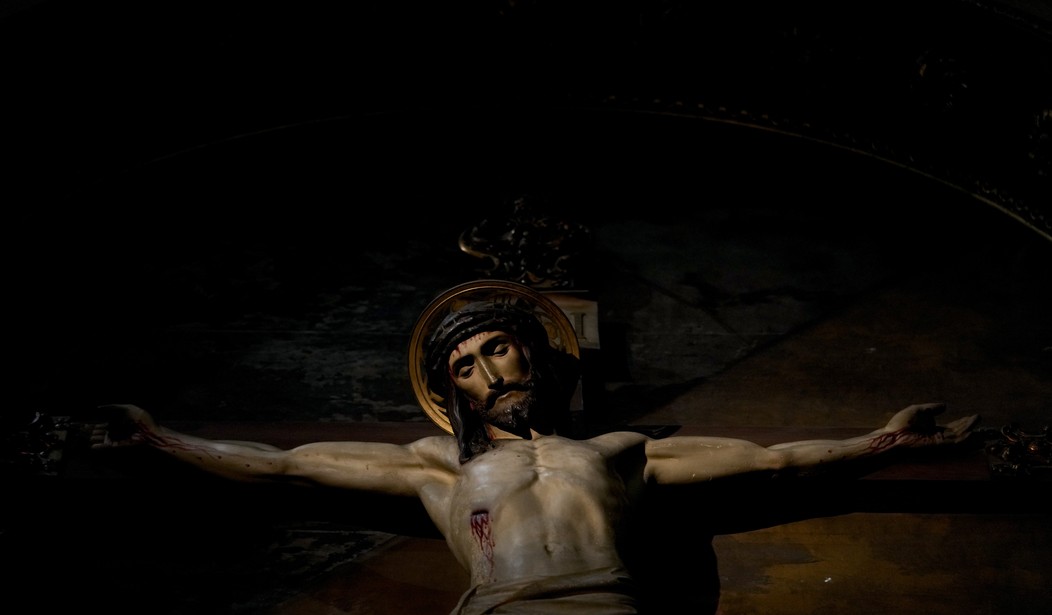
Long before the age of cable news and social media, this dynamic appeared in its most dramatic form during the trial of Jesus of Nazareth.
If ever there was a case where innocence was buried beneath accusation, the final hours of Jesus’ life remain the most powerful example in human history.
The Gospel accounts describe something that feels uncannily familiar to modern readers: a carefully constructed narrative campaign. From the beginning of Jesus’ ministry, the religious authorities struggled to contain him. His teachings challenged their authority. His growing popularity threatened their control of the religious order.
Eventually, the conflict moved from debate into prosecution.
Matthew’s Gospel records the moment with remarkable bluntness: “The chief priests and the whole council were looking for false testimony against Jesus so that they might put him to death.”
The Greek text is even more revealing. The authorities were seeking ψευδομαρτυρία (pseudomartyria)—literally false witness. The search for evidence did not begin with truth but with the need to produce an accusation strong enough to sustain the narrative.
Narrative first. Evidence later.
The religious leaders faced a practical problem, however. Under Roman occupation, they lacked the legal authority to execute a prisoner. Their narrative, therefore, required another stage.
Jesus was delivered to the Roman governor, Pontius Pilate.
Pilate immediately sensed what was happening. Luke records the charge brought before the Roman court: *“We found this man misleading our nation.”*² The accusation was framed politically rather than theologically. It was designed to provoke Roman intervention.
The courtroom had become the arena where narrative and power would collide.
Pilate asked Jesus one of the most famous questions in history: τί ἐστιν ἀλήθεια? — “What is truth?”
The Greek word ἀλήθεια (aletheia) means more than factual accuracy. It refers to truth that has been uncovered or revealed, reality standing unconcealed before us. Pilate understood that something deeper than legal procedure was unfolding in the courtroom.
Yet by this point, the machinery of accusation was already moving.
The New Testament uses a legal word that captures the moment perfectly: κατηγορία (katēgoria)—a formal accusation brought before a tribunal.⁴ Once accusation begins to drive the process, the courtroom can quickly become less a place where truth is discovered and more a place where narratives are enforced.
The Gospels show exactly how this unfolded.
Witnesses were produced. Charges were repeated. Crowds were stirred.
Matthew records that the chief priests persuaded the crowd to demand the release of Barabbas instead. The prosecution had successfully expanded its narrative beyond the courtroom into the public square.
At that point, even the Roman governor became trapped inside the story.
Pilate recognized the injustice of the charges. Yet Roman governors were judged primarily by their ability to maintain order. A riot during Passover in Jerusalem could end a political career—or worse.
So Pilate performed the gesture that has echoed through history.
He washed his hands before the crowd.
“I am innocent of this man’s blood.”
Yet the execution proceeded anyway.
The trial of Jesus reveals something deeply unsettling about human institutions. Courts exist to pursue justice, yet they operate within political and social pressures that can distort the search for truth. Once accusations accumulate and public anger gathers momentum, legal processes themselves can begin to move in directions detached from reality.
Fear spreads faster than evidence. Accusations travel farther than truth. Narratives simplify complicated realities into emotionally satisfying stories.
Once that process begins, reversing it becomes extraordinarily difficult.
The trial of Jesus exposes that dynamic with devastating clarity.
False witnesses appear. Crowds gather. Accusations multiply.
Eventually, even the judge recognizes the injustice—and still the process continues.
That is why the story remains so unsettling two thousand years later. It is not merely a religious event recorded in Scripture. It is a mirror held up to every age.
The legal machinery worked exactly as designed. Witnesses testified. Charges were filed. The crowd demanded judgment. The governor performed the rituals of justice.
And yet the innocent man was condemned.
History has repeated the pattern many times since.
Narratives rise. Crowds gather. Accusations multiply.
And somewhere in the middle of the noise stands a human being whose innocence becomes almost irrelevant once the story has taken hold.
Which leaves us with the same question Pontius Pilate asked two thousand years ago—a question that echoes today in every courtroom, newsroom, and political arena.
When the narrative is already written, when accusations are already circulating, when the crowd has already chosen its side—τί ἐστιν ἀλήθεια?
What is truth?



Join the Conversation
VIP members get the ability to comment on articles.