







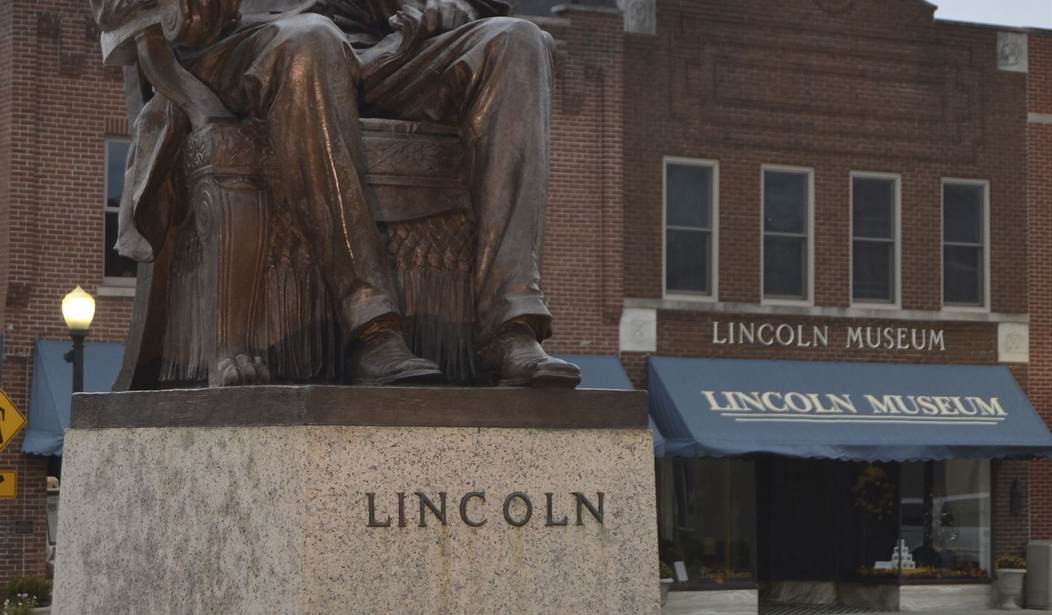
One hundred and fifty-five years ago, the bloodiest conflict in America’s history was finally coming to an end.
It was mid-April 1865. The Civil War was almost over, after more than 600,000 deaths.
Just five days earlier, on April 9, Confederate General Robert E. Lee had surrendered the Army of Northern Virginia to Union General Ulysses S. Grant following the last major battle of the war, at Appomattox Court House, in Virginia.
Defeated southerners, their hearts broken, were returning to their families at last.
Yet just as the nation could see a brighter day—just when it seemed as though the killing would finally end and normal life might return—a new disaster struck.
At 10:20 p.m. on Good Friday night, one of the most famous men in America – a celebrity actor named John Wilkes Booth – entered a corridor that led to the box seats in Washington D.C.’s famous Ford’s Theatre. Below, on the stage, actors were performing a light British comedy named Our American Cousin.
In the box seats above the stage, President Abraham Lincoln sat with his wife, Mary, and two young guests. Lincoln was chuckling. This had been the happiest day Lincoln had enjoyed in many years.
In his right hand, Booth held a .44 caliber derringer. He stood outside the door leading to the box seats, as usual waiting for his cue.
Suddenly, the audience exploded in laughter at a famous joke in the play.
Booth pushed the narrow door open. He glanced to his right, took two steps forward, and reached out so the derringer was just six inches from the back of Lincoln’s head. And squeezed the trigger.
The assassination of Abraham Lincoln instantly threw the nation into turmoil.
Within hours, virtual martial law was declared as news of the killing flashed across the nation’s telegraph lines. Just as America was beginning to dream of a future again, the country found itself once again plunged into bloody conflict.
The peace initiatives Lincoln had proposed for the South were suddenly in doubt. In a split second, Booth almost succeeded in derailing the end of the Civil War.
Yet after 155 years, many of the details of Lincoln’s assassination are still disputed or unknown:
Why did Booth do it – and what purpose did it serve? At this point, the war was effectively over.
Did Booth act alone... or did leaders of the Confederacy help him?
How had a gentle-spirited family of actors, poets and physicians, who supported the Union and opposed slavery, produce a presidential assassin?
Where was Lincoln’s police bodyguard?
How was Booth able to evade the largest manhunt in history despite having broken his leg and being unable to walk?
While the circumstances of Lincoln’s assassination were unique to that time and place, the political hatreds of that era seem uncomfortably familiar.
Then, as now, the country stood sharply divided between Republicans and Democrats.
The Democrats, in both the north and the south, claimed to represent the common man against the depredations of capitalism. The Republicans championed economic development and protective tariffs and opposed the institution of slavery.
Then, as now, journalists, celebrities and artists hurled intemperate condemnations at the Republican leader – even producing fake news about a Republican plan for forced intermarriage.
“Lincoln is a worse tyrant and more inhuman butcher than has existed since the days of Nero,” wrote Wisconsin newspaper editor Marcus M. Pomeroy.
“The man who votes for Lincoln now is a traitor and murderer.... And if he is elected to misgovern for another four years, we trust some bold hand will pierce his heart with dagger point for the public good.”
With rhetoric such as this, it was almost inevitable that someone would act on it.
The political hatreds that unleashed the Civil War burned in the hearts of many even at the end – and remain with us in our own polarized age.
The Lincoln assassination remains relevant because it reminds us that the intemperate rhetoric and actions of a few can result in devastating consequences for the many.
Robert J. Hutchinson is an award-winning writer and the author of numerous books of popular history. including What Really Happened: The Lincoln Assassination (2020).
Join the Conversation
VIP members get the ability to comment on articles.