





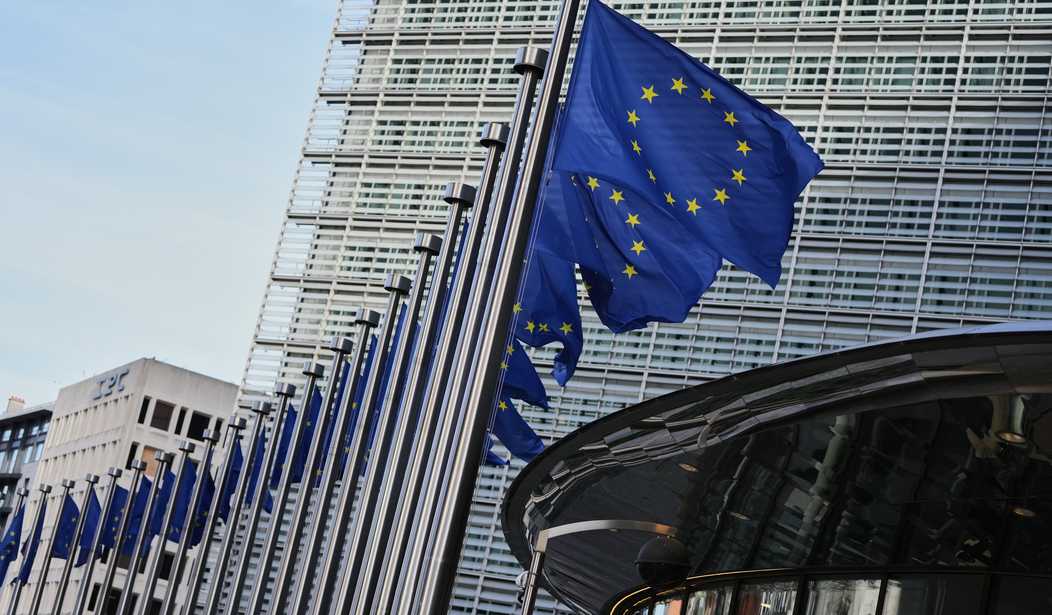
Goods and services aren’t the only things that countries trade with each other. Oftentimes, laws in one country are forced upon the companies of another country. The latest case: the European Union (EU) is plowing forward with plans to force U.S. companies to import woke ESG and digital censorship regulations. The Orwellian-named regulations, the Corporate Sustainability Due Diligence Directive (CSDDD) and the Digital Markets Act (DMA), would impose regulatory burdens on U.S. businesses that operate globally, making them subject to foreign principles and provisions not ratified by Congress. Now more than ever, we need President Trump and his allies in Congress to fight this assault on American sovereignty to defend U.S. businesses and workers from these discriminatory regulations.
The CSDDD forces American companies to succumb to restrictive EU climate and ESG regulations, imposing a radical political agenda on American workers and consumers and ignoring basic free market principles. The directive, which results in higher compliance and monitoring costs for businesses operating in the EU, is essentially coercing American companies to fund the EU’s woke climate agenda. Estimates have projected that CSDDD will likely cost America more than $1 trillion in measurable costs and even more in immeasurable costs. It’s just one example of regulations that target American businesses, resulting in higher prices for American consumers, weakening American innovation, and giving our economic competitors an unfair advantage.
The DMA sanctions large American technology companies that provide invaluable services for small business owners, while exempting companies headquartered in the EU. These unnecessary restrictions, coupled with a digital services tax, burden mom-and-pop businesses trying to tap into an increasingly digital economy – whether it’s using a platform like Amazon to enter the digital marketplace or running ads on Meta to promote their business.
For instance, the DMA can require companies to fund extensive redesigns of their products and services, such as removing self-preferencing, expanding user controls, and opening their ecosystems to external developers and devices. These changes amount to an average of $200 million in added compliance costs per year for a large U.S. technology company.
These costs do not live in a vacuum. They impact American businesses’ ability to pay competitive wages, build up their workforce, and keep their platforms secure for all users. Companies like Apple have warned that the DMA would weaken their privacy and security standards for their EU users, exposing them to more risk from third-party developers.
What’s worse, as the EU threatens to rip apart American technology companies, it is giving China’s state-owned companies a free pass to infiltrate the digital marketplace without any checks. The DMA only regulates one Chinese company compared to five American companies. It’s no secret that American leadership in innovation is the envy of the world. As the AI race accelerates, we cannot allow EU regulations to undermine our national and economic security and cede our advantage to China.
It's no wonder the Trump administration made this a priority in its trade negotiations with the Europeans. When the joint U.S.-EU trade agreement framework was signed back in August, President Trump received assurances from the EU that it would address these regulatory concerns.
Nearly four months later, the EU has failed to take meaningful steps to remove these barriers. Yet, they have the audacity to ask the U.S. to lower steel and aluminum tariffs. You can’t make this up. Thankfully, Commerce Secretary Howard Lutnick is driving a hard bargain, reiterating that the EU must roll back its digital regulations in exchange. Additionally, U.S. Trade Representative Jamieson Greer admitted that the EU has not been “responsive,” citing that the U.S. has investigatory tools at its disposal to achieve an outcome that benefits the U.S. and the bloc.
President Trump has effectively used his executive authority to fight back against unfair trade agreements. With a Supreme Court decision looming on broader tariffs, lawmakers should proactively use the tools available to them to level the playing field for American businesses and workers. As the Trump administration is continuing to renegotiate elements of the trade framework with the EU, the U.S. Trade Representative should be prepared to launch a Section 301 investigation under the Trade Act of 1974 if the EU refuses to repeal these regulations.
President Trump’s allies in Congress should also be willing to reconsider enacting Section 899, “reciprocal taxes” against Europe. Since these discriminatory regulations distort the global market, creating a disadvantage for American businesses, Congress can threaten these taxes on investors and corporations from foreign countries with policies deemed unfair against American companies. This tax provision creates a pathway for regulators to ensure that American companies, consumers, and workers receive equal treatment.
America First means prioritizing American businesses and workers at all costs. Congress must stand firm and punch back against these discriminatory regulations by leveraging every tool or action at its disposal to ensure the EU fulfills its end of the bargain. President Trump has made significant progress in protecting American businesses from unfair trade practices. However, if the executive branch’s authority on trade issues is curbed, Congress should be willing to fill the void and send a clear message that EU regulators cannot dictate American innovation and leadership.
Rick Santorum is a former U.S. senator from Pennsylvania.
Editor’s Note: Do you enjoy Townhall’s conservative reporting and opinion? Support our work by joining Townhall VIP! Use the promo code FIGHT to get 60% off your VIP membership!


Join the Conversation
VIP members get the ability to comment on articles.