





The craze for renaming, removing and retitling historic landmarks grows crazier. Instead of preserving our past, imperfections and all, many would just wipe it clean of anything shameful. But instead of creating a perfect past, they may succeed only in rendering it perfectly empty.
There are still lonely voices of reason and perspective out there who realize that in vandalizing the past, we lose not only our memory but our memory of how we tried to reshape it. One such voice is that of Gov. Dennis Daugaard of South Dakota, who has objected to the federal government's decision to give Harney Peak a new name -- Black Elk Peak -- because Gen. William S. Harney led a raid against the Sioux in 1855. The governor said doing so would result in "unnecessary expense and confusion."
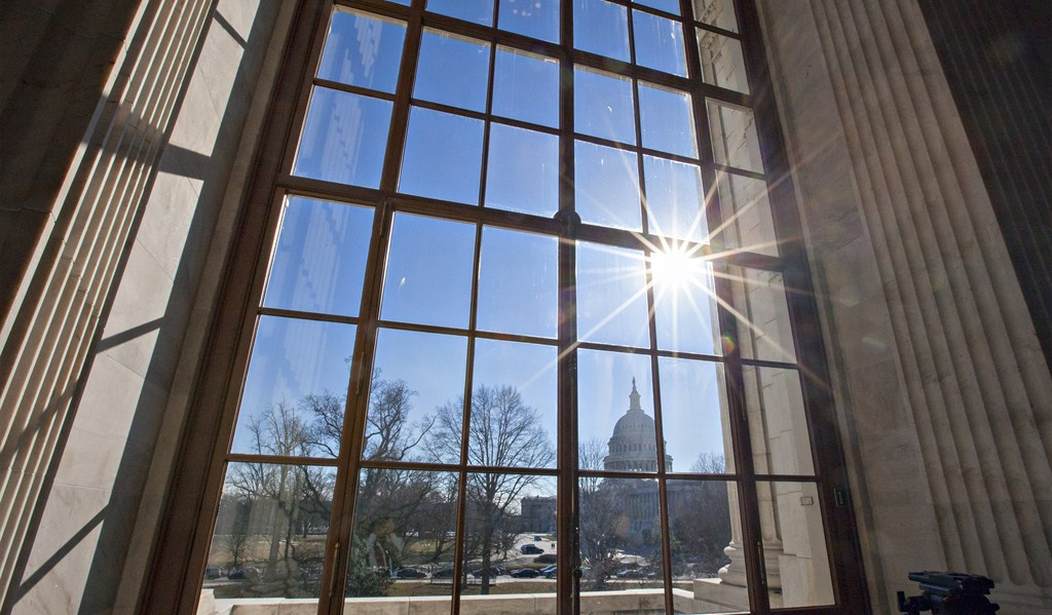
The same objection could be made against attempts to rename the Russell Senate Office Building in Washington because it's named for Richard Russell, whose distinguished career in the Senate included his long-time opposition to historic civil rights acts. Which would be like changing the name of the J. William Fulbright College of Arts and Sciences at the University of Arkansas because of his hand in framing the notorious Southern Manifesto -- and ignoring his positive contributions to American history like creating the Fulbright Scholar Program.
Yet a professor emeritus of American history at one of the Eastern universities -- David Bennett -- claimed that Sen. Russell's "core legislative legacy was built on massive resistance to racial equality," formerly called states' rights. So the professor proposed to rename the building named for him, formerly known as the Old Senate Office Building. He would now rename it in honor of the late Ted Kennedy, whose own checkered history included more than one scandal. Once this sad process of remodeling history is set into motion, there may be no end to it. Any more than there is an end to political obsessions.
How things have changed since 1972, when a bipartisan resolution co-sponsored by Democrat Robert Byrd of West Virginia and Republican Howard Baker of Tennessee to dedicate the Old Senate Office Building to Sen. Russell passed the Senate -- with scarcely any opposition at all. The lone objection recorded came from farsighted Sen. Philip Hart, who himself would later have a Senate office building named in his honor. He noted that it was "unwise to anticipate history's verdict" on those currently serving in the Senate. As for Clio, muse of history, she took no part in the debate, but one can imagine her bored expression, for she's seen it all before.
Purges of history come and go in politics -- not just in totalitarian societies but in supposedly democratic ones like ours. And they are often initiated with more than due ceremony. Among others, Vice President Al Gore lauded Sen. Russell in 1996 when the late senator's statue was unveiled. "Dick Russell," he said, "had a heart of gold and was one of the most honorable individuals ever to serve in the United States Senate throughout its more than 200-year history." Which covers a lot of time and a lot of great senators, but Al Gore has seldom has met a cliché he could resist repeating. Nor an overstatement.
Instead, why not just let all these historic sites be? Yes, including the deeply embarrassing ones. Suppose there were an Alger Hiss School of American Diplomacy, or a Benedict Arnold State Park? Then let them stand unmolested as testimony to the country's faith that reason will eventually overcome its opposite. Though it might be useful to put up an historical plaque noting just who they were. The way an asterisk might be added to the record of a champion in the annals of sport when said champion was found to have been less than perfect.
To quote an essay by Kenneth Minogue in the American Conservative, "perfection, by its nature, destroys the possibility of progress." What's more, an unchanging, immaculate conception of history would obscure the difference between progress and its opposite. It would all be the same.
Recommended reading: "Lest We Forget: The merit of immoral memorials" by Jonathan Bronitsky in the Aug. 8 issue of the Weekly Standard.



Join the Conversation
VIP members get the ability to comment on articles.