





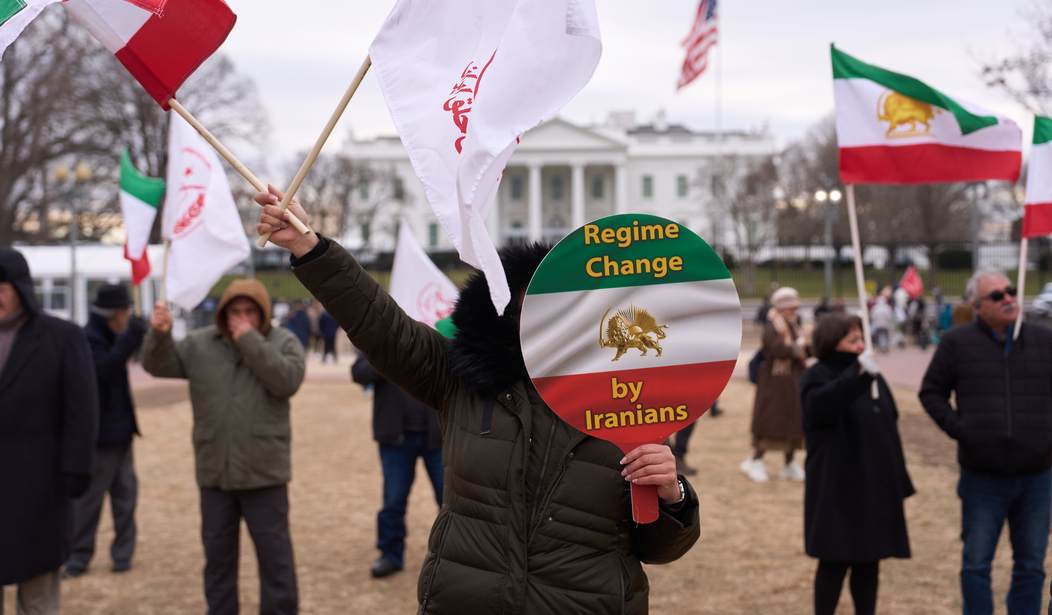
The day of reckoning for Supreme Leader Ali Khamenei and the cabal that has governed a proud nation through a deluge of blood may finally be at hand. What ignited on January 6 as a strike by Tehran’s Grand Bazaar merchants—born of a plummeting currency and a crushing economic malaise—has metastasized into a nationwide rebellion. What began as a desperate cry for livelihoods has evolved with startling speed into a fundamental challenge to the regime’s very existence.
In the western reaches of Ilam Province, the "rebellious youth" of Abdanan and Malekshahi recently forced the regime’s Praetorian Guard into a humiliating retreat. In fierce, hand-to-hand skirmishes with the Revolutionary Guard (IRGC) and the state security apparatus, citizens compelled the machinery of repression to abandon both cities. Amidst rolling blackouts and besieged police stations, a singular truth has emerged: the veil of fear has lifted, and repression has lost its sting.
Khamenei has spent the last year attempting to prove otherwise. Despite the judicial murder of approximately 2,200 people in 2025, a campaign of state terror designed to shock the public into silence, he has failed to turn the tide. This current wave bears the hallmarks of a movement more determined, organized, and expansive than any that preceded it. The chants echoing from the provinces to the capital, “Death to the dictator” and “Death to the oppressor, be it the Shah or the Leader,” are more than slogans; they are a popular referendum against every form of tyranny.
As the regime falters, a curious counter-narrative has emerged, amplified by certain media outlets, with opaque interests such as the Farsi television station, Iran International. They suggest that Reza Pahlavi, son of the deposed Shah, represents the natural alternative to clerical rule. Their strategy relies on the amplification of staged nostalgia: circulating curated videos and suggesting that a people weary of theocracy are yearning for a return to the throne. A careful, almost forensic review of dozens of videos circulating on social media reveals that some have been artificially overlaid with chants in support of Reza Pahlavi. In other cases, identical footage is recycled and broadcast under the names of different cities, creating a misleading impression of widespread support.
While decades of clerical mismanagement have naturally birthed a longing for a more stable past, nostalgia is no substitute for democratic legitimacy. The pro-monarchy movement lacks authentic roots in contemporary Iranian society. With over 70% of the population born after 1979, the monarchy is not a lived memory but a historical artifact.
Furthermore, the conduct of some "monarchist" groups has raised suspicions of regime infiltration. In Mashhad, provocateurs chanting pro-Pahlavi slogans attacked mourners at a funeral, only to be outed as members of the Basij when their identification cards were discovered.
The regime’s motive is transparent: to fracture the opposition by injecting the illusion of a monarchical restoration, thereby distracting from the unified demand for a democratic future. This gambit is failing; as the protests deepen, the calls for a democratic, secular republic are drowning out the echoes of the past. Even under scrutiny, Reza Pahlavi’s proposed "roadmap" is fundamentally problematic. Far from outlining a democratic transition, it seeks to consolidate executive, judicial, and security powers into the hands of a single, unelected individual for an indefinite period. This is not a bridge to freedom; it is a blueprint for a rebranded autocracy.
Iran has endured four dictatorships in the last 120 years, from the twilight of the Qajars to the iron-fisted rule of the Pahlavis and the current theocratic nightmare. The Iranian people have no appetite for a fifth. If the answer were simply another dictator, Khamenei already provides the most brutal version available.
The defining characteristic of this uprising is its psychology. The burden of fear has shifted from the oppressed to the oppressor. We see it in the images of security forces abandoning their posts, in young women standing unflinching before armored cannons, and in neighborhoods that treat curfews with open contempt. The regime now relies solely on naked force because it has utterly forfeited the consent of the governed.
Executions and internet blackouts no longer cow the public; they merely broadcast the regime's desperation. They expose a system whose legitimacy has evaporated, clinging to power through the singular, fraying thread of violence.
For too long, Western capitals have treated Iran’s rulers as a permanent fixture and its people as a footnote. This perspective is both morally bankrupt and strategically myopic. True stability in the Middle East will not come from a clerical state that exports terror, but from a society determined to reclaim its sovereignty.
The international community must now: First, formally recognize the Iranian people’s right to resist tyranny. Second, prosecute regime officials for crimes against humanity and mass executions. Third, cease the legitimization of the IRGC through diplomacy that ignores domestic carnage. Fourth, reject any transition—clerical or monarchical—that replaces one autocrat with another.
The fire on Iran's streets is fueled not by nostalgia, but by possibility. This is a generation refusing to inherit the chains of their fathers. The mandate is clear: no to the Shah, no to the Supreme Leader—yes to a secular, democratic republic. For the first time in nearly half a century, that future is not just a dream; it is an imminent reality.
Editor’s Note: Do you enjoy Townhall’s conservative reporting that takes on the radical left and woke media? Support our work so that we can continue to bring you the truth.
Join Townhall VIP and use promo code FIGHT to receive 60% off your membership.


Join the Conversation
VIP members get the ability to comment on articles.