





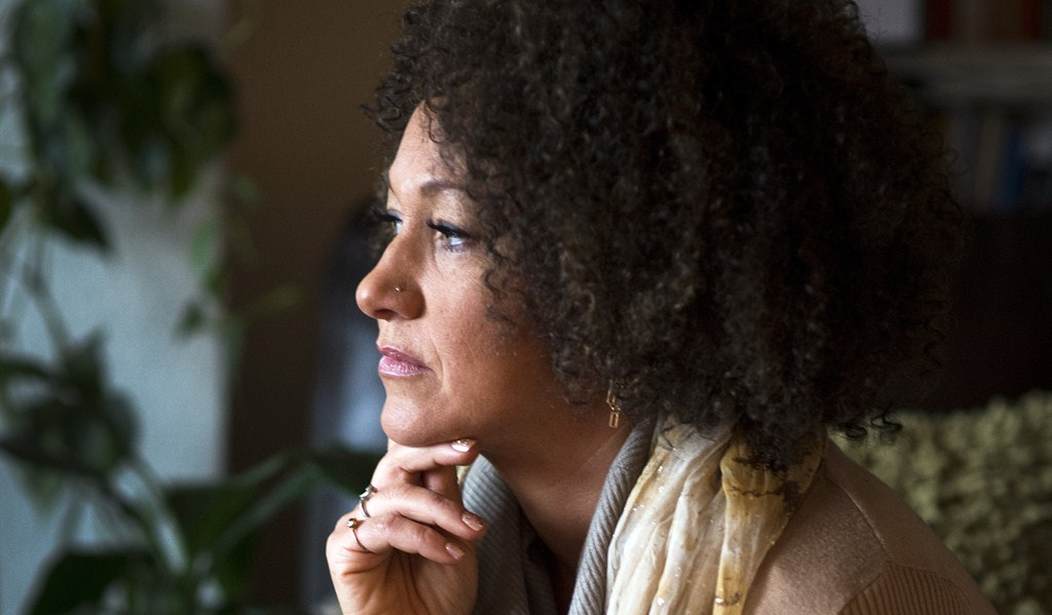
Rachel Dolezal may be the single worst person imaginable to provoke a serious discussion on race in America -- but provoke it she does. The woman has told so many lies, it's easy to lose sight of the important question her story raises: What is race, anyway?
Dolezal was born to fair-skinned parents whose ancestors came from Europe: Germany and what was then Czechoslovakia. We call such people white or Caucasian, though they are neither white in a literal sense or from the Caucasus. We define the racial group that includes the Dolezals so broadly today that it includes people as diverse as Danes and Arabs.
But the definition of a white race itself has transmogrified over time and place. In the early 20th century, amateur anthropologist and attorney Madison Grant wrote a book called "The Passing of the Great Race" that influenced the immigration debate of the time. In it, Grant argued for the superiority of what he dubbed the Nordic race, which included most Northern Europeans, against what he considered the corrupting influence of the Mediterranean and Alpine "races" that encompassed those from Southern and Eastern Europe. And indeed the immigration laws passed in the early 20th century were aimed at excluding more Italians, Poles, Russian Jews and others that lawmakers at the time considered racially inferior.
The 1930 Census included Mexican as a race. Protests from the Mexican government and Americans of Mexican descent in the U.S. led to removal of the racial classification afterward, but today we ask all who complete the Census to identify whether or not they are Hispanic, which the government carefully clarifies are persons who may be of any race. On the other hand, Mexican-American activists in the 1960s adopted "La Raza," the race, as their identity, and many still use the term today, including the National Council of La Raza, a leading Hispanic civil rights group.
Our most troubling racial classification has always been around the category of those whose heritage is African. That Africans were brought here in chains will always be our Original Sin, one that even a Civil War has never seemed fully to expiate. Years of discrimination on the basis of skin color followed passage of the 13th, 14th and 15th Amendments, which abolished slavery and granted citizenship and the right to vote to former slaves and their progeny. For decades, the "one drop rule" meant anyone who had even one great-grandparent who was black could be excluded from schools, denied a job or prevented from marrying whom he or she chose in many parts of this country.
But African-Americans are not the only group who have faced discrimination on the basis of race or color. Our immigration laws excluded Chinese in 1882 and later other Asian immigrants, and foreign-born Asians could not become naturalized U.S. citizens until 1952. Like African-Americans, Asians could not marry whom they chose. Seven states prohibited Asians, dubbed Mongolian in many statutes, from marrying whites in the 19th and 20th centuries.
Racial classifications have always served the purpose to divide and discriminate, so why do we insist on continuing to use them? I, for one, refuse to check the boxes on forms asking my race. But government today is the leading driver in asking people to identify their race on everything from college to loan applications. When I refuse to check the box required, the loan officer does it for me, because the government insists: "If you do not furnish ethnicity, race or sex, under federal regulations, this lender is required to note the information on the basis of visual observation and surname if you have made this application in person."
The real problem, it seems to me, isn't that Rachel Dolezal called herself black. It's that all of us are forced to choose a racial identity in the first place.



Join the Conversation
VIP members get the ability to comment on articles.