






Even with its centuries-old roots throughout the region, is Christianity history in the West?
In a speech at the Catholic University of America, in Washington, D.C., the visiting archbishop of Vienna, Cardinal Christoph Schonborn, warned that "trends questioning the Christian foundation of Europe, and aggressively opposing it, are becoming stronger in several countries and in the European political arena in general.
"Christianity is for many a foreign element in a world determined by reason, enlightenment and democratic principles," he asserted. Interestingly it's this "foreign element" that Cardinal Schonborn sees as essential to Christianity's role in the modern world: "Europe can only play its role in the concert of world cultures when it retains Christianity, this foreign body, as a part of its identity."

Across the pond, the British seemed to get the message, setting aside legislation that would put unprecedented restrictions on religious freedom in the name of a spurious liberty. It probably helped that the Brits were shepherded by the pope himself; during a gathering of bishops from England and Wales in Rome, Pope Benedict XVI heralded the UK's "firm commitment to equality of opportunity for all members of society." But he had critical words for pending UK legislation that could compel religious organizations to make hiring choices in conflict with their beliefs. "In some respects it actually violates the natural law upon which the equality of all human beings is grounded, and by which it is guaranteed," he said.
Mandates proposed by what is erroneously called the "equality bill" would remove existing exemptions for religious organizations on employment and services. Catholic officials in Britain believe that they could be forced to ordain women to the priesthood -- an untenable position for the Church and one that the government certainly has no business forcing it into.
The bill has been referred to as "an existential threat" to Christian churches in Europe. Sir Jonathan Sacks, the chief rabbi in the United Kingdom, said: "When Christians, Jews and others feel that the ideology of human rights is threatening their freedoms of association and religious practice, a tension is set in motion that is not healthy for society, freedom or Britain."
In the wake of the papal rebuke, Britain has put a stop to this -- for now.
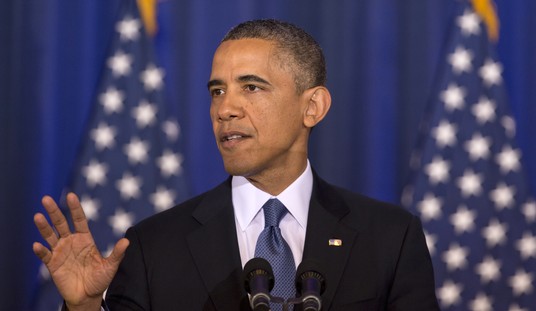
But the attitudes expressed in the bill are not foreign to us here in America. President Barack Obama's nominee for the Equal Employment Opportunity Commission, a Georgetown University professor named Chai Feldblum, wrote in 2006: "Just as we do not tolerate private racial beliefs that adversely affect African-Americans in the commercial arena, even if such beliefs are based on religious views, we should similarly not tolerate private beliefs about sexual orientation and gender identity that adversely affect LGBT people." Feldblum believes that there is a "zero-sum game" being played between religious freedom and the homosexual activists, in which "a gain for one side necessarily entails a corresponding loss for the other side." Religious liberty, in Feldblum's estimation, must give.
This conversation about religious liberty, homosexuality and the definition of rights will be a prominent one this term as the U.S. Supreme Court takes up Christian Legal Society v. Martinez, in which it will decide whether religious groups on college campuses must be open to students who do not share their beliefs. The Court will decide, in other words, whether we're still free to associate or not.
The conflict between religious liberty versus LGBT activists doesn't have to be this fraught. As David French, a lawyer for the Alliance Defense Fund, which specializes in religious-liberty litigation, recently put it: "If your idea of law is that it is an instrument of domination and exclusion, then, yes, legal disputes between ideological opposites are 'zero-sum games.' But if your idea of the Constitution is that it protects the fundamental liberties of all citizens (which happens to be the way the document is written), then -- quite literally -- everyone wins when those liberties are vindicated."
Christianity will be history if the history we're making today divorces itself from its roots -- moral, yes, but legal, ethical, and political, too. And while more of us need to have a heightened awareness of the threats menacing Christianity throughout the West -- mercifully, it's not just a pope, a cardinal and a rabbi who are paying attention.

Join the Conversation
VIP members get the ability to comment on articles.