


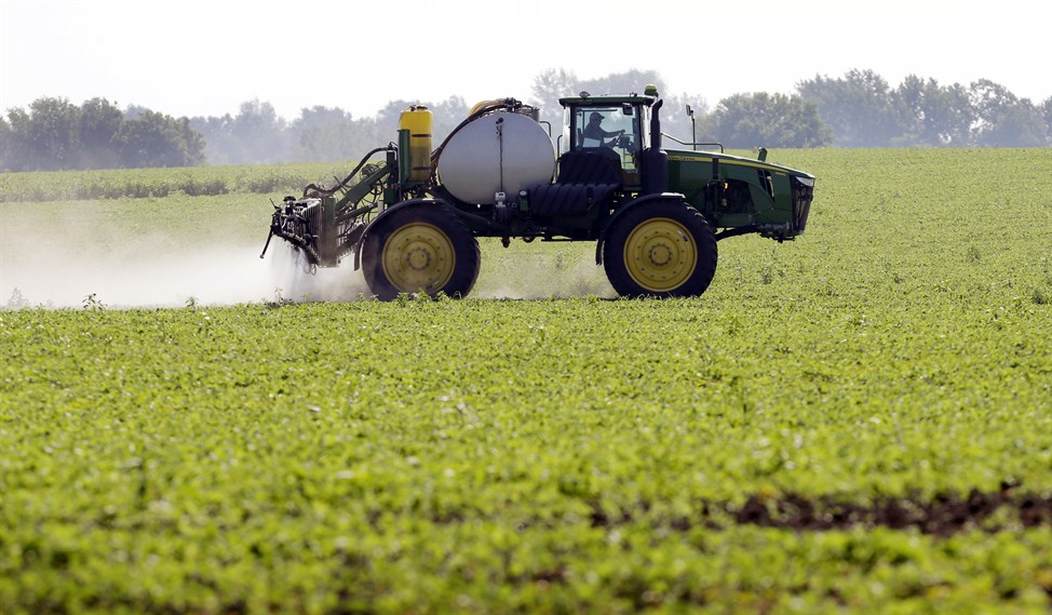
Bayer’s acquisition of Monsanto has some critics concerned that the merger would deter innovation in the agricultural sector and impact overall productivity. Despite the doomsday predictions of a few “chicken littles” around Washington D.C., such fear mongering is misplaced and could not be further from the truth. If nothing else, the merger of these two great industry innovators would streamline innovation capabilities and increase productivity within the sector, benefiting farmers, consumers and the country as a whole.
While recent concerns have been expressed by some regarding the impacts to productivity and crop yields of a potential merger, the facts do not support such assertions. Thanks in part to advances made in part by both Monsanto and Bayer in the area of crop protection and plant biology, from 1993-2013 corn yields across the nation increased almost 60 percent. From 1978-2008 new hybrid varieties of corn for instance, led to an increase in yields over the last 30 years from 90 to nearly 150 bushels per acre with that number projected to rise to over 200 bushels per acre in the coming years.
Such advances, pioneered by companies such as Monsanto, have allowed for U.S. farmers to meet the ever-increasing needs of a growing domestic and international demand. Globally, in just the last decade, consumption of corn has skyrocketed by 35 percent while soybeans have seen a 50 percent increase in demand during the same time period. The U.S. agriculture industry is now able to grow more than twice as much food on a single acre as compared to yields just 40 years ago.
Advances in crop technology led by industry innovators have also allowed for ever growing demand to be met with limited increase in the amount of acres tilled, resulting in greater yield with less environmental impact. Specifically, responding to such increases has only required a six percent increase in tilled acres.

New innovations are particularly important when looking at the growing demand U.S. farms face and the ever-diminishing land available. Yet despite such restrictions, North American agriculture, led by American innovation, has become a global example of a system with the highest productivity in the world yet the lowest greenhouse gas emissions. Additionally, such improvements to agronomic management and biotechnology in general have led to greater nutritional content for the food Americans rely on every day to feed their families.
Sadly, what American consumers won’t hear from anti-free market opponents criticizing pending mergers within the industry is that domestic consumers, and just as importantly consumers in developing countries, are better off today thanks to the research and industry innovations in technology and science pioneered by companies such as Monsanto and Bayer, among others.
By criticizing and calling into question the efforts of such leading innovators to come together and cohesively improve the agricultural industry and the resulting products that have allowed U.S. producers to supply increasing demands, opponents are only standing in the way of needed innovations and potentially subjecting American consumers and the global market to shortfalls in supply and failures in product quality.








Join the conversation as a VIP Member