





Democrats are playing a “game of chicken” with their tax base that they’ll ultimately lose. And won’t recover from. The reason is that the economics that have kept businesses in uncompetitive jurisdictions will be an even bigger barrier to their return.
There are myriad examples of Democrats driving away their business tax base: Mayor Zohran Mamdani in New York, Mayor Katie Wilson in Seattle, California’s proposed billionaire tax, blue states rushing to pass higher income, wealth, and corporate taxes.
The trend is unmistakable. It is likely also uncorrectable.
The reason is relocation costs: those all-in costs required to uproot complex business operations. Just because there is a lower cost of operation in one location; this does not mean businesses will relocate there.
Relocation is expensive, finding suitable replacement venues isn’t easy, moving personnel is difficult (with perhaps many unwilling to go), locating, hiring, and training new personnel takes time and money. These added real-world costs add significantly to businesses’ calculation to relocating.
Democratic jurisdictions have benefited from such costs historically. Because relocation costs make it expensive to move, businesses will stay—and pay—up to their all-in costs of moving. Staying put means foregoing relocation costs and being willing to pay—in the form of higher taxes—to avoid them.
Blue jurisdictions have taken this reality to heart and added taxes. Plucking their roosting chickens of just so many feathers that they’ll tolerate the loss without leaving and continue laying. However, having built a cycle of ever-increasing spending and taxes, Democrats now can’t stop. In their eyes, ever more reasons for ever more spending and taxes arise. This cycle is driving them to pursue taxes beyond businesses’ relocation costs of moving.
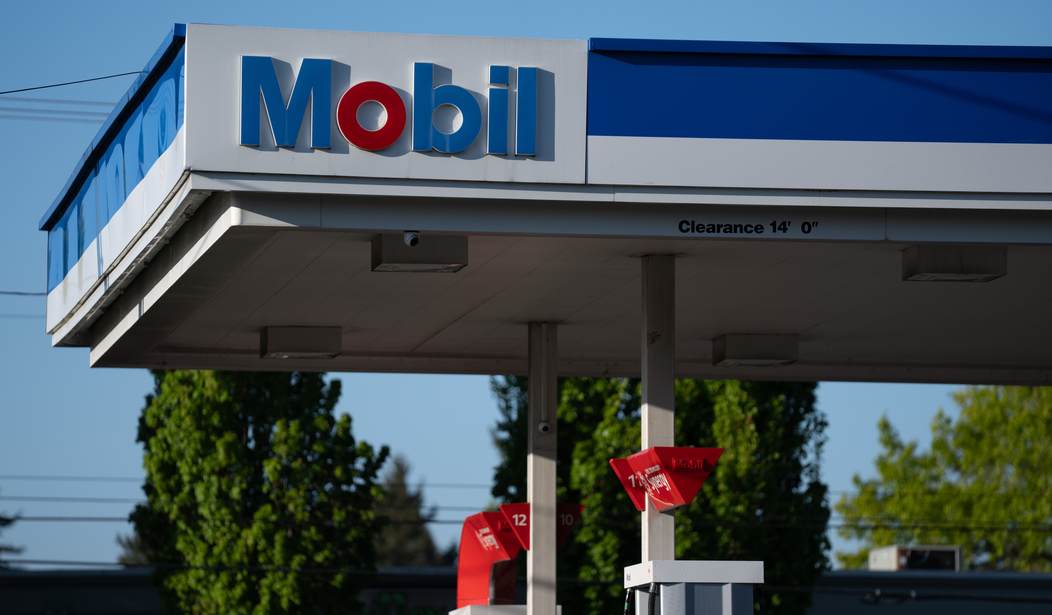
At the same time, costs of relocating in today’s age of interconnectivity are falling, while incentives to relocate to lower tax-and-regulate red states are rising. Not surprisingly, businesses are seeing this and acting on it. ExxonMobil shareholders just voted to leave New York for Texas. ExxonMobil isn’t alone.
The problem for blue jurisdictions is that these moves may prove irreversible. The reason is that relocation costs also exist for returning. Why would businesses pay these again to return to jurisdictions that were already cost-uncompetitive when they left?
For blue jurisdictions to lure businesses back they will not simply need to stop raising their costs or even reducing these to former levels; they will need to lower these well below former levels—and convince businesses these changes will continue for a long time. Yet that is exactly the opposite of what blue jurisdictions are doing. Instead, they are raising taxes and regulatory costs even higher.
The upshot of this is that blue jurisdictions that are so cavalierly (Katie Wilson and “bye”) driving out their business tax bases—and income tax bases of those owning and working in these businesses—are unlikely to see these companies return anytime soon.
Entrapped in their increasingly high spending, taxing, and regulating cycles, they cannot reverse course without violating their own ideology and alienating their political base—activists, leftist voters, and unionized civil servants. They will not stop raising businesses’ costs and driving them to relocate, while red jurisdictions appear equally committed to doing the opposite.
And to attract these businesses back, blue jurisdictions must lower their costs of doing business far enough below prior levels to offset the cost of returning. For uncompetitive blue jurisdictions, the need to become hyper-competitive looks insurmountable now. Particularly so with their influx of even more radically left politicians.
The relocation costs that were until recently a wall keeping companies from leaving blue jurisdictions are now a barrier that will keep businesses from coming back.
In a “game of chicken,” one car approaches another head-on; the saner driver who veers away from the head-on crash “loses” in the eyes of the driver who does not. However, the one who veers also lives to drive another day. No wonder, today’s businesses are veering off from the blue jurisdictions barreling at them. And no wonder they won’t be willing to encounter again the driver who confronted them with a game of chicken.
J.T. Young is the author of the recent book "Unprecedented Assault: How Big Government Unleashed America’s Socialist Left" from RealClear Publishing. Follow him on Substack.


Join the Conversation
VIP members get the ability to comment on articles.