







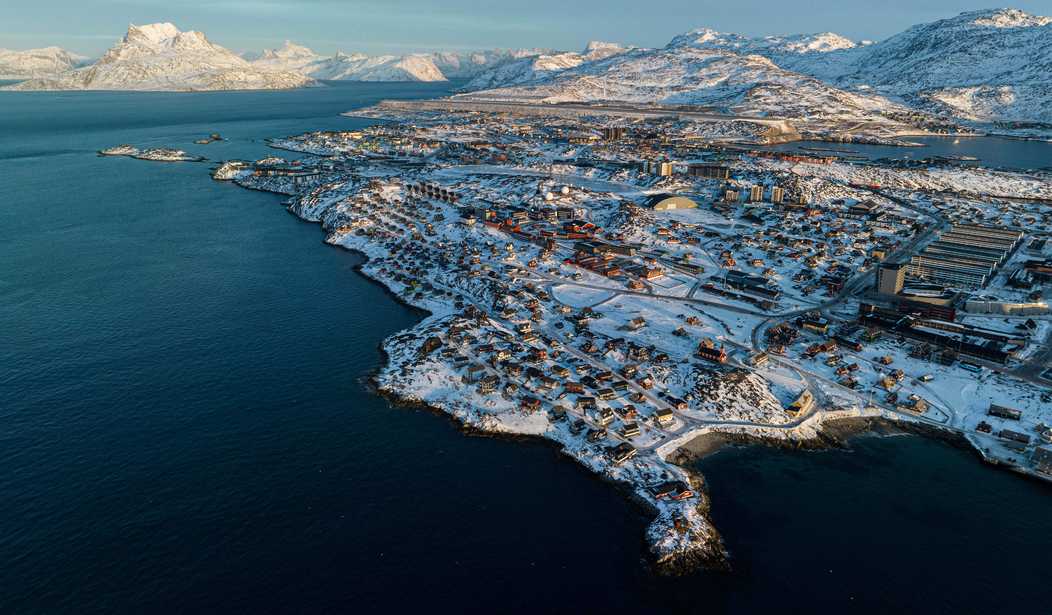
Given the Trump administration’s interest in securing the Arctic cap via the annexation of Greenland and defending against the Intercontinental Ballistic Missile threat from Russia and China, Cold Zero is both geopolitical fiction and fact. But that’s typical of the intricately researched and characteristically prescient Brad Thor thriller. Add in the finely honed word-smithery of Ward Larsen, and you’ve got a thriller that hits like a bomb cyclone.
There are co-written thrillers that feel assembled, and then there are co-written thrillers that feel forged. Brad Thor and Ward Larsen’s new collaboration, Cold Zero, belongs squarely in the latter category.
Co-authored novels are notoriously difficult to execute well. Too often, the seams show—voices shift, pacing becomes uneven, and the machinery of collaboration becomes visible on the page. The reader begins to see the scaffolding instead of the story.
Cold Zero avoids that problem entirely. It reads with the confidence and cohesion of a novel written by a single author operating at the top of his game.
That should not be surprising when you consider the résumés involved. Thor has spent more than two decades building one of the most successful franchises in modern political thrillers with his Scott Harvath series. Larsen, a former Air Force fighter pilot and, until recently, an airline pilot turned novelist, has carved out his own reputation for smart, technically credible thrillers that balance precision with narrative drive. “The more we got into it, the more we realized how little difference there was in the way we wrote and the way we approached our writing,” Larsen told Townhall.
Cold Zero never reads like alternating chapters written by two different hands. The voice is unified, the pacing consistent, and the narrative momentum uninterrupted. The authors developed a rhythm that allowed the collaboration to feel organic rather than mechanical. “One of us would write some chapters and send it to the other, and the other one would edit it, and we just kind of went back and forth like that,” Larsen told Townhall.
Simple in theory, much harder in practice.
A novel is not a memo or a policy paper. It is voice, cadence, pacing, imagination, and structure working together at once. Maintaining consistency across those elements requires trust, discipline, and a shared sense of storytelling.
At the center of Cold Zero is a premise that feels both cinematic and unsettlingly plausible. A commercial aircraft traveling across the Arctic goes down under mysterious circumstances. On board is highly sensitive artificial intelligence technology. Within hours, the crash site becomes the focus of a geopolitical race involving the United States, Russia, and China.
The Arctic is one of the last truly unforgiving environments on Earth—a vast expanse of ice, darkness, and brutal weather where distance alone can defeat even the most sophisticated technology. Thor and Larsen use that environment effectively, creating a narrative that feels both expansive and claustrophobic at the same time.
They combine their literary alchemy to transport you in mind and seemingly body to the eternally frozen wastes of the Arctic north, where death comes not merely by the slow clawing of ice, snow, and sub-zero gales and by the rapacious tooth and claw of polar bears the size of a small sedan.
The idea for the story originated with a simple but intriguing question. “I’ve been fascinated with the fact that so many commercial airliners go over the North Pole to save time and fuel,” Thor told Townhall. “And we’ve never lost one. I thought, what if one went down up there?”
The novel contains plenty of technical credibility—particularly in the aviation and systems-related elements that benefit from Larsen’s background—but the authors never allow those details to overwhelm the story. “You have to strike a balance,” Larsen told Townhall. “You don’t want to drop anybody out of the narrative. You don’t want to bore the reader. I tend toward the story.”
The technological dimension of the story revolves around the vulnerability of modern systems and the consequences if sensitive AI technology were to fall into the wrong hands. The novel does not treat those risks as abstract speculation. “If I can think of this, so can the bad guys,” Larsen told Townhall. “And we need to keep up our guard.”
That observation reflects something essential about the thriller genre at its best. Good thrillers entertain. The best thrillers also function as imaginative stress tests—exploring potential vulnerabilities before someone with malicious intent finds them first.
Cold Zero reads quickly and smoothly, but that apparent ease is the result of disciplined craftsmanship. Scenes are tightly constructed. Dialogue moves the story forward. Action sequences are vivid without becoming chaotic. Perhaps most importantly, the book never loses altitude. The tension that begins with the mysterious aircraft incident continues to build as the geopolitical stakes expand and the race against time accelerates.
Thor compared his writing career to building roller coasters at an amusement park—each novel designed to deliver a thrilling ride. For a collaboration to work, he explained, the standard had to remain the same. “It had to be as good as the stuff I write on my own,” Thor told Townhall.
By that measure, Cold Zero is a fabulous success.
The book has already attracted Hollywood attention. Thor confirmed that the novel has been acquired by Netflix for a feature-film adaptation, with producer-director Pete Berg attached and True Detective creator Nick Pizzolatto writing the screenplay. Those names signal serious interest—and it is easy to see why the story appealed to filmmakers.
The Arctic setting alone provides cinematic scale. But the narrative structure—the race, the geopolitical tension, the technological stakes—gives the story the kind of framework that can translate effectively to the screen.
In the end, what impressed me most after reading Cold Zero and speaking with both authors was their shared seriousness about entertainment. They understand that readers today have no shortage of distractions competing for their attention. A novel has to earn its place. Cold Zero earns it.
Editor’s Note: Do you enjoy Townhall’s conservative reporting that takes on the radical Left and woke media? Support our work so that we can continue to bring you the truth.
Join Townhall VIP and use promo code FIGHT to receive 60% off your membership.


Join the Conversation
VIP members get the ability to comment on articles.