






In initial reviews of Sotomayor’s court record, a trend emerges: many of her questionable court decisions have been made per curiam, or, as part of an unsigned decision made by a group of judges, while the decisions she signs her name to are relatively unremarkable.

It’s not a unique trend, and only a moderately useful lens through which to view her judicial record. It’s usually difficult to tell why a decision is authored per curiam, because one court may use the method frequently to write its decisions, while another never uses it. Furthermore, the decision to issue a ruling in this manner may be made by any judge who is working with her – so Sotomayor is not necessarily responsible.
Still, as part of per curiam decisions, Sotomayor supported a bizarre notion of eminent domain in which a politically connected developer extorted a land owner in New York after the land owner refused to give him a stake in the property. The day after the refusal, the land was condemned by the city.
She also held that the Second Amendment is inapplicable to states. According to her, if a state denies the right of its constituents to own guns, as is guaranteed by the Constitution, the Supreme Court cannot overturn that decision. Sotomayor is one of only three judges in America to hold this opinion, though again, she did not sign it.
These cases, along with her ducking the issue of reverse discrimination with New York firefighters in the massively-reported Ricci v. Destafano, provide a sharp contrast to what could be considered her more important individual court cases, which are comparatively tame.
Recommended
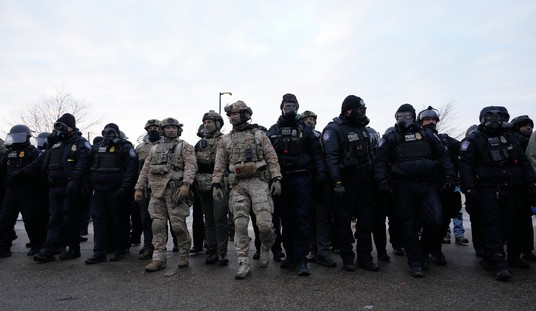
Some, such as Amnesty America v. Town of West Hartford, could be considered anti-law enforcement, though not egregiously so. In that case, she was the sole author of an opinion that faulted police officers for not training well enough when they were managing a demonstration. In U.S. v. Cavera, she ruled against giving a trial judge more discretion in deciding a case, in contrast to a trend that gave judges more liberties in deciding cases based on individual circumstances.
In another case, Sotomayor wanted to hold corporations liable for regulations that previously only applied to federal agencies. If federal agents violate a version of constitutional law, the person affected can be eligible for compensation. The Constitution usually only applies to the government, so this standard did not affect private entities. Sotomayor’s ruling sought to change that, but she was overturned by the Supreme Court.
In a number of other individual court cases, she issued what could be considered a more conservative ruling. Some point to her record on the establishment clause as generally being in line with the Republican view that the government should remain neutral with regards to religion, instead of absent from it. This is exemplified in Mehdi v. United States Postal Service, where she ruled that a post office was not liable for not displaying a Muslim holiday token when already displaying Jewish and Christian ornaments.
The court decisions she is wholly or partially responsible for should be considered along with her controversial extra-judicial comments as the Senate gears up for confirmation hearings, observers say. She has virtually no record on controversial issues such as abortion or the death penalty, and so the positions she would take on the bench are largely unpredictable. A large number of her decisions have been reversed by the Supreme Court, though, that could be attributable to the Court’s generally conservative leanings, which contrast with her generally liberal leanings.




Join the conversation as a VIP Member