





Price controls don’t work, yet Kamala Harris has just proposed them as the centerpiece of her new “Opportunity Economy” agenda. That means one of two things is true: Either Harris is ignorant of fundamental economic principles and the history of the failure of price controls, or she’s extraordinarily cynical, and is willing to pitch a plan she knows won’t work in the hope and/or belief that enough of her target audience is ignorant that she can get away with it.
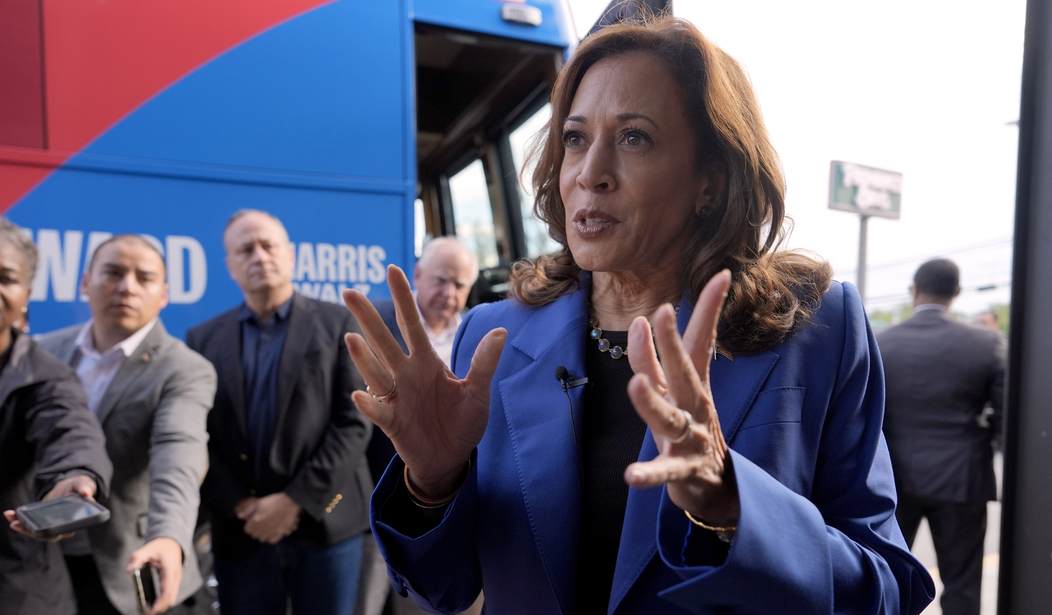
Speaking last Friday in Raleigh, North Carolina, Harris proposed what she called “the first-ever federal ban on price-gouging on food.” She continued: “My plan will include new penalties for opportunistic companies that exploit crises and break the rules.”
Though she did not give details in her remarks, her campaign went a bit further. In a press statement released even before she spoke in North Carolina, her campaign said her plan would set “clear rules of the road to make clear that big corporations can’t unfairly exploit consumers to run up excessive corporate profits on food and groceries.” Further, said the campaign, the plan would implement the ban as part of her first 100 days agenda, at least in part by directing the Federal Trade Commission to impose what the campaign called “harsh penalties” on “excessive profits.”
Neither “unfairly exploiting,” nor “price gouging,” nor “excessive profits” were defined. Come to think of it, neither were “opportunistic companies,” nor “exploit crises and break the rules.” What rules?
In Harris’ world, high prices are caused by “big corporations” that “unfairly exploit consumers” to run up “excessive profits.” But that’s not happening in the grocery business. According to a report issued in late June by the Food Industry Association, “after spiking during the [COVID] pandemic, profit margins and same-store sales growth have fallen back to pre-pandemic levels for the grocery industry … In 2023, profit margins in the grocery industry hit 1.6% -- the lowest level since it was 1% in 2019 – as total expenses increased.”
Even though Harris’ campaign did not define “excessive profit,” I’m pretty sure a 1.6% profit margin would be below whatever definition she eventually settles on.
The higher costs we’re all paying for groceries now aren’t caused by “greedy corporations” trying to “unfairly exploit” consumers for “excessive profits.” Instead, they’re caused by too much money chasing too few goods – the inevitable result, that is, of actions taken by the government when it ordered shutdowns (thereby reducing output) and then followed that up by throwing trillions of dollars beyond the trillions it regularly spends into the economy (thereby increasing the money supply).
Prices in a free-market economy are simply the equilibrium point between supply and demand. If prices are up, it’s because there’s either too much money chasing a static output, or too little output available for a static money supply. When prices remain high, output will increase, as producers see the market demand and move to fill it; prices will then decrease naturally, as output expands, and a new equilibrium – a lower price – is reached.
Price controls are artificial distortions in the working of a free market. When government interferes in the market by artificially controlling prices, it doesn’t just affect prices, it also has side effects. Distortions occur – shortages (which lead to rationing of one form or another), hoarding, and black markets.
Just as importantly, price controls don’t actually address the root cause of the inflation. They merely mask its effects.
We’ve had experience with this before, during Harris’ lifetime. Exactly 53 years ago last week, in an effort to combat inflation, President Richard Nixon imposed a 90-day freeze on wages and prices, the first time the U.S. Government had done so in peacetime. Price controls were popular at first, and he extended them, but over the longer run, they didn’t work.
For instance, government imposed price controls on the price of chickens – and farmers responded by killing a million baby chicks, because there were no controls placed on the price of the grain used to feed the chicks, and it became more expensive to feed the chicks than the farmers could make back by selling grown chickens.
When Nixon two years later removed his price controls, inflation roared back, reaching heights by the end of that decade that were even higher than those with which Nixon had to contend – becoming so bad that Jimmy Carter’s presidency ended after just one term, replaced by that of Ronald Reagan.
Reagan understood the folly of price controls. Asked in one of the 1980 GOP primary campaign’s debates what he thought of them, Reagan responded, “I oppose them, and they failed back when Diocletian tried them 2,000 years ago in Rome – and he used capital punishment to enforce them.” (The moderator responded, “I was very young then,” to which Reagan replied, “I’m the only one here old enough to remember.”)
I don’t know which is worse – the thought that Kamala Harris has risen to the highest heights of American political power without understanding the fundamentals of economics, or the thought that she knows full well her proposal will not work to bring down prices, and yet she might actually be so contemptuous of her fellow citizens that she’s confident she can pull the wool over their eyes and convince enough of them that it can work that it’s worth it as a political ploy.
One thing I know for sure: Whichever is true, I don’t want her anywhere near the Oval Office for another four years.
Jenny Beth Martin is President of Tea Party Patriots Citizens Fund.

Join the Conversation
VIP members get the ability to comment on articles.