





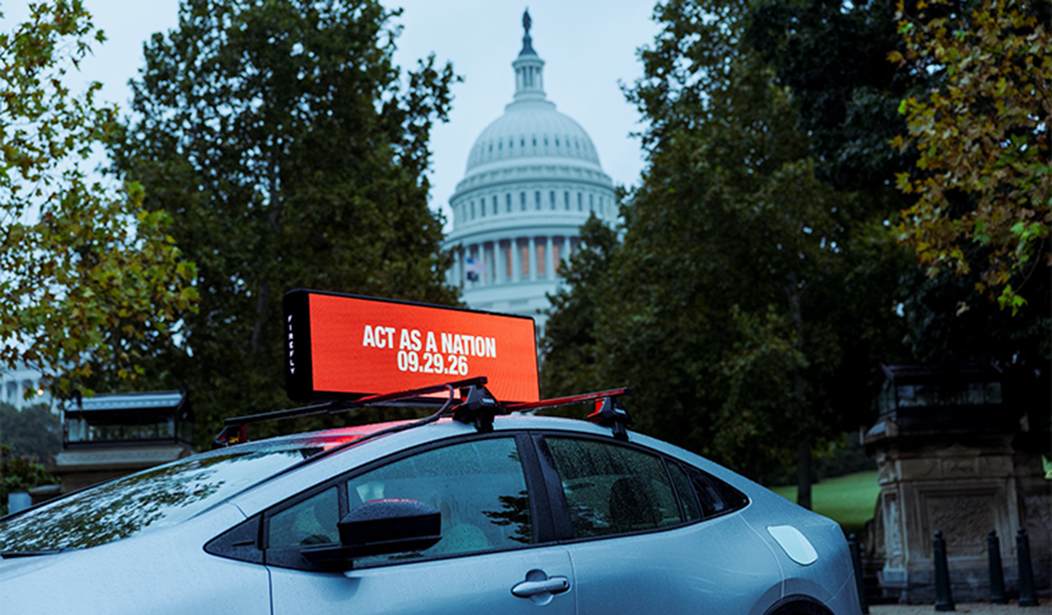
On September 29, the White House launched America.gov, a single website with AI-enhanced search across more than 29,000 federal websites. Edward Coristine, the former DOGE engineer, called that number "pretty insane." On that point, he and I can split a pizza. A government running 29,000 websites doesn't have a web presence. It has a hoarding problem.
I'd love to cheer without reservation. I can't, and neither should you. I'm a father of three; I run a small firm, so my tolerance for ribbon-cuttings is low. Conservatives spent years dissecting the Healthcare.gov launch, and with good reason. We don't get to grade our own side on a curve. America.gov should be judged by transactions completed, dollars spent, and who answers when it breaks.
Here's where things stand. Executive Order 14432 directs agencies to connect public-facing services that reach more than 100,000 users a year, and the Office of Management and Budget must issue guidance within 90 days, or about December 28. Today the site mostly helps you find things and ask questions. The White House says Medicare enrollment and passport tasks arrive "later this year," yet reporting on first-time passport applications ranges from December to the end of 2027. Seinfeld fans will remember the rental car agent who knew how to take a reservation but not how to hold it. Launching a website is like taking the reservation.
The White House says Americans spend about 10 billion hours a year on federal paperwork. A plain-language assistant that points a retiree to the right form beats a maze of agency sites. Coristine says Medicare enrollment now means hopping between Medicare.gov and the Social Security website, and he has promised first-time passport applications online. America.gov also says it does not retain chat history. My worry is a chatbot that sounds sure of itself while getting the answer wrong. A wrong answer on Social Security or Medicare eligibility can cost a retiree real money. The order says agencies keep custody and control of their records, so the agency of record has the final word. The assistant should cite its source every time and say "I don't know" when it doesn't. In my industry, advice comes with disclosure and a regulator watching. A government chatbot deserves the same scrutiny.
The record on the last big federal website is sobering. In the first month of the Obamacare website, just 106,185 Americans selected a Marketplace plan, according to HHS. GAO found that CMS launched Healthcare.gov "without verification that it met performance requirements," and that by the end of development only the plan management module was complete. CMS reported obligating $840 million on development as of March 2014, and HHS's inspector general counted 60 related contracts originally valued at $1.7 billion. The site did recover, and 8,019,763 people had selected plans by March 31, 2014. Emergency repairs had to save that launch. Nobody should plan the next website around a rescue.
The politics deserve accuracy, too. CGI Federal, the lead contractor, employed senior vice president Toni Townes-Whitley, who attended Princeton with Michelle Obama and donated to Obama's campaign. That makes a fine cable segment. FactCheck.org found no evidence it influenced the award, and CMS said CGI won a competition among pre-approved contractors. The viral $678 million figure is also wrong. PolitiFact, citing Snopes, traced it to several years of CGI healthcare contracts, and CMS put the project budget near $630 million. The documented failure was oversight, and GAO says so.
Critics will compare Coristine to Healthcare.gov's builders. The parallel is narrow. GSA's Technology Transformation Services houses America.gov, and Coristine works with the National Design Studio, where Trump named him lead engineer at launch. A lead engineer isn't a budget owner. What both projects share is heavy political backing, and backing tends to shield a project from hard questions.
I looked for a price tag. Neither the GSA release nor the White House fact sheet lists one for America.gov, though the release does tout about $126 billion in products and services moving through federal contracts. An agency that can publish that figure can publish the price tag. I'll withhold any claim of waste until I see the number. I have spent too many years as an expert witness, and the principle never changes: whoever spends your money tells you what it costs.
The order deserves credit on privacy. It bars "a centralized Federal system of records concerning the American people," and keeps phone, mail and in-person service. Execution is another matter. Biometric Update reported that Login.gov code added a browser identifier set to expire in 20 years. Sunlight remains the best disinfectant.
Four fixes cost almost nothing. First, publish the total cost, contract authority and the accountable official's name. Second, post a public dashboard of completed transactions, uptime and AI answer-error rates for each service. Third, require GAO or agency inspectors general to test the system before more services migrate. Fourth, write phone, mail and in-person options into statute so a future administration can't retire them. The OMB memo due around December 28 is the place to start.
Supporters will say it's early, and they're right. Nobody should judge a two-week-old site on passports it hasn't processed. That argument helps my case, because early is exactly when you set the rules. Every sports coach knows the scoreboard gets reset before kickoff, and the test is simple: can a citizen finish the task without calling anyone?
The 29,000-site mess is real, and cleaning it up is worth doing. If America.gov lets a retiree enroll in Medicare or a family renew passports without three browser tabs and a prayer, I'll applaud. Reagan's rule applies to our side too: trust, but verify. Healthcare.gov taught us that a launch party proves nothing. Show us the house.
Jay Rogers is a financial professional with more than 30 years of experience in private equity, private credit, hedge funds, and wealth management. He writes about issues in finance, constitutional law, national security, human nature, and public policy.
Editor’s Note: Do you enjoy Townhall’s conservative reporting that takes on the radical Left and woke media? Support our work so that we can continue to bring you the truth.
Join Townhall VIP and use promo code FIGHT to receive 60% off your membership.



Join the Conversation
VIP members get the ability to comment on articles.