





Last week, two days after he lost a First Amendment lawsuit brought by critics he had blocked on Twitter, Donald Trump promised to "protect the free speech rights of ALL AMERICANS" through "regulatory and legislative solutions" aimed at guaranteeing equal access to social media. "At a time when social media platforms are banning conservative voices and supporters of the president," said Brad Parscale, Trump's 2020 campaign manager, "it's important for President Trump to emphasize that he appreciates their support and wants to protect their First Amendment rights."
No one would mistake the president -- who averred during his "social media summit" that press coverage he considers unfair is "not free speech" -- for a constitutional scholar. But his views reflect widespread confusion about the First Amendment that has led many of his supporters to endorse policies that would interfere with freedom of speech in the name of protecting it.
In the case that Trump lost, the U.S. Court of Appeals for the 2nd Circuit ruled that he had created a "public forum" by using his Twitter account for official purposes and letting people participate in the "interactive space" associated with it. Under those circumstances, the court said, the president could not constitutionally exclude Twitter users whose opinions offended him.
The principle described in that decision is politically neutral. On the same day the 2nd Circuit issued its ruling, two critics of Rep. Alexandria Ocasio-Cortez, D-N.Y., a prominent Trump opponent, filed lawsuits arguing that she had violated their First Amendment rights by blocking them on Twitter because of their views.
But the 2nd Circuit's ruling did not impose any obligations on Twitter or any other social media platform. That's because the First Amendment applies only to government officials, not to private companies, no matter how inscrutable or unfair their decisions might seem.
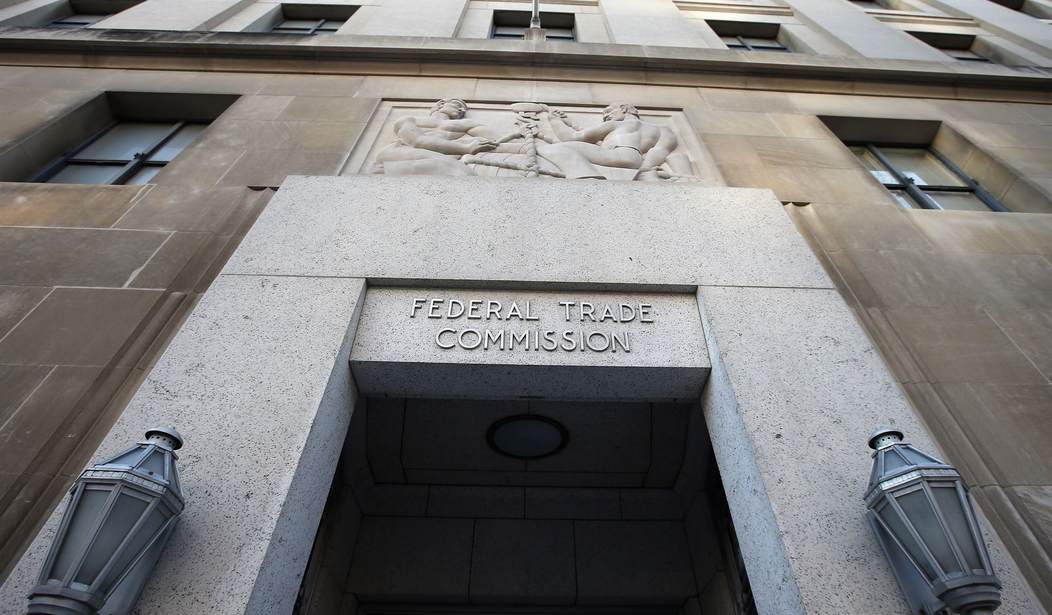
The premise of the so-called Ending Support for Internet Censorship Act, which Sen. Josh Hawley, R-Mo., introduced last month, is therefore fundamentally mistaken. The bill, which Trump calls "very important," would charge the Federal Trade Commission with determining, every two years, whether social media companies such as Twitter, Facebook and YouTube are moderating content "in a manner that is biased against a political party, political candidate, or political viewpoint."
Companies deemed biased would lose protection under Section 230 of the Communications Decency Act, which says "no provider or user of an interactive computer service shall be treated as the publisher or speaker" of information posted by others. That principle, which was crucial to the development of the internet, generally shields websites from civil or criminal liability for material they did not produce.
To pass muster with the FTC, a company would need the votes of four out of five commissioners, three of whom are currently Republicans. In other words, if two Republicans think a platform is biased against Republicans, that would be enough to strip it of the vital protection that Section 230 provides.
Although Hawley claims he is trying to promote freedom of speech, the upshot of such decisions would be more censorship, not less. If they could not rely on Section 230, social media platforms would be forced to monitor content much more intensely than they currently do, as anything that is arguably libelous or criminal would expose them to liability.
Hawley argues that services such as Twitter and Facebook are getting "a sweetheart deal" while failing to "hold up (their) end of the bargain," which he says requires them to maintain "politically neutral" forums. But that "bargain" is a figment of Hawley's imagination. As Sen. Ron Wyden, D-Ore., who wrote Section 230, recently told my Reason colleague Eric Boehm, the provision "has nothing to do with neutrality."
Hawley and Trump are pushing a solution to censorship that will encourage censorship, under the control of partisan bureaucrats who supposedly will guarantee neutrality. No conservative who claims to believe in limited government, free markets and freedom of speech should be tricked into buying their snake oil.
Jacob Sullum is a senior editor at Reason magazine. Follow him on Twitter: @JacobSullum. To find out more about Jacob Sullum and read features by other Creators Syndicate writers and cartoonists, visit the Creators Syndicate webpage at www.creators.com.

Join the Conversation
VIP members get the ability to comment on articles.