





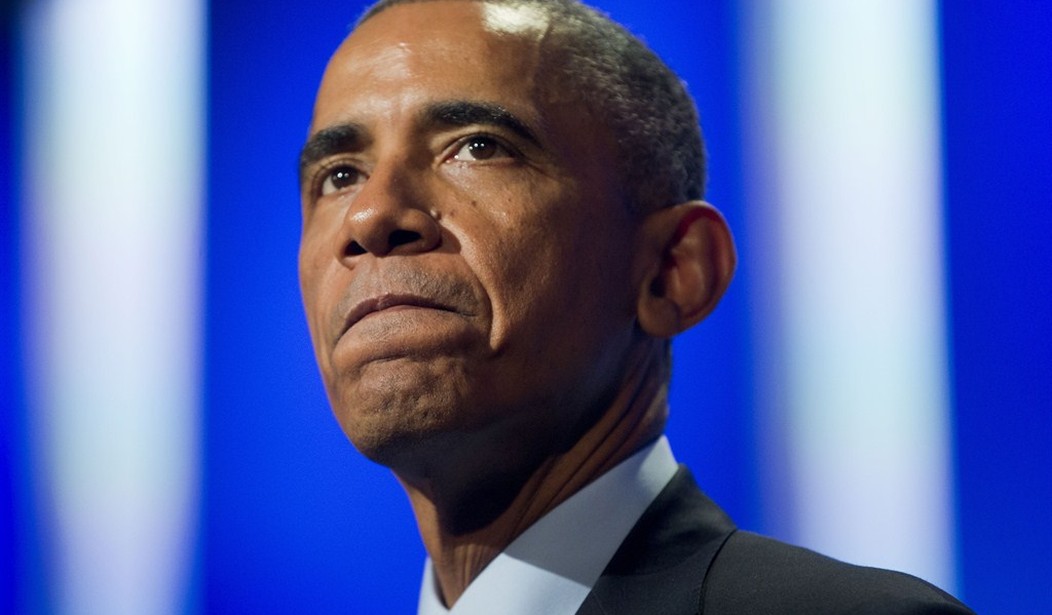
Confused? You should be. Obama certainly is. Let us count the ways:
1. Obama has repeatedly promised that his war against ISIS will not involve U.S. ground troops in Iraq or Syria, but Martin Dempsey, chairman of the Joint Chiefs of Staff, says they may be necessary. The White House argues that armed military "advisers" who call in air strikes, serve on the front lines and could easily become involved in combat do not count as ground troops.
2. As proxies for U.S. soldiers in Syria, Obama is counting on the "appropriately vetted elements of the Syrian opposition," whom Congress last week authorized the Pentagon to train and arm. On Tuesday, he called them "the best counterweight to (ISIS) and the Assad regime." But last month, Obama told The New York Times that the idea that U.S. assistance could turn "an opposition made up of former doctors, farmers, pharmacists and so forth" into an effective fighting force "has always been a fantasy."
3. Obama says U.S. military assistance will be limited to "moderate Syrian opposition forces." According to the bill approved by Congress, "appropriately vetted" rebels do not include groups linked to terrorist organizations such as the Nusra Front, a Syrian branch of al-Qaida. But as the Times points out, "even the more secular forces have turned to Islamists for support and weapons over the years, and the remaining moderate rebels often fight alongside extremists like the Nusra Front."
4. Running for the Democratic nomination in 2007, Obama declared that "the president does not have power under the Constitution to unilaterally authorize a military attack in a situation that does not involve stopping an actual or imminent threat to the nation." Although Obama admits ISIS does not pose such a threat, he says he does not need congressional authorization to wage war against it.
5. Obama brags about ending the "dumb" and "rash" war in Iraq, which he says was based on a trumped-up threat. But he also says that war has not really ended, citing the 2002 authorization for it as part of his argument for attacking ISIS in Iraq without seeking congressional approval.
6. "Our objective is clear," Obama claims, right before showing that it isn't. The aim, he says, is to "degrade and destroy" ISIS. But don't get the wrong idea: Destroying ISIS does not necessarily mean destroying ISIS. It could mean that ISIS is "degraded to the point where it is no longer the kind of factor that we've seen it being over the last several months." In other words, "we can continue to shrink (ISIS's) sphere of influence, its effectiveness, its financing, its military capabilities, to the point where it is a manageable problem."
According to the president, then, acceptable outcomes of this war range from making ISIS less of a factor (whatever that might mean) to wiping it from the face of the planet. As additional insurance against failure, the administration says this effort will take at least three years, so seeing it through will be the responsibility of Obama's successor. Don't blame Obama if things go south after 2016!
And what about that awful Assad regime, the one Obama said must go? The arming of "appropriately vetted" Syrian rebels, according to the legislation approving it, is aimed at "promoting the conditions for a negotiated settlement to end the conflict in Syria."
It would be terribly confusing if Assad had a place at that table, especially if he were joined by a degraded-but-not-destroyed ISIS. It is hard to believe something like that could happen -- unless Obama promises that it won't.
Join the Conversation
VIP members get the ability to comment on articles.