







As the U.S. military dismantles the Iranian regime's power structure, the ongoing campaign serves as a brutal reminder that air superiority remains a cornerstone of modern warfare.
But the reckless depletion of U.S. weapon stockpiles in the Middle East is not sustainable – it actively undermines America's ability to deter opportunistic moves by near-peer rivals, namely Russia and China, elsewhere.
While Vladimir Putin remains entrenched in a costly war of attrition in Ukraine, where Russia has suffered horrendous losses since 2022, an increasingly assertive Xi Jinping is actively probing defenses in the Western Pacific – with the People's Republic spoiling for a fight.
In the only major armed conflict pitting the U.S. directly against China, air superiority was arguably the decisive factor in preventing a catastrophic defeat for the American side. Twice, no less.
In the first instance, a better armed and trained North Korean military launched a surprise invasion of South Korea in June 1950, driving their rival army into the southeast corner of the peninsula. Only superior U.S. air power prevented annihilation of the "Pusan Perimeter."
In the second, once Chinese troops poured across the Yalu River to join the fight – ultimately sending millions – it was again U.S. air superiority that prevented the numerically superior communist forces from overrunning the peninsula. The resulting stalemate and demilitarized zone separating the two Koreas still exists today.
China suffered mightily in Korea and learned a lesson, losing by some estimates more than 15 times the American casualties. The sting ingrained in the Chinese the importance of air superiority. However, it's only in recent years, as an emerging powerhouse, that they've been able to do something about it.
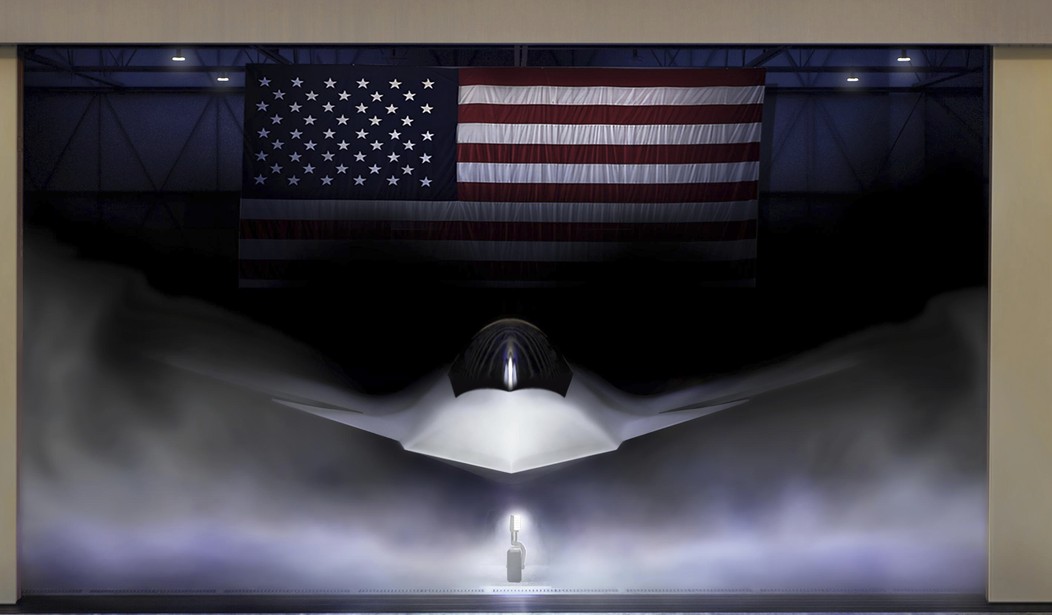
Unthinkable not long ago, China appears to have already flown two variants of the next-generation fighter jets, while the U.S. remains literally years behind in even getting one off the ground.
Moreover, the Trump administration drastically cut the budget for engine development designed to power America's coming next-generation fighter. In Fiscal Year 2025, the Next Generation Adaptive Propulsion (NGAP) system was funded at roughly $440 million; this year, it's been reduced to approximately $330 million.
Worryingly, U.S. leaders seem to be banking on air superiority they take for granted, while failing to put in the strategic work – and funding – required to sustain it.
To be clear, the American-made F-35, a.k.a. Joint Strike Fighter, remains a most capable stealth combat jet, designed to achieve air superiority. It's also a force multiplier that both our top Pacific allies, Japan and South Korea, fly the F-35.
Nevertheless, we must realistically acknowledge that it's a 5th-generation fighter that first flew a full 20 years ago. And it likely won't fare well against the technology that comes next.
At the macro-level, Donald Trump has argued that for American dominance to be maintained, U.S. defense spending should approach $1.5 trillion annually rather than the $1 trillion that is currently apportioned.
He's not wrong. But it's clear that the decision to slash next-generation fighter funding is contrary to his long-term defense strategy.
This is particularly the case as armed conflict between China and nations we've signed up to protect grows more likely, and as Beijing becomes more aggressive while our allies chart their own paths – ultimately writing checks that America may have to cash.
Japan's recent elections, giving the nationalistic Liberal Democratic Party (LDP) a supermajority in the Diet, its bicameral parliament, have already set off alarm bells and belligerent rhetoric by China's leaders.
Beyond the ongoing territorial dispute over the Senkaku/Diayou Islands, rocky outcroppings between both countries, the Japanese have wasted little time asserting themselves in other ways. Just last month, Tokyo announced plans by 2031 to install surface-to-air missiles on Yonaguni Island, within sight of Taiwan on a clear day.
In Taiwan, the ruling Democratic Progressive Party – viewed by Beijing as hawkish – flatly rejects the "One China" policy, despite living under constant threat of military action. Furthermore, Taiwan's ongoing acquisition of 66 new F-16s from the U.S. is seen by China as another provocation.
Meanwhile, since the war never technically ended in Korea, it remains one of the world's most dangerous flashpoints. With talk of succession in the Kim dynasty, continued uncertainty is likely to be with us for a while.
But one thing is certain — China will continue to be as aggressive as its economic might allows.
To cope with this regrettable reality, the U.S. cannot afford to cede air superiority to China while backing allies that could find themselves at war with Beijing at a moment's notice.
Maintaining air superiority by properly investing in military technological advances is far more prudent than backing down from agreements with nations we've pledged to defend, or worse, risking a military defeat to China.
If Washington waits another budget cycle to correct course, the margin for deterrence may be gone.
Ivan Sascha Sheehan is the interim dean of the College of Public Affairs at the University of Baltimore, where he is a professor of public and international affairs. The views expressed are the author's own. Follow him on X: @ProfSheehan
Editor’s Note: Thanks to President Trump and his administration’s bold leadership, we are respected on the world stage, and our enemies are being put on notice.
Help us continue to report on the administration’s peace through strength foreign policy and its successes. Join Townhall VIP and use promo code FIGHT to receive 60% off your membership.



Join the Conversation
VIP members get the ability to comment on articles.