







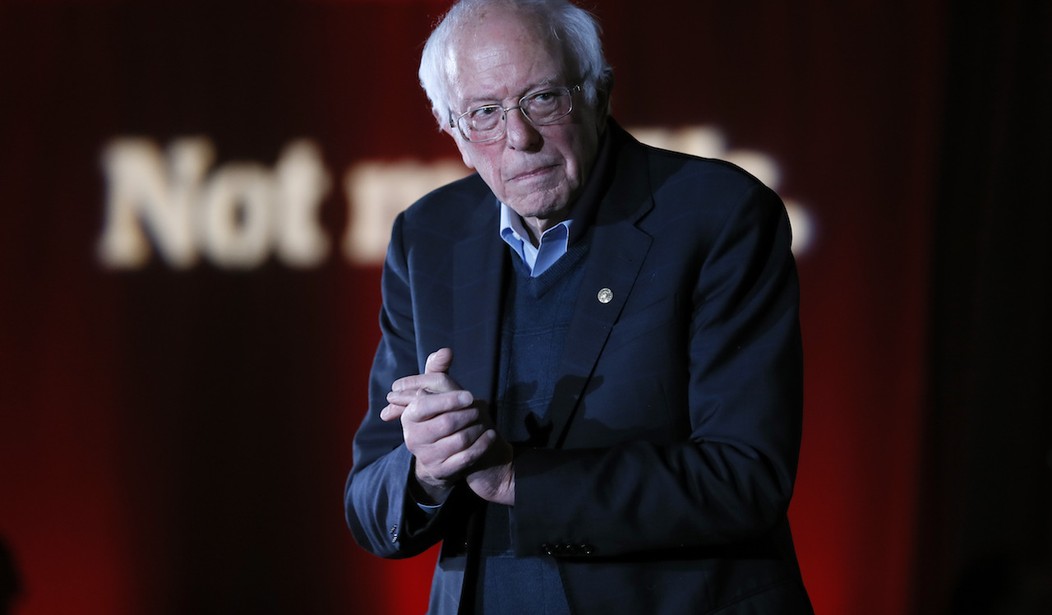
Presidential candidate Bernie Sanders wants to impose national rent control. He unveiled the policy proposal last September and recently reiterated his support via Twitter.
Sanders proposes a national cap on annual rent increases to 1.5 times the rate of inflation or 3 percent—whichever is higher.
Ironically, the article Sanders tweeted out attributes increasing rent prices, in part, to government control over the private housing market. This irony reinforces what many economists already know to be true: the left’s prescriptions for lowering housing prices are precisely what keeps prices high and supply low.
Rent control would be a flagrant infringement of American property rights and a vast expansion of the federal government's control over the private housing market.
The government should have no role in determining rental costs. All governments are ill-equipped to consider the many visible and invisible factors that determine the market price of a rental property.
What enforcement mechanisms would come down on the American people under a national rent control bureaucracy? If a local landlord, for whatever reason, fails to comply with the new federal standard, what kind of punishment would ensue? Might the IRS garnish his wages? Would he be fined out of business? Put in jail?
None of that passes the smell test is because none of it feels like it's an appropriate use of the federal government's power nor is it even within the scope of power that the government ought to operate in.
Sanders wants to create a new bureaucracy inside HUD which will involvemassive administrative costs. Enforcing rent control requires an elaborate bureaucracy—especially on a national level. To take an example of one city, San Francisco's Rent Arbitration Board can expect to bring in over $5 million in order to enforce rents on 170,000 rent units. The National Multifamily Housing Council explains, “Rental property must be registered; detailed information on the rental property must be collected; elaborate systems for determining rents and hearing complaints and appeals must be established.”
Recent evidence revealed that the 1994 rent-control expansion in San Francisco led to landlords converting their properties to condos or tenancies in common. Instead of encouraging affordable housing, the government incentivized converting away from it.
In Cambridge, Mass., where rent control was abolished, economists found that direct dollar investments in housing units doubled over just a few years.
The San Francisco study also found that, as a result of rent control, there was a city-wide rent price increase of 5.1 percent. Because of existing tenants’ depressed rents, many will stay in apartments for longer than they otherwise would. This reduces the supply of rent-controlled properties for potential tenants, thus increasing the prices of other, non-controlled properties.
Michael Hendrix of the Manhattan Institute explained that the savings associated with rent control are offset by these increased costs. Those who actually do benefit from rent control are disproportionately white, affluent renters. Hendrix notes, "White renters in 2017 claimed a 36% discount on market-rate rents in New York City because of rent control, compared with 17% for Hispanic renters and 16% for black renters; affluent renters received a 39% discount."
Sanders has proposed a myriad of dangerous, government-expanding policies. National rent control is one that has gotten very little media coverage, despite the dire effects of such a policy.
Rent control hurts the very people it aims to help. The housing market in rent-controlled cities is defined by dissatisfaction, maddening trade-offs, and paycheck-consuming prices.
If rent control on the local level causes increases in rent prices and limits housing supply, it’s not hard to imagine just how severe the effects would be on a national scale, when the federal government tries to impose Manhattan-type rent control policy on Thurmond, W. Va.
Even the socialist Swedish economist Assar Lindbeck said, “In many cases rent control appears to be the most efficient technique presently known to destroy a city – except for bombing.”
Isabelle Morales is a Communications Associate at Americans for Tax Reform.



Join the Conversation
VIP members get the ability to comment on articles.