







(Editor's note: this piece was authored by three people: George Landrith, Miklos Radvanyi, and Andras Simonyi.)
According to Immanuel Kant, “A lie is a lie, and in itself intrinsically evil, whether it be told with good or bad intent.” This wise observation reminds us of the many absurd falsehoods, deliberate distortions, and ideologically convenient narratives that have surrounded Russia’s war of aggression against Ukraine. Yet any rational observer, even with only a modest understanding of European history and political culture, must conclude that Russia’s conduct reflects not misunderstanding or isolation, but a long-standing tradition of imperial coercion and moral nihilism. Fyodor Dostoyevsky grasped this pathology with chilling clarity in The Possessed, where political terrorism and depravity are revealed as instruments of power rather than tragic deviations.
The central challenge confronting today’s negotiators is not a lack of dialogue, but a failure to recognize the nature of the regime with which they are dealing. Moscow’s narrative of perpetual victimhood — steeped in chauvinism and historical falsification — has repeatedly served as the moral pretext for tyranny at home and violence abroad. This myth has survived not because it is true, but because it has not been sufficiently challenged.
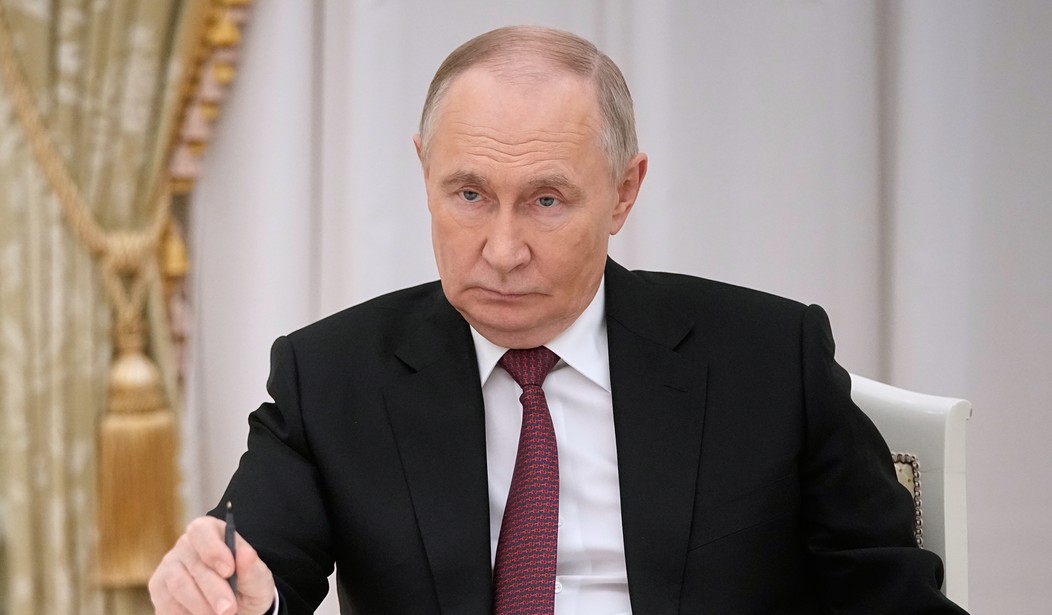
Some in the West continue to view Russia’s invasion of Ukraine as a byproduct of insecurity or diplomatic exclusion, believing that renewed engagement, concessions, or temporary ceasefires can stabilize the situation. History suggests otherwise. The Russian state, under Vladimir Putin, has demonstrated again and again that it interprets compromise not as reconciliation, but as weakness. The collapse of this system will ultimately be the result of its own internal contradictions, but until that moment arrives, clarity and resolve are indispensable.
At the core of Russia’s war aims lies President Putin’s unyielding assertion that Ukraine is not a legitimate nation. This belief persists despite Russia’s repeated and explicit recognition of Ukraine’s sovereignty and borders following the dissolution of the Soviet Union. Agreements in 1991, 1994, 1997, and 2003 formed the legal and diplomatic foundation of post-Soviet European security. Each was subsequently violated by Moscow — first through the illegal annexation of Crimea in 2014, then through hybrid warfare in the Donbas, and finally through the full-scale invasion launched in February 2022.
This pattern exposes a fundamental reality: the Kremlin does not regard treaties as binding commitments, but as tactical instruments to be discarded when inconvenient. Even earlier, President Putin reportedly dismissed Ukraine as an “artificial state,” warning that its alignment with Western institutions would inevitably provoke conflict. These statements were not rhetorical flourishes; they were declarations of intent.
It is time that the world recognizes that Putin is just another evil, totalitarian dictator. He doesn’t have an ounce of good in him. He murders political opponents and has targeted and killed and his orders have wounded more than fifty thousand Ukrainian civilians. The world needs to recognize this and stop treating Putin as if he were a legitimate political leader. He systematically eliminates or imprisons political opposition. He maintains strict state control of the media and information. He has criminalized political dissent. And he uses coercion to win political debates. And he is a mass murderer.
In this context, Ukrainian resistance to territorial concessions and its insistence on credible security guarantees are not obstacles to peace — they are prerequisites for it. Durable peace cannot be built on enforced amnesia or coerced surrender. Nor can it rest on fragile ceasefires that freeze conflict temporarily while allowing Russia to regroup militarily and politically, as occurred under the Minsk agreements. Those arrangements failed precisely because they lacked enforcement and rested on false assumptions about Russian good faith. There is not one ounce of good faith or honesty or decency in Putin.
For the free world, the strategic task is therefore not simply to negotiate but to compel a change in Russian behavior. That requires unity, deterrence, and the credible threat of consequences. Diplomacy divorced from power is not realism; it is illusion. Negotiations must be embedded within a broader strategy that raises the costs of continued aggression beyond what the Russian regime can sustain — economically, militarily, and politically.
Equally important is recognizing that this war is not merely a regional dispute, but a test of whether borders in Europe can be changed by force. If Russia is permitted to expand its territory through terror and intimidation, the precedent will reverberate far beyond Ukraine, encouraging authoritarian regimes elsewhere to pursue similar ambitions.
President Putin has made clear, most recently in late December 2025, that he intends to continue the war unless Ukraine capitulates entirely to his demands. This is not the language of compromise; it is the language of coercion. Peace achieved under such terms would be neither just nor lasting.
As Shakespeare observed, “The truth will out.” The truth is that Russia’s wars have rarely produced stable peace because they are rooted in irreconcilable ideas: liberty versus domination, sovereignty versus empire, law versus force. Peace at any price is not peace — it is postponement at best.
The reason was always the fact that Russia and its adversaries never thought alike because they represented irreconcilable ideas, and never trusted each other. Obtaining peace at any price will surely be shortsighted and therefore false.
In conclusion, the international community cannot be under any illusion. The only solution to reach a just and enduring peace in Ukraine and beyond is defeating Putin’s Russia — perhaps economically, or if needed by force.
If the free world wishes to end this war and prevent future ones, it must abandon illusions and act with strategic coherence. Only by confronting aggression decisively — and, if necessary, defeating it — can a just and enduring peace be secured in Ukraine and beyond.
George Landrith is the President of the Frontiers of Freedom Institute and the author of “Let Freedom Ring… Again: Can Self-Evident Truths Save America from Further Decline?”
Dr. Miklos K. Radvanyi is the Vice President of the Frontiers of Freedom Institute.
Dr. Andras Simonyi, a Hungarian-American, was Hungary’s first ambassador to NATO, (1995-2001), and later the country’s ambassador to the United States (2002-2007).
Editor’s Note: Do you enjoy Townhall’s conservative reporting that takes on the radical left and woke media? Support our work so that we can continue to bring you the truth.
Join Townhall VIP and use promo code FIGHT to receive 60% off your membership.
Join the Conversation
VIP members get the ability to comment on articles.