





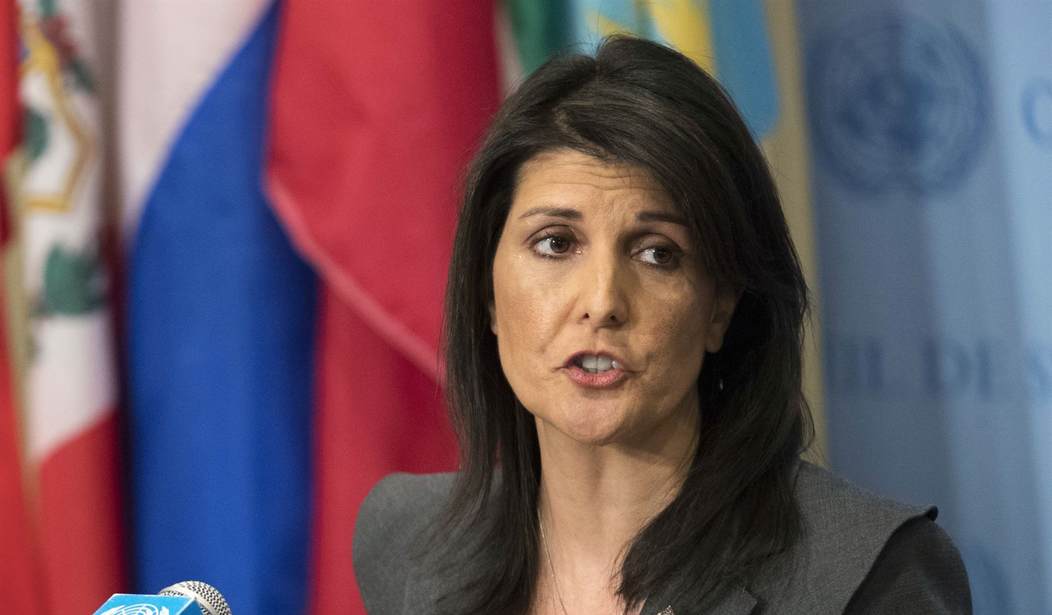
The definition of insanity, as they say, is doing the same thing over and over again, but expecting different results. And yet critics insist that the U.S. shouldn’t have withdrawn from the U.N. Human Rights Council.
We’re running away, they claim. Turning our back on human rights abuses. Showing that we don’t care.
On the contrary. Nobody has tried harder to make the Council work than the United States.
We have talked, debated, argued and negotiated. We have pressed for years to get the Council to actually stand up for its stated ideals – to spotlight abuses and bring relief to persecuted people around the globe.
Yet time and time again, we’ve been disappointed. We’ve seen the Council not only remain silent in the face of abuses, but allow membership to some of world’s worst abusers -- all while showing an unseemly obsession with vilifying Israel.
When such a state of affairs prevails year after year, should you keep thinking things will magically improve if you stay the course? Can you be blamed for trying a different tack?
No. But somehow, at least to the Trump administration’s vociferous opponents, the answer is yes.
And so it was that the U.S. ambassador to the United Nations, Nikki Haley, came to The Heritage Foundation recently to elaborate on the reasons the U.S. withdrew.
It wasn’t an easy decision to make. The U.N. was founded in the ashes of World War II “for a noble purpose -- to promote peace and security based on justice, equal rights, and the self-determination of people,” Haley pointed out. Unfortunately, thanks to the presence of many members who utterly reject this purpose, it often falls short of this goal.
The result? Well-meaning members hoping to build consensus adopt a position of neutrality. Resolutions are watered down. And, Haley added, “Moral clarity becomes a casualty of the need to placate tyrants.”
How can the United States – a country, she said, “founded on human dignity; on the revolutionary idea that all men are created equal with rights including, but not limited to, life, liberty, and the pursuit of happiness” – be a party to this? How can it sit by as the Human Rights Council contradicts its very name on a near-daily basis?
“When I arrived, and still today, its members included some of the worst human rights violators,” Haley said. “The dictatorships of Cuba, China and Venezuela all have seats on the Council.”
It continues to target Israel through the infamous Agenda Item Seven. And last fall, it seated the Democratic Republic of the Congo.
“The Congo is the setting for atrocities that shock the most hardened international aid workers,” the ambassador noted. “They were discovering mass graves in the Congo even as the General Assembly approved its bid to the Human Rights Council.”
When the Council invited Venezuela’s dictator, Nicholas Maduro, to speak to a special assembly, he got a standing ovation. And not a word was uttered when Iran’s government reacted to peaceful protests with beatings, arrests and killings.
But condemnations of U.S. immigration policy? Check.
Do other nations not notice this? Hardly. Haley said many share our disgust at the Council’s record. But they will say so only in private. They’re afraid to speak up. This is why, as the ambassador said, we have “the world’s worst human rights regimes calling the shots at the United Nations.”
Under those circumstances, it’s hardly crazy to withdraw from the Council. In fact, our continued presence could be taken as a sign that we don’t care about its glaring failures and rank hypocrisy.
The fact is, we do care. Lip service isn’t enough for us. So while the U.S. will continue to pursue its human rights commitments, we’re not going to remain part of a “self-serving organization that makes a mockery of human rights,” in Haley’s words.
When Eleanor Roosevelt chaired the Commission on Human Rights, the predecessor to today’s Council, she urged it to be “a place of conscience.” If it is, let’s act like it.
Join the Conversation
VIP members get the ability to comment on articles.