







A nation unable to secure its own territory and hemisphere cannot project power effectively across oceans. That top priority—Homeland Defense—is not isolationism—it's strategic necessity. Cartels had infiltrated all of America’s 50 states, Chinese entities acquired farmland adjacent to nuclear missile sites and bomber bases, and Venezuelan criminal gangs controlled urban enclaves in sanctuary cities. Fentanyl flooding through an unsecured border claimed nearly 100,000 American lives annually—ten times the toll of the Global War on Terrorism. These weren't mere nuisances; they were undeclared acts of war.
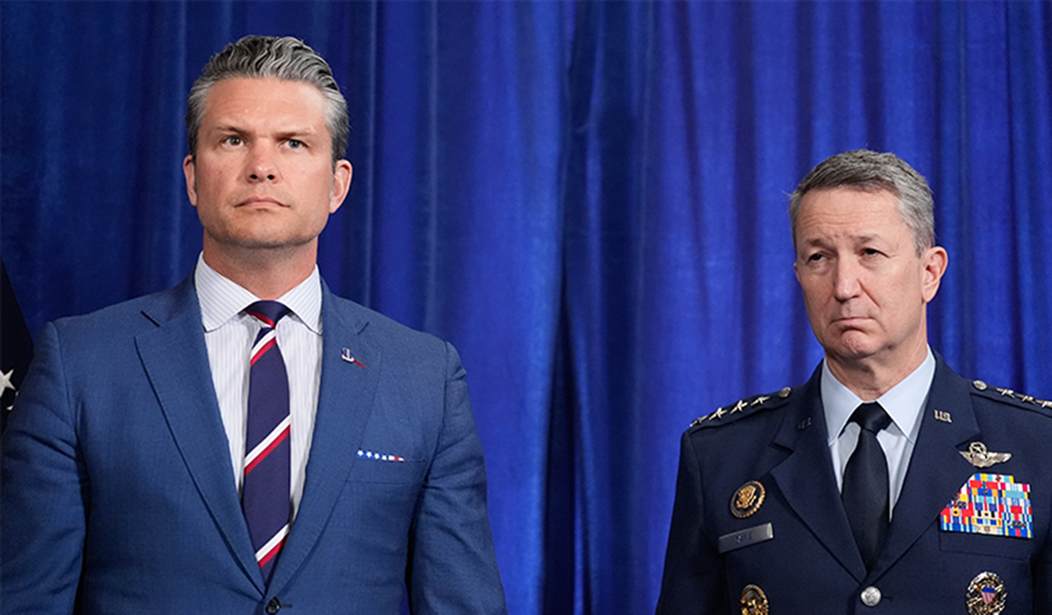
Two months after President Trump’s September 5 Executive Order restored the title “Department of War,” the institution is being reborn. This is not symbolic. It signals a fundamental shift: America’s military is no longer organized around perpetual “defense” against vague threats in distant lands, but around defending the homeland by preparing to fight, and win, America’s wars.
In the wake of that shift, the results are already transforming America’s security posture. With the successful capture of Nicolás Maduro and the liberation of Venezuela through Operation Southern Spear, the U.S. military has demonstrated its renewed focus, not on abstract threats abroad, but on eliminating dangers that directly threaten the American homeland.
What comes next is the National War Strategy, the first document to carry that name since World War II. Unlike every National Defense Strategy of the past three decades, it opens with a priority no previous administration placed first: Homeland Defense.
The newly released National Security Strategy (NSS) in early December 2025 marks a historic pivot, the first document since World War II to place Homeland Defense at the top of America’s priorities. Unlike the defense strategies of the past three decades, which diffused focus across global commitments, this NSS establishes a clear, disciplined sequencing of national priorities. Now guiding policy execution, it is driving the systematic dismantling of threats and denying foreign adversaries any opportunity to exploit American vulnerabilities.
This sequencing reflects the Trump national security team's core insight: We cannot deter Beijing in the Indo-Pacific while our hemisphere remains contested. A China capable of disrupting our sea lanes, propping up hostile proxies, choking energy supplies, and waging chemical warfare via fentanyl has no place in a secure America. By prioritizing homeland defense, the NSS enables us to eradicate these footholds first, allowing decisive power projection abroad without domestic distractions.
President Trump has delivered swiftly: National Guardsmen in cities, active-duty troops at the southern border, the reinstatement of Remain in Mexico, the end of catch-and-release, and tariffs that forced Mexico and Canada to seal trafficking routes. Illegal crossings have dropped over 90 percent since January 2025, mass deportations continue apace, and fentanyl precursor flows have been strangled. These measures not only safeguard communities but sever China's espionage and subversion networks, freeing our forces for Indo-Pacific focus.
The Caribbean operations against narco-terrorists backed by Maduro's regime, culminating in Operation Southern Spear's triumph—the capture of Maduro and Venezuela's liberation—prove the point. Regimes destabilizing the U.S. through conventional or irregular means face swift consequences, without the quagmire of nation-building. Iran felt this in Operation Midnight Hammer; Maduro's fall reinforces it. With Venezuela now free from socialist tyranny, the Western Hemisphere is reclaiming stability under American leadership, denying adversaries like China and Russia any regional leverage.
Second in the NSS priorities—and deliberately so—is denying Chinese Communist Party dominance in the Indo-Pacific through "Allied Autonomy." As articulated by Under Secretary of War for Policy Elbridge Colby in The Strategy of Denial, frontline allies like Japan, Taiwan, the Philippines, and Australia must be equipped to hold the First Island Chain in a conflict's early phases. U.S. submarines, long-range missiles, and bombers, based in the Second Island Chain and on the continent, will then deliver unmatched strikes. This isn't retreat, but rather credible deterrence. A homeland once porous to cartels and espionage couldn't sustain such efforts—now, with the NSS's embrace of the Trump Corollary to the Monroe Doctrine, it can.
All else plays supporting roles. NATO must bear more European weight, while the Middle East is deprioritized amid stronger regional allies. The American people rejected endless wars; the Trump Administration's NSS honors that, channeling resources to what matters.
Detractors cry "isolationism,” while history will see it as renewal: the end of self-inflicted wounds in peripheral conflicts, and the dawn of preparedness for decisive victories. America First isn't rhetoric—it's the bedrock of independence, bolstering energy, manufacturing in semiconductors and steel, medicine, rare earths, and infrastructure for enduring dominance.
The NSS doesn't just rename priorities; it rearms the republic for an era of great-power competition, with Venezuela's liberation as proof of concept. America is back, unbreakable at home, unstoppable abroad.
Catherine Treadwell-Perry, Esq., is a Tennessee mother and Green Beret spouse who blends legal expertise and veterans’ advocacy on Capitol Hill, serving as Chief of Staff and General Counsel while championing policies for military families and the warfighter.
Editor’s Note: Do you enjoy Townhall’s conservative reporting and opinion? Support our work by joining Townhall VIP! Use the promo code FIGHT to get 60% off your VIP membership!


Join the Conversation
VIP members get the ability to comment on articles.