





Each in his own way, each to a wholly different purpose, the pope and Dylann Roof, the suspected Charleston gunman, have hold of something major.
Which is -- I trust I do not surprise anyone -- the failings of the liberated human spirit.
Let's see what we can do with this improbable pairing.
First, consider Pope Francis. To quote a Wall Street Journal headline, "Pope Blames Markets for Environmental Ills." Markets? Meaning what? Meaning the virtually uninhibited choice that economic markets offer consumers: I'll have some of this; I'll have some of that. For the environment's degraded condition the pope, in a new encyclical, blames bad choices, reflecting "the interest of the deified market, which become the only rule." Francis would enjoin, as he sees it, more responsible choices, concerning stewardship of our earthly home and its resources.
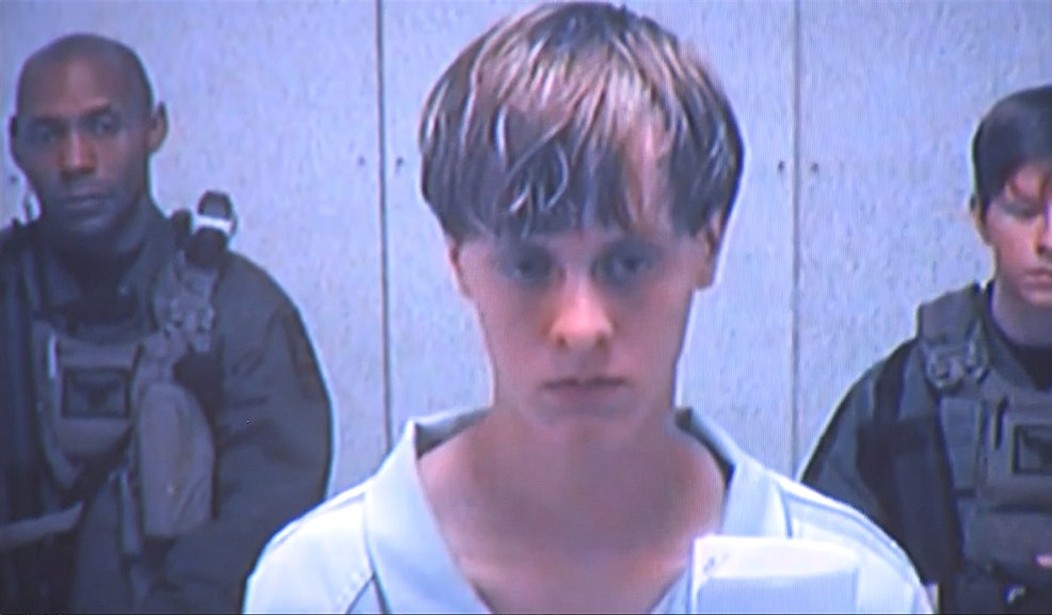
Then there's Dylann Roof, whose dead-eyed photos, putting one in mind of the Newtown, Connecticut, gunman Adam Lanza, send shivers up the spine. According to the police, young Roof, a contemporary of Lanza's, executed nine blameless worshipers in a black Charleston church -- an act that joined blasphemy with savagery. He did so by choice -- a human right capable of becoming a human wrong, absent norms, absent an interior sense of justice.
The secular age in which we live makes a virtue of choice. Which isn't entirely wrong. The free marketplace the pope assails works to upgrade living conditions and opportunities precisely on account of the choices it affords entrepreneurs and consumers alike. With what would Francis have us replace the marketplace -- some system combining government oversight with government distribution? Led by whom? On what premises? Imposed how? Enforced with what tools?
The fantasy world of perfect economic outcomes overseen by well-meaning planners is no substitute for the moral tutelage no one can rightly say governs 21st-century choices. What's wrong with responsible choice, based on what that great moralist Aleksandr Solzhenitsyn identified as self-limitation? Assuming, to be sure, that we've been taught to understand and value limitations on behavior.
Maybe we haven't. That would certainly go for the alleged (as the media are instructed to say) Charleston gunman. Who instructed him as to the worthlessness of human life and deputed him to take consequent action? Maybe he merely inferred a personal entitlement to act as judge, jury and executioner. If he did so, could that be called a logical outcome of the moral emptiness that is very possibly the 21st century's hallmark?
The pope and young Roof are an odd pairing on the surface of life -- the first a very good man, the second a very -- to say the least -- confused and disturbed man. I pair the two in order to illustrate the need for recovery of that moral sense lacking which we assign to individual actors virtually unlimited power to choose with minimal if any respect for consequences.
Involved in the power to choose is the power not only to choose rightly but also to choose wrongly. "Wrongly?" Who says any such thing? The pope for one; and at the other end of the moral spectrum the Charleston gunman, by his hatreds, his callousness.
You can't have much of a society when word gets around -- and it does -- that the individual owes no one anything; that it's all about him, precious, irreplaceable him!
There's never been a time, history suggests, when agreement on the moral basics was universal. Yet there hasn't been a time either, perhaps, when the disposition to expound normative standards and connections was as small as today.
We don't talk much about right and wrong, save when we get smoked out by events -- the Charleston murders for instance. They oblige us to look deep within the heart of humanity and utter a cry of horror, to acknowledge that indeed some things are perpetually wrong and others perpetually right, and that the same goes for the choices we make. We know, without exactly knowing why, that the moral understanding we claim to have needs refurbishing in the highest degree. Beginning -- would last week be soon enough?

Join the Conversation
VIP members get the ability to comment on articles.