





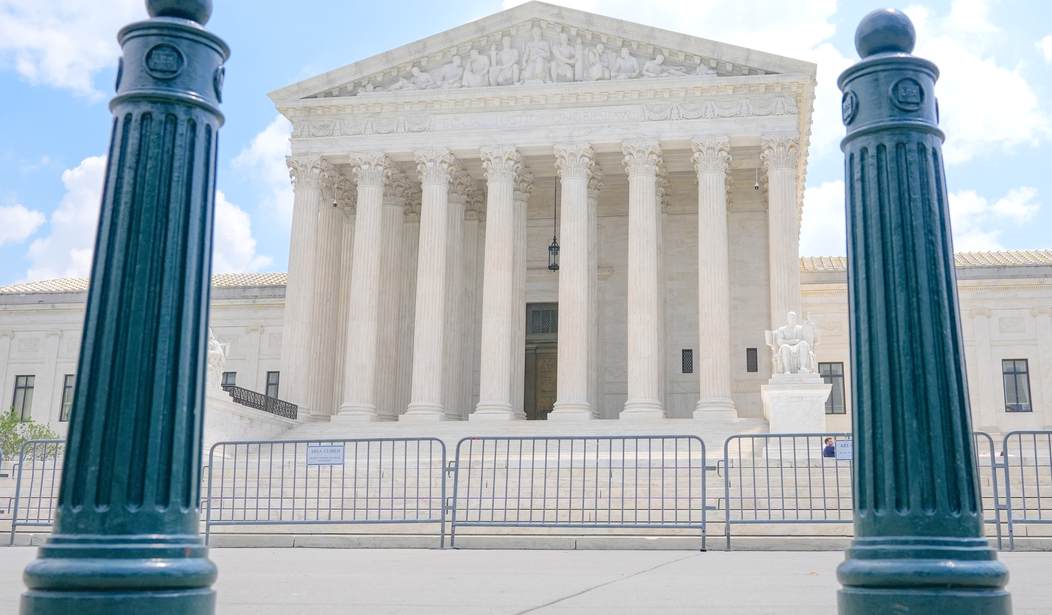
The Supreme Court has now settled, at least for the foreseeable future, one of the most contentious questions in American immigration law: A child born in the United States is a U.S. citizen, regardless of whether the child's parents entered the country legally or came solely to give birth. That remains the law after the court's 6-3 decision in Trump v. Barbara.
Chief Justice John Roberts, joined by the court's liberal justices, concluded that the Citizenship Clause of the 14th Amendment guarantees citizenship to virtually anyone born on American soil. Justices Clarence Thomas, Samuel Alito and Neil Gorsuch dissented, arguing that the majority has fundamentally misread both the Constitution and American history.
The ruling itself is hardly surprising. Federal courts have interpreted birthright citizenship this way for generations. What is remarkable is the historical reasoning Roberts employs to justify that conclusion.
The 14th Amendment states: "All persons born or naturalized in the United States, and subject to the jurisdiction thereof, are citizens of the United States." The debate has always centered on these words: "subject to the jurisdiction thereof."
If mere birth within U.S. borders automatically settled the matter, the jurisdiction language would seem unnecessary. Why include it at all? That question lies at the heart of the case.
Roberts traces the answer back to English common law, arguing that the American understanding of citizenship grew directly out of Britain's doctrine of birthright subjecthood. Under that rule, even a foreign woman who entered Britain briefly, gave birth and immediately departed still produced a child who owed allegiance to the Crown because the sovereign protected the child at birth.
According to the majority, the American Founders largely carried that principle forward after independence, replacing "subjects" with "citizens" while preserving the underlying rule.
The dissenters reject that premise entirely.
Thomas argues that the American Revolution was a rejection of the British conception of political allegiance itself. Americans ceased to be subjects of a monarch and became citizens of a republic. In his view, importing British common-law doctrines wholesale into the 14th Amendment ignores the very political philosophy that gave birth to the United States.
Thomas contends that "subject to the jurisdiction thereof" requires more than physical presence. It requires complete political allegiance to the United States, not merely temporary subjection to American laws while visiting the country. Under that interpretation, citizenship would depend in significant part on the legal status and allegiance of the parents.
That approach is not without precedent. American law already looks to parental status in several contexts. Children born to foreign diplomats, for example, are not automatically granted U.S. citizenship because their parents are not fully subject to American jurisdiction.
Thomas also disputes the majority's historical account. He argues that the court relies heavily on the 1898 decision in United States v. Wong Kim Ark while overlooking evidence from the years immediately following the ratification of the 14th Amendment. According to the dissent, all three branches of the federal government initially rejected the sweeping interpretation the court now embraces, and 19th-century Americans generally viewed exclusive national allegiance as incompatible with widespread dual citizenship.
Alito argues that the court is allowing practical concerns about modern immigration to shape its constitutional interpretation. Reversing the current understanding of birthright citizenship, he acknowledges, could create enormous legal and political complications for millions of people. But, Alito writes, avoiding difficult consequences is not a valid reason to adopt what he considers an incorrect reading of the Constitution.
In one of the sharpest passages of his dissent, Alito argues that the 14th Amendment does not require the nation to extend citizenship to the children of so-called birth tourists or others whose parents came to the United States solely to secure citizenship for their children. He concludes that the majority's historical narrative is fundamentally flawed, beginning with its assumption that America simply inherited Britain's rule of birthright subjecthood after independence.
Whether one agrees with the majority or the dissent, the practical consequence is clear. Birthright citizenship remains the law of the land, and it is likely to remain so unless the Constitution is amended or the court revisits the issue in the future.
That places the responsibility squarely where it has long belonged: on Congress and the president. If policymakers believe current immigration policy encourages abuses of birthright citizenship, the remedy lies not with constitutional reinterpretation but with enforcing immigration law and reforming the nation's border policies.
The Supreme Court has spoken. The constitutional debate will continue, but the political branches can no longer avoid confronting the immigration system that made this controversy so consequential in the first place.
Ben Shapiro is a graduate of UCLA and Harvard Law School, host of "The Ben Shapiro Show," and co-founder of Daily Wire+. He is a three-time New York Times bestselling author.
Editor’s Note: Do you enjoy Townhall’s conservative reporting that takes on the radical Left and woke media? Support our work so that we can continue to bring you the truth.
Join Townhall VIP and use promo code FIGHT to receive 60% off your membership.



Join the Conversation
VIP members get the ability to comment on articles.