





Don't fall for the propaganda. Iran is not holding its own in this conflict. It is being systematically dismantled.
One by one, the senior figures of the Islamic Republic have been eliminated: generals, security chiefs and regime power brokers. The country's leadership has been decapitated at the highest levels, leaving behind a hollowed-out command structure struggling to function.
Even the regime's attempts at continuity appear shaky. A successor was hastily elevated, but reports suggest instability, absence and internal disarray at the very top. Whatever facade of order Tehran hoped to project has given way to uncertainty and silence.
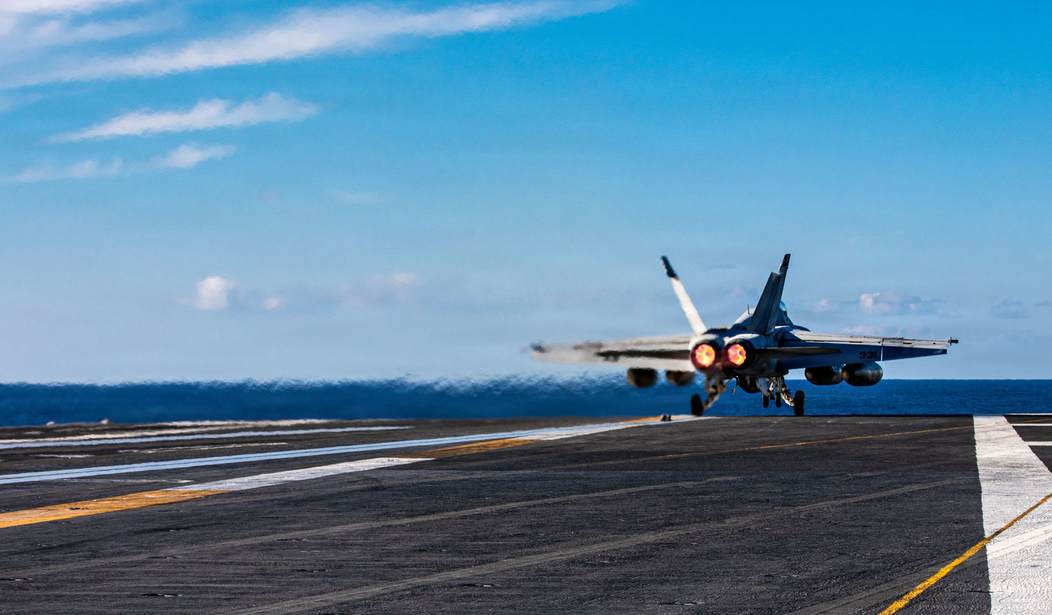
Meanwhile, the military picture is equally stark. Iran's command-and-control systems have been fractured. Its missile and drone capabilities - once touted as pillars of deterrence - have been severely degraded. What remains is not a coordinated campaign but sporadic, diminished retaliation.
The numbers tell the story. Early volleys of hundreds of missiles have dwindled to scattered launches. Drone deployments have followed the same trajectory. Factories, infrastructure and key facilities tied to these capabilities have been destroyed or heavily damaged. What the regime is able to deploy now appears to be the remnants of what once was.
This is not simply a Western narrative. Even regional observers — some hardly aligned with U.S. interests - have acknowledged the effectiveness of the campaign. Analyses describe a deliberate, phased strategy: first neutralizing air defenses and leadership networks, then targeting the industrial backbone that sustains Iran's military capabilities. The objective is not just to weaken but to prevent reconstruction.
And yet, despite this evidence, a counternarrative persists in parts of the West: that Iran is resilient, that it is outlasting its adversaries, that the outcome remains uncertain. That claim is increasingly difficult to square with reality.
Recent developments underscore the point. Senior Iranian officials once positioned as potential successors have been killed. Key internal security figures - those responsible for maintaining order and suppressing dissent - have also been eliminated. Even localized enforcement mechanisms are now under pressure.
What remains of the regime's response resembles less a strategy and more a reaction - disjointed, limited and increasingly ineffective.
So the real question is not whether Iran is losing. The evidence suggests it is.
The real question is why so many observers continue to insist otherwise.
Part of the answer may lie in broader geopolitical anxieties: fears of escalation, concerns over regional stability, or skepticism shaped by past conflicts. But those concerns, while understandable, do not change the facts on the ground.
There are also looming questions about what comes next. Much attention has been paid to strategic chokepoints like the Strait of Hormuz, though any prolonged disruption there would invite overwhelming international response. More significant, perhaps, is the internal dynamic within Iran itself.
The regime has long relied on force to suppress dissent, as seen in past protests met with lethal crackdowns. But the current moment may be different. With leadership weakened and security structures under strain, the balance between state control and public resistance could begin to shift.
If that happens, the future of Iran will not be decided solely by external pressure but by the Iranian people themselves.
They have risen before, at great personal risk. The difference now is that the regime they would confront appears more vulnerable than it has in decades.
What happens next is uncertain. But one thing is increasingly clear: The narrative of Iranian strength no longer matches the reality.
Ben Shapiro is a graduate of UCLA and Harvard Law School, host of "The Ben Shapiro Show," and co-founder of Daily Wire+. He is a three-time New York Times bestselling author.
Editor's Note: For decades, former presidents have been all talk and no action. Now, Donald Trump is eliminating the threat from Iran once and for all.
Help us report the truth about the Trump administration’s decisive actions to keep Americans safe and bring peace to the world. Join Townhall VIP and use promo code FIGHT to get 60% off your VIP membership.
Join the Conversation
VIP members get the ability to comment on articles.