





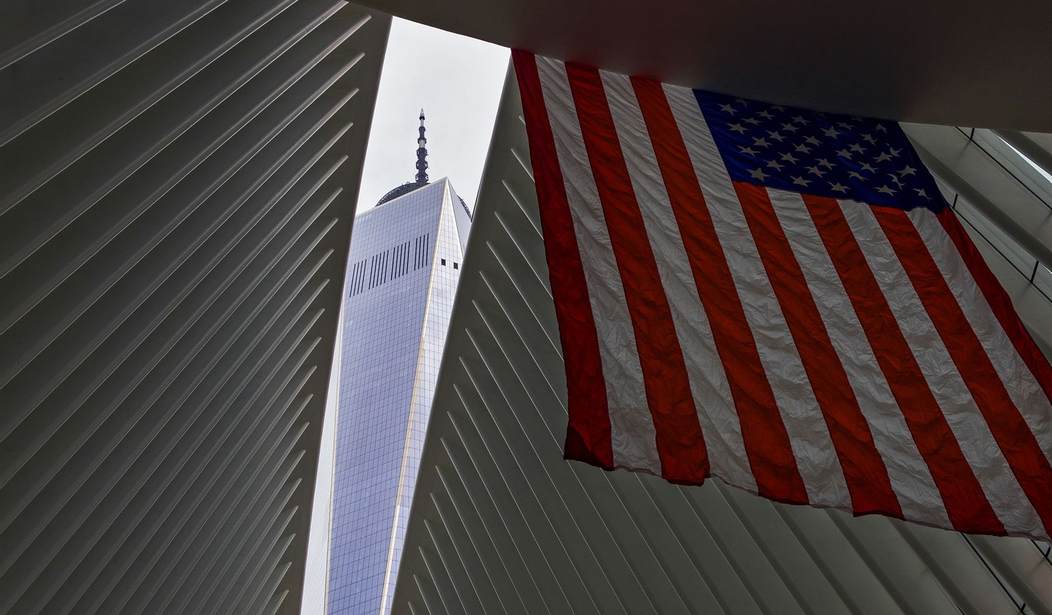
It's now been nearly a full generation since Sept. 11, 2001. There are people currently serving in the U.S. military who weren't born when that act of evil took place -- and the military still has thousands of troops in Afghanistan, the home base of the Taliban-supported al Qaida attack on the United States that took nearly 3,000 American lives.
With time comes forgetfulness. The same period of time has now elapsed since Sept. 11 that elapsed between the end of World War I (1918) and the German re-occupation of the Rhineland in contravention of the Treaty of Versailles (1936). Believing that World War I had ended all war, the Allied powers did nothing. That same year, Germany concluded its Axis alliance with Italy, as well as its Anti-Comintern Pact with Japan. Less than three years later, the world would be at war.
Forgetfulness is easy, because immediate costs are painful and steep. American foreign policy nearly always vacillates between two poles: isolationism and reactive interventionism. The American people (correctly) don't like the consequences of isolationism -- increased attacks on America and her allies, maximization of influence by our enemies -- but we also dislike (correctly) the consequences of maintaining a global military presence. It was easy to tear into the Clinton administration's weakness on defense in the aftermath of the Cold War, but there was almost no political cost in it for Clinton at the time. The sepia glow of media coverage regarding Barack Obama hasn't been darkened by his single-minded quest to minimize American influence around the world.
But every so often, we're reminded that the world is filled with enemies.
We were reminded of that unfortunate fact this week when President Trump withdrew an apparently secret invitation to the Taliban to visit Camp David. The Taliban was, is and will remain an Islamic terror group; it has continuously sought the murder of American soldiers and citizens for two decades. Why would the Trump administration think it a good idea to sign an agreement with radicals who seek to overthrow the administration of Afghanistan, support terrorism and despise the United States? Do members of the administration truly believe that any agreement signed by the Taliban will be binding?
The answer, of course, is no. That's why the talks fell apart, according to The New York Times -- a response from inside the administration in the aftermath of a terror attack on American soldiers this week, a recognition of the obvious.
The problem, of course, is that there are no easy solutions when it comes to foreign policy in the worst parts of the world. Everyone of good heart wants American soldiers out of Afghanistan and home. But how many Americans are willing to risk the increase in terrorism likely to follow such a withdrawal?
So long as we remember 9/11, the answer will be: very few.
Now, perhaps we should withdraw from Afghanistan. Perhaps the withdrawal is worth the risk. But American history isn't replete with circumstances in which precipitous withdrawal is followed by peace and security.
All of which means that American troops are likely to remain in Afghanistan for the foreseeable future. Few politicians will be bold enough to simply state that truth. After all, when John McCain said as much in 2008, he was roundly mocked by Barack Obama -- the same Obama who escalated the war in Afghanistan and retained thousands of troops there, despite promising withdrawal repeatedly. But our politicians should be brave enough to recognize that a weaker America on the world stage means a more vulnerable America at home. If we didn't learn that lesson on 9/11, we're bound to repeat it.
Ben Shapiro, 35, is a graduate of UCLA and Harvard Law School, host of "The Ben Shapiro Show" and editor-in-chief of DailyWire.com. He is the author of the No. 1 New York Times bestseller "The Right Side Of History." He lives with his wife and two children in Los Angeles. To find out more about Ben Shapiro and read features by other Creators Syndicate writers and cartoonists, visit the Creators Syndicate website at www.creators.com.


Join the Conversation
VIP members get the ability to comment on articles.