




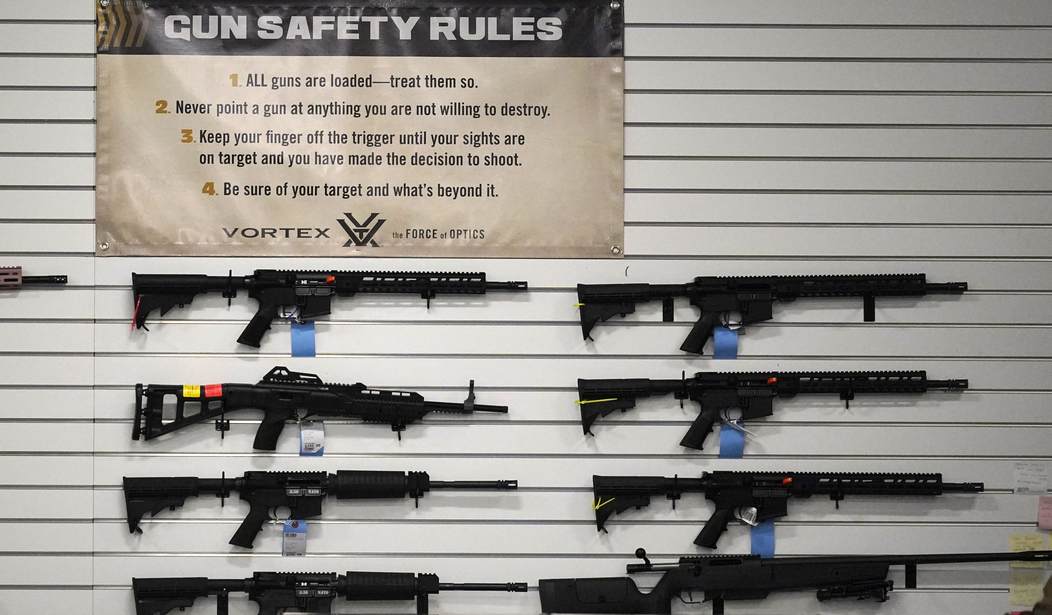
Does the Second Amendment right to keep and bear arms apply to fully automatic machine guns? The US District Court for the Western District of Tennessee is poised to rule on the matter.
Jaquan Bridges pleaded guilty to possessing a machine gun after engaging in a 2023 shootout with police officers on a Tennessee highway. Courthouse News reported that Bridges “was arrested with a Glock .40 caliber pistol with an attachment that converted the handgun into a machine gun, but fought to dismiss the charge on constitutional grounds.”
He claimed the 2022 U.S. Supreme Court ruling in New York State Rifle and Pistol Association v. Bruen required dismissal of the charge because machine guns fall under the definition of "arms" used in the Second Amendment.
U.S. District Judge John Fowlkes Jr. disagreed, and cited the 2008 Supreme Court decision in District of Columbia v. Heller in his decision to deny the dismissal motion.
"Heller explained that the type of weapons protected by the Second Amendment 'were those 'in common use at the time' and we think that limitation is fairly supported by the historical tradition of prohibiting the carrying of 'dangerous and unusual weapons,''" he said.
Attorney Greg Gookin, a federal public defender assigned to Bridges' case, argued Wednesday his client had no criminal history or prior convictions that precluded him from owning and possessing a firearm at the time of his arrest.
Gookin urged the panel to conduct a historical analysis required under the Bruen ruling, and told the court there are no "historical analogues" to machine guns.
"But it's not whether there is an analogue to a machine gun, it's only whether there is an analogue to a ban on entire weapon types," U.S. Circuit Judge John Nalbandian said.
"The test is: Are they dangerous and unusual?" the attorney responded. "With the proliferation of these weapons, I don't think the government can meet that standard."
Recommended
Assistant US Attorney Eileen Kuo brought up a court’s ruling in the 2009 Hamblen v. United States, where the court used the Heller decision to determine that the Second Amendment did not protect a Tennessee State Guard member who owned several machine guns.
However, Judge John Nalbandian noted that “Hamblen doesn’t apply after Bruen.”
When asked for a historical example supporting her contention that the Second Amendment does not cover machine guns, she responded, “The regulation on gunpowder in the 1800s regulated the amount of gunpowder an individual could own.”
The judge didn’t seem to buy this. He noted that regulation “was a fire code issue so they wouldn’t blow up the town.”
He asked, "Isn't the 1986 machine gun ban the first? That's fairly powerful evidence of no historical evidence of the federal government banning any category of weapons."
Kuo replied, insisting that current firearms, unlike those manufactured in the 19th century, are “highly destructive and specialized weapons” and claimed the Second Amendment “does not include the right to go on the offensive and to wage war with military weapons.”
This could be a pivotal case — especially if the court rules against the machine gun ban. It would constitute a significant victory for gun rights.
Judge Nalbandian is right, these laws do not pass the Bruen test, which requires all gun restrictions to have historical analogues — meaning that if a regulation does not have a similarity with other gun laws passed earlier in American history, it is deemed unconstitutional. Hopefully, the other judges on the panel will concur.





Join the conversation as a VIP Member