





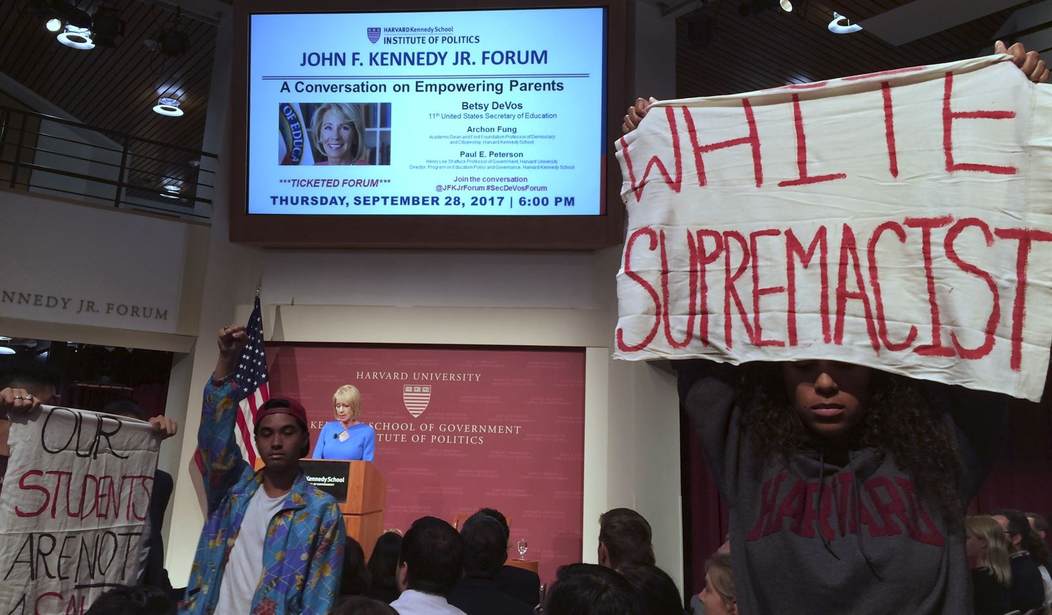
Instead of "safe spaces," it is time for "brave spaces."
A former professor and vice dean of Harvard Law School, John Palfrey is advocating for a place where students aren't sheltered from views they may disagree with. In these spaces, students will be exposed to controversial ideas and views they may deem to be offensive on purpose. In these areas, students will learn about the importance of free speech and have the ability to have a debate over these potentially triggering topics.
If one didn't know any better, that is how a college classroom should operate.
And that's exactly what Palfrey said.
Palfrey said that most of academic life should take place in brave spaces, such as in classrooms, lecture halls and public forums.
If "brave spaces" are merely spaces where learning takes place and different views are presented (i.e., classrooms), why call them "brave spaces"? Why "create" a new space when that space already exists? Rather than acting as if a new space needs to be created to counter the fragile, safe space culture, colleges and universities should take back control of their campuses. The colleges and universities do not need permission from their students to allow diverse ideas to enter classrooms, lecture halls and public areas. Furthermore, there is this First Amendment right, guaranteed under the U.S. Constitution, known as freedom of speech that allows for different opinions to be expressed.
Palfrey also correctly states:
Diversity and free expression ought to co-exist. And yet, in recent years, a false choice has been served up: you are either for diversity, equity, and inclusion in our communities or you are for free expression.
It should be important to note that when it comes to diversity and free expression, only one will result in the other. Free expression inevitably leads to diversity, but diversity doesn't lead to free expression.
Advocating for "brave spaces" is the "safe space" way of saying, "Welcome to the real world."













Join the conversation as a VIP Member