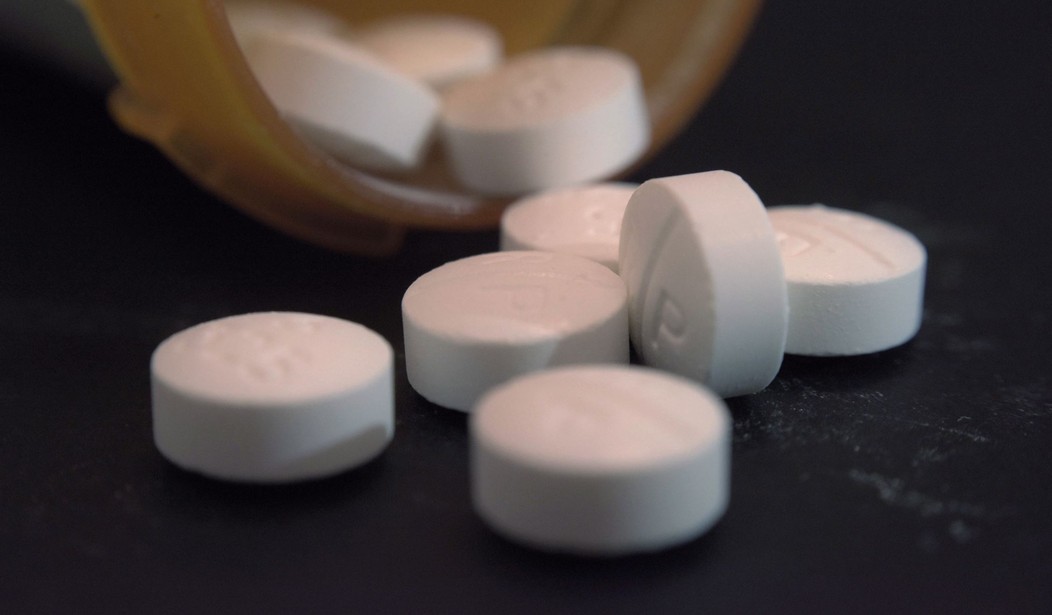
There's been no shortage of coverage on the Democrats' budget reconciliation package, which includes a proposal that would allow the federal government to negotiate prescription drug prices on behalf of Medicare beneficiaries and people with private health insurance. A new poll released Tuesday explored Americans' thoughts on this.
The poll, conducted by the Kaiser Family Foundation, mentions that about eight in ten American adults (83 percent) and adults 65 and older (78 percent) say that the cost of prescription drugs is "unreasonable."
In the first question of the survey, respondents were asked if they favor or oppose allowing the federal government to negotiate with drug companies to get a lower price on prescription drugs. This applied to both people with Medicare and private insurance.
In the results, 52 percent of respondents said they "strongly favor" this. Thirty-one percent said they "somewhat favor" this. Eleven percent and five percent said they somewhat oppose or strongly oppose, respectively.
Out of the 52 percent of respondents who said they "strongly favor" the government negotiating prescription drug prices, 66 percent identify as Democrats, 54 percent as Independents, and 44 percent as Republicans. Thirty-two percent of Republican respondents and 31 percent of Independent respondents said they "somewhat favor" the government negotiating prescription drug prices.
The clear-cut arguments "for" and "against" outlined in the article go as follows.
“Argument against: People opposed to allowing the federal government to negotiate prices with drug companies say this would have the government too involved and will lead to fewer new drugs being available in the future.
Argument in favor: People in favor of allowing the federal government to negotiate prices with drug companies say this is needed because Americans pay higher prices than people in other countries, many can’t afford their prescriptions, and drug company profits are too high.”
The poll write-up explains that previous KFF polls have found attitudes on this issue are "malleable" for some people when the public hears arguments on both sides of the debate.
Additionally, the public's confidence in our current administration to "do what's right for the country" on prescription drug pricing is not there.
"Neither President Biden nor members of either party in Congress has gained the full confidence of the public to do what's right for the country on prescription drug pricing," the write-up reads. "Slightly less than half of the public say they have 'a great deal' or 'a fair amount' of confidence in President Biden (46%) or Democrats in Congress (48%) to recommend the right thing for the country on prescription drug prices. One-third of the public (33%) say they have at least a fair amount of confidence in Republicans in Congress and few are confident that pharmaceutical companies will recommend the right thing (14%)."