





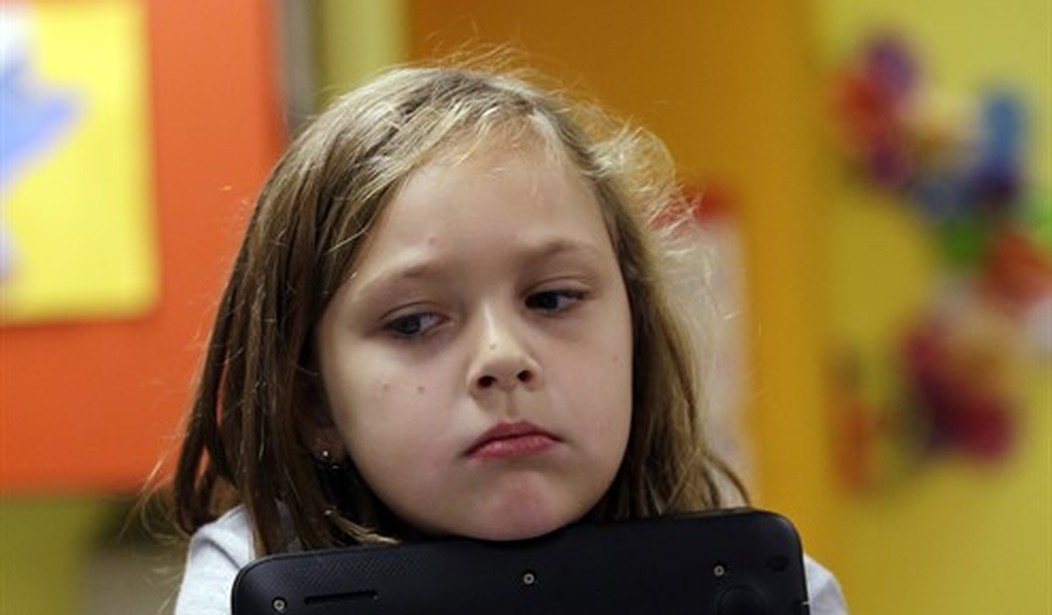
The New York Times is acknowledging in a new report that pandemic school closures did not help stop the spread of COVID-19 and resulted in significant learning loss among students.
Four years later, the paper took a look at what the data show about the effects of remote learning on academic test scores and found that across income levels, academic declines were seen among students.
At the state level, more time spent in remote or hybrid instruction in the 2020-21 school year was associated with larger drops in test scores, according to a New York Times analysis of school closure data and results from the National Assessment of Educational Progress, an authoritative exam administered to a national sample of fourth- and eighth-grade students.
At the school district level, that finding also holds, according to an analysis of test scores from third through eighth grade in thousands of U.S. districts, led by researchers at Stanford and Harvard. In districts where students spent most of the 2020-21 school year learning remotely, they fell more than half a grade behind in math on average, while in districts that spent most of the year in person they lost just over a third of a grade. (NYT)
Even more disconcerting is that students are still having a difficult time catching up.
The most recent test scores, from spring 2023, show that students, overall, are not caught up from their pandemic losses, with larger gaps remaining among students that lost the most ground to begin with. Students in districts that were remote or hybrid the longest — at least 90 percent of the 2020-21 school year — still had almost double the ground to make up compared with students in districts that allowed students back for most of the year. (NYT)
“There’s fairly good consensus that, in general, as a society, we probably kept kids out of school longer than we should have,” Dr. Sean O’Leary, a pediatric infectious disease specialist involved in creating school reopening guidance, told The Times.
In March 2024, the New York Times admits it:
— Nicki Neily (@nickineily) March 18, 2024
“The more time students spent in remote instruction, the further they fell behind. And, experts say, extended closures did little to stop the spread of Covid.”
Someone needs to share this with the co-hosts of The View… pic.twitter.com/oMwBWQLCh3
While the Times’ editorial board acknowledged the learning loss last year, the paper spent most of the pandemic either denying the problem, shaming then-Education Secretary Betsy DeVos for urging schools to reopen, or deriding Sweden’s decision to keep life as normal as possible. But critics pointed out that the teachers unions were most to blame.
You can thank Randi Weingarten and the teachers unions for holding children’s education hostage pic.twitter.com/kBgJRBBToD
— Corey A. DeAngelis, school choice evangelist (@DeAngelisCorey) March 18, 2024
People need to go to prison for what they did to our kids during Covid.
— Chaya Raichik (@ChayaRaichik10) March 18, 2024
Make sure @rweingarten sees this https://t.co/C0PbvDAz4o
Absolutely devastating to the teachers union bosses who wanted to keep schools closed. https://t.co/ieA1GeZ0d5 pic.twitter.com/HP1HkFjc7Q
— Steve Guest (@SteveGuest) March 18, 2024








Join the conversation as a VIP Member