






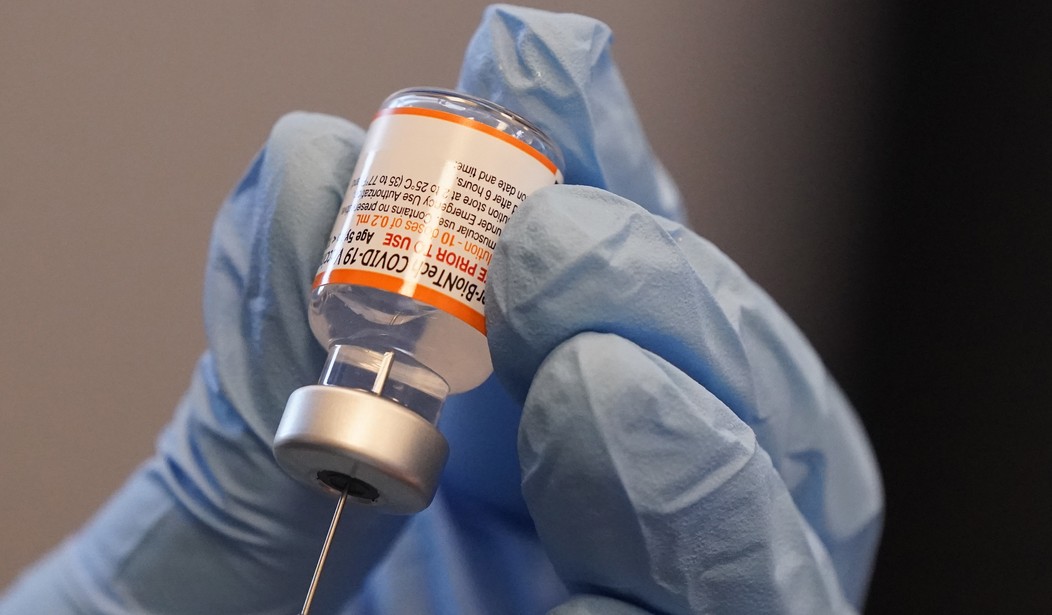
A top FDA official admitted Thursday during a Select Subcommittee on the Coronavirus Pandemic hearing that the government's vaccine safety reporting system was not prepared for the “avalanche” of submissions entered after the rollout of the COVID-19 vaccines.
“As of February 2024, VAERS [Vaccine Adverse Event Reporting System] reports for COVID-19 vaccines total significantly higher than all other vaccines combined since 1990 as reported,” said Chairman Brad Wenstrup of Ohio. “This is a surprising figure. Dr. Marks, was the government prepared for an avalanche of reports to VAERS?”
Dr. Peter Marks, director of the Center for Biologics Evaluation and Research at the FDA, acknowledged it wasn't.
“We tried to be prepared for that,” he said, "but the avalanche of reports was tremendous. And again, it required re-tasking people on the fly…we had to usually staff up and had many meetings working to increase our ability to go through these reports because as you already mentioned, what the public sees on the public VAERS page is just a small fraction of the information that we ultimately collect and sift through that is very important to determine whether an adverse event is truly related to the vaccine
“One of the things we often receive is that we do not make additional information available,” he added. “I would say to you that it's a challenge. What we have learned is that it is very challenging to make available, essentially, protected health information...”


Dr Marks said @US_FDA and @CDCgov had many meetings, retasked workers to receive the flood of safety reports pouring in on the unsafe and ineffective COVID-19 vaccines yet Marks and @DrCaliff_FDA did not recommend black box warnings, population restrictions, or market removal. https://t.co/tasxWZDBYJ
— Peter A. McCullough, MD, MPH® (@P_McCulloughMD) February 16, 2024
We're hearing about this now. 2 years after we were deplatformed for even raising the question. https://t.co/eWNTxHws1b
— Peter St Onge, Ph.D. (@profstonge) February 15, 2024
VAERS is an early-warning system but does not "prove that a vaccine caused a problem," according to the CDC. The information submitted, however, can highlight patterns and important information the agency and FDA can then investigate. Reports can be submitted by anyone.













Join the conversation as a VIP Member